Achilles
The greatest Achaean warrior.
Not in Homer. The Iliad presents Achilles as an exceptional hero and as the son of a goddess, but also as a man destined to die young. It does not narrate his death, does not mention the Styx and makes no mention of a vulnerable heel. The familiar image of a body invulnerable except at one point comes from later versions, which themselves do not form a single coherent story.
Is Achilles invulnerable in the Iliad?
Sección titulada «Is Achilles invulnerable in the Iliad?»No. Homer does not say that his body is immune to wounds or give him an anatomical weak point. His excellence in battle also depends on his weapons — including the new panoply Hephaestus makes for him in Book 18 — on his strength, and on divine help or opposition. None of this amounts to physical invulnerability.
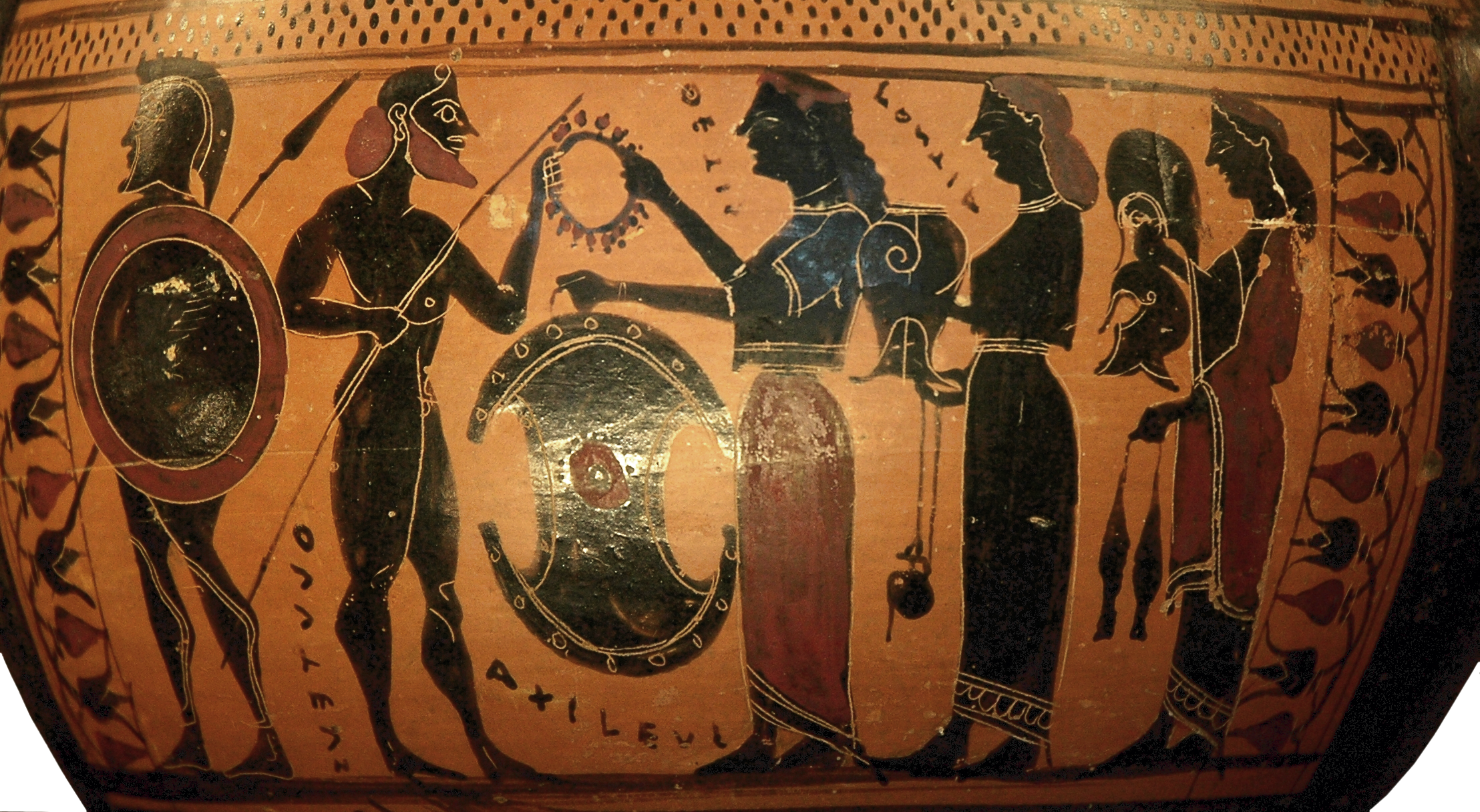
Image: AishaAbdel / Wikimedia Commons, CC0 1.0.
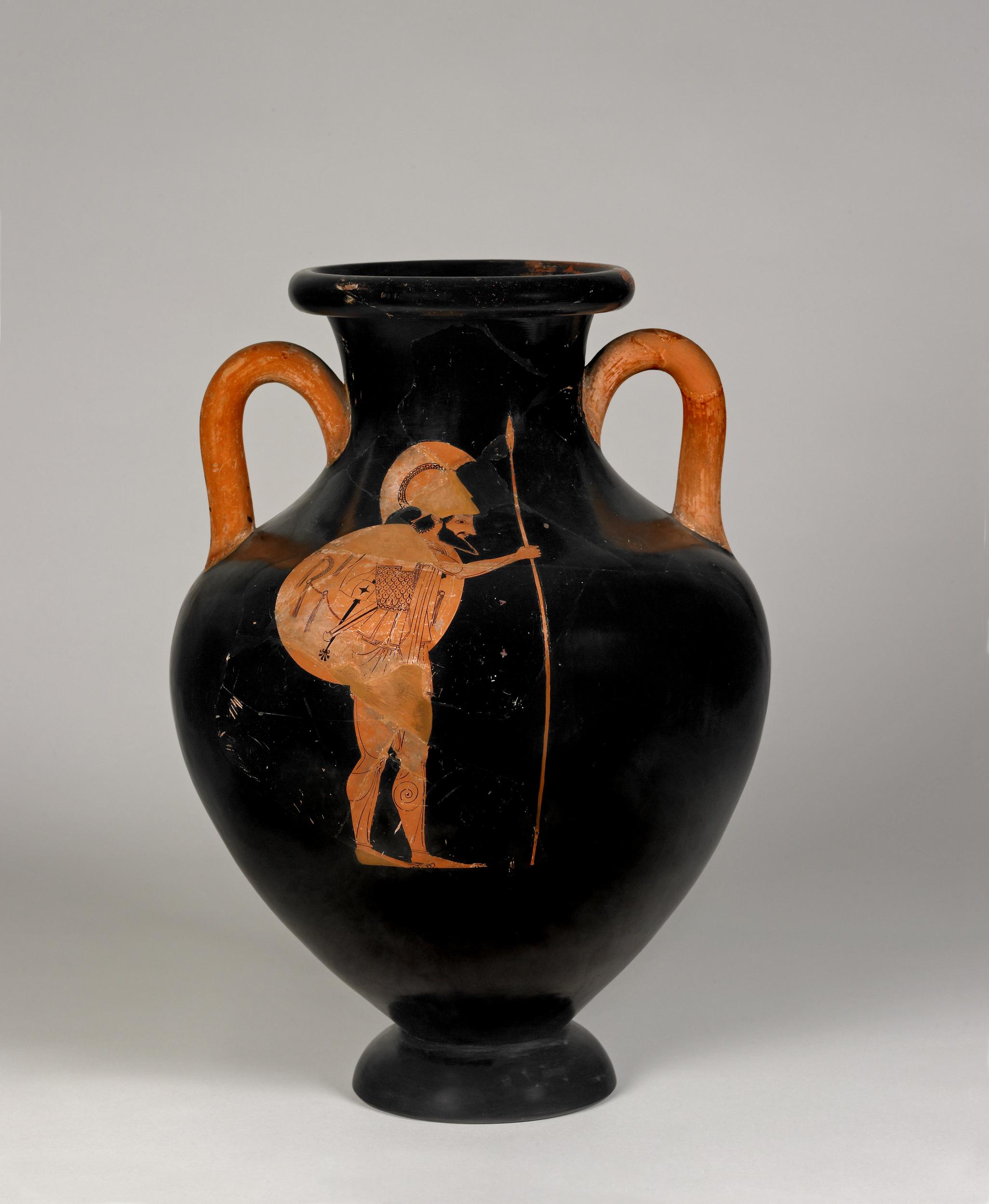
The poem calls him the son of Peleus and Thetis and grants him an extraordinary heroic status; but that status is inseparably bound to a death already foretold. Being the son of a goddess does not make him immortal.
Did Achilles know he was going to die?
Sección titulada «Did Achilles know he was going to die?»Yes: Achilles’ mortality is one of the central concerns of the Iliad. In Iliad 9.410–416 he sets out his two fates: he can return home and live a long life without imperishable glory, or remain before Troy, win that glory and die young. This is not a scene about a heel, but about the price of his heroic choice.
The anticipation returns after Patroclus’ death. Thetis knows that Achilles’ return to battle brings him closer to his end (Iliad 18.95–126); as Hector dies, he foretells that Paris and Apollo will kill Achilles beside the Scaean Gates (Iliad 22.359–360); and the horse Xanthus warns him that his day of death is near (Iliad 19.404–423). The Iliad, however, ends with Hector’s funeral: it foretells Achilles’ death but does not narrate it.
The Odyssey does remember his funeral and the honour he receives among the Achaeans (Odyssey 24.36–92). It is further Homeric evidence that Achilles died, not that he was invulnerable.
What was Achilles’ relationship with Patroclus?
Sección titulada «What was Achilles’ relationship with Patroclus?»In Homer, Patroclus is Achilles’ closest companion. The poem uses language of affection, kinship and companionship for their bond — including hetairos, “companion” — and makes Patroclus’ death the decisive turning point in Achilles’ wrath. The mourning in Books 18 and 23, the care of Patroclus’ body, and the decision that their bones should not remain apart all reveal an exceptional intensity. The request is voiced by Patroclus’ shade (Iliad 23.83–92), and the shared urn is remembered again in Odyssey 24.77–84.
This does not justify replacing Homer’s own language with a modern label. The Iliad does not explicitly state that they have a sexual relationship. Nor does it offer a theory of their bond in our terms: it narrates an emotional, martial and funerary intimacy of extraordinary force.
Ancient Greek reception debated the question differently. In the Symposium, Plato has Phaedrus offer an erotic reading and take issue with Aeschylus over which of the two should be regarded as the erastes and which as the eromenos (Symposium 179e–180b); that discussion presupposes the interpretation of Aeschylus, whose tragedy Myrmidons is lost. Xenophon offers a different reading: he says that Homer presents Achilles avenging Patroclus not as his beloved, but as his companion (Symposium 8.31). These readings are valuable evidence for ancient reception, but they do not add an explicit sexual statement to the Homeric text.
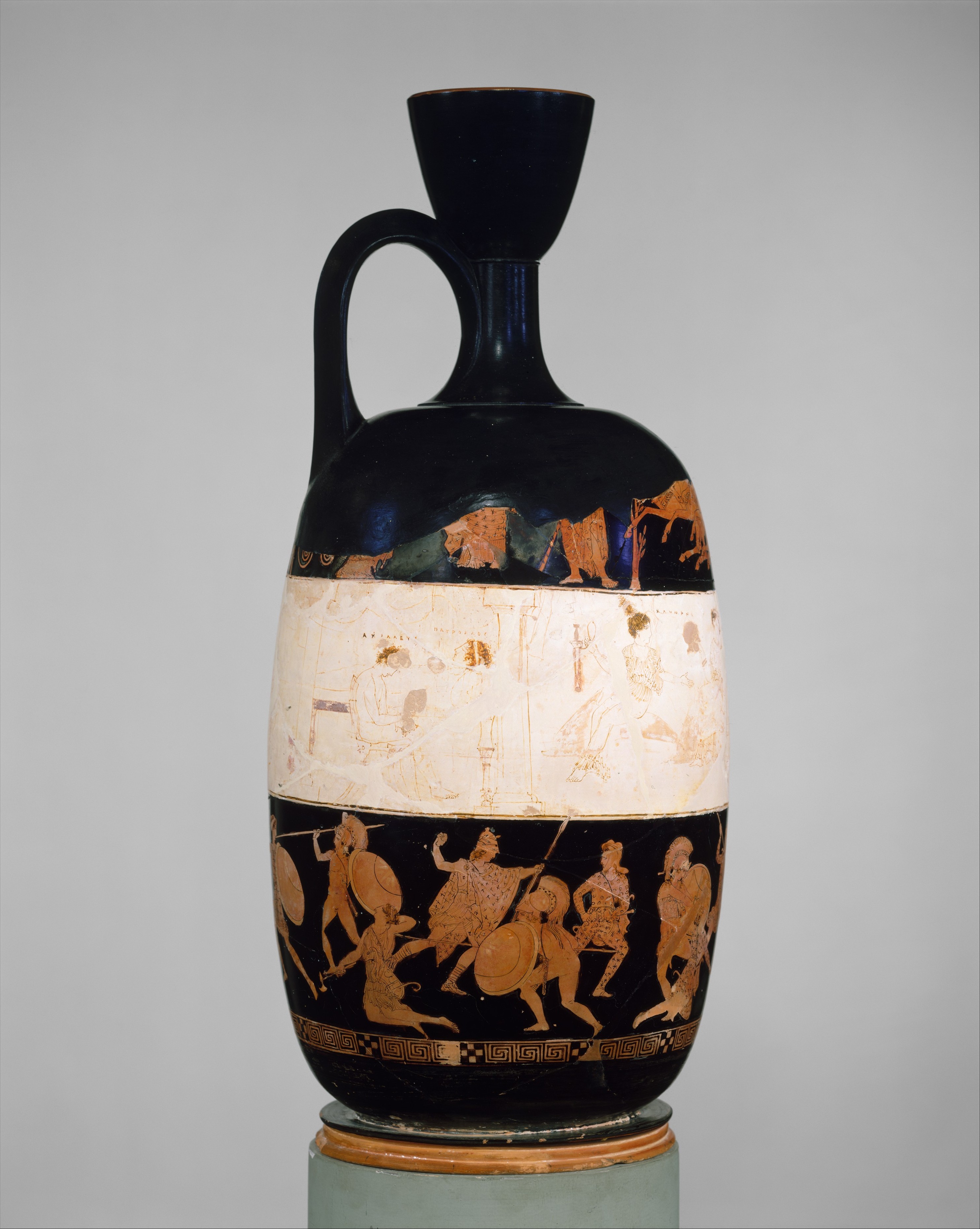
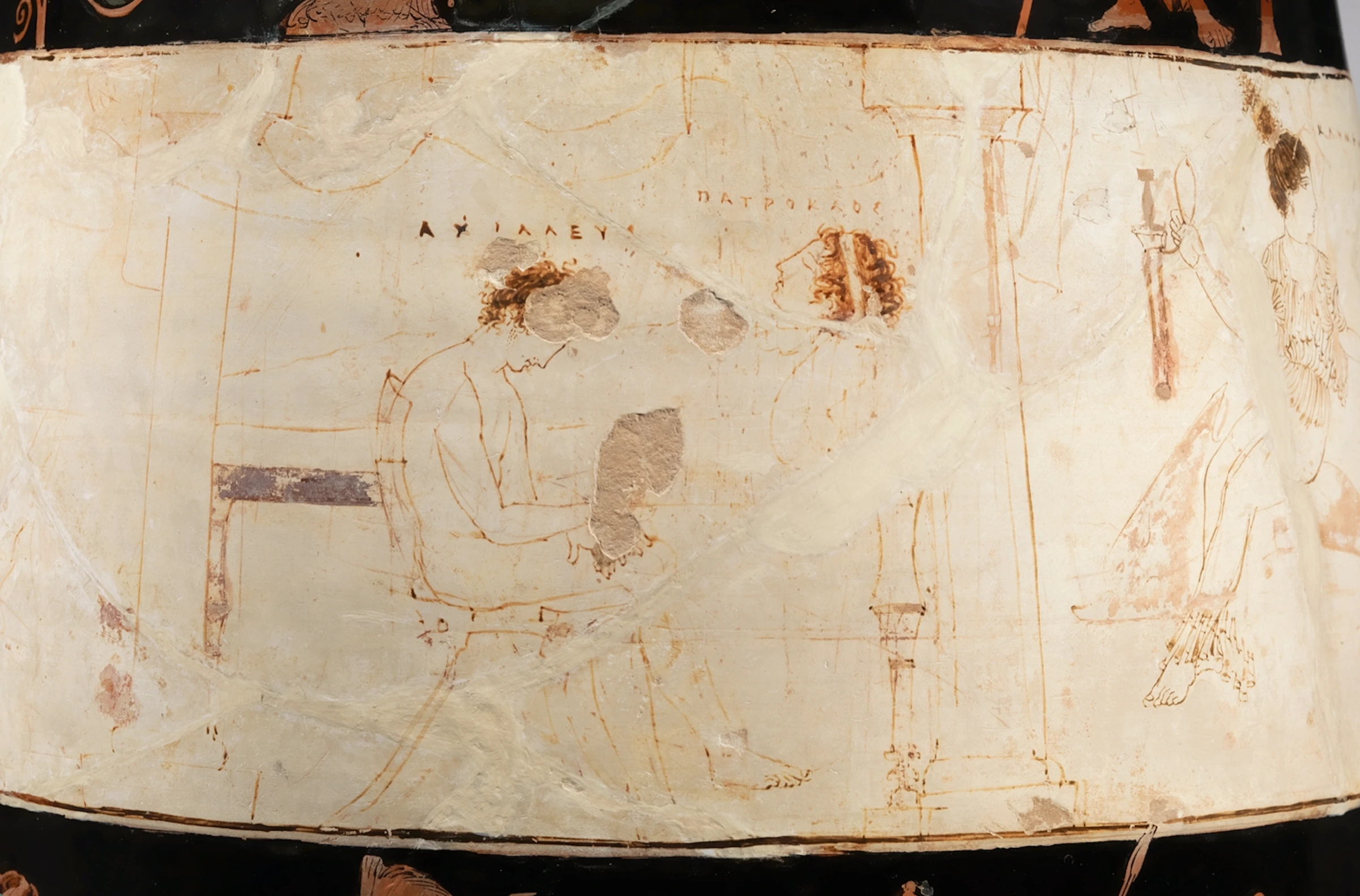
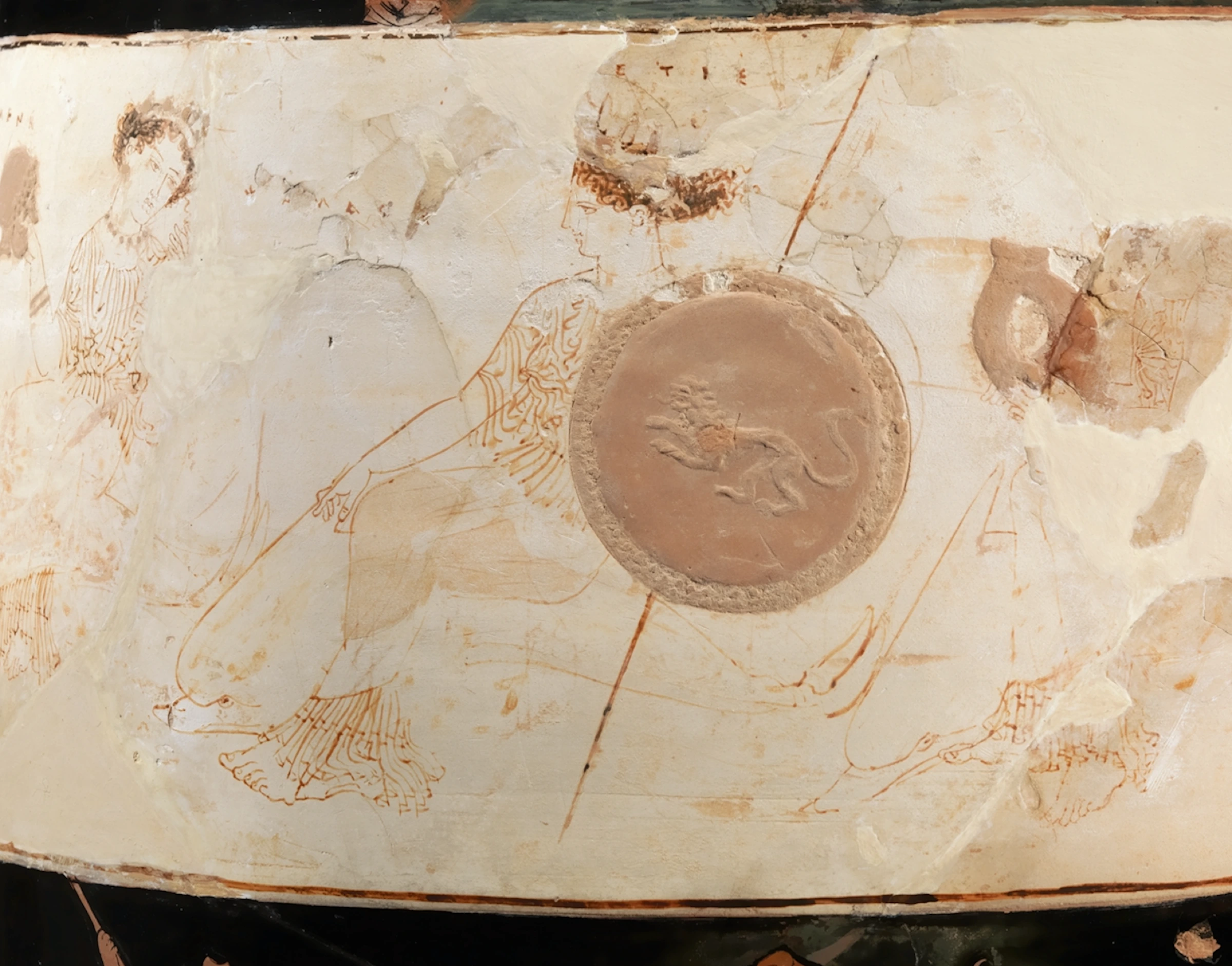
Image: The Metropolitan Museum of Art. Public Domain.
The Iliad presents Patroclus as Achilles’ most intense emotional bond, but does not explicitly define the relationship as sexual. Later Greek authors did interpret it erotically, although they did not agree among themselves on how it should be understood. This distinction prevents later images of Achilles from being treated as proof that Homer defined the bond in that way.
When does the immersion in the Styx appear?
Sección titulada «When does the immersion in the Styx appear?»It does not appear in Homer or in the surviving summary of the Aethiopis. The story of Thetis trying to free Achilles from his mortal condition circulated in several forms. One ancient tradition, preserved by Pseudo-Apollodorus, Bibliotheca 3.13.6, says that Thetis placed him in the fire by night and anointed him with ambrosia by day; Peleus interrupts the ritual. This is not yet the scene of the Styx.
Statius’ Achilleid, a Latin poem from the late first century AD, recognisably alludes to immersion in the waters of the Styx and to the part Thetis failed to cover while holding the child. It is the most important surviving literary formulation of the Styx motif; by itself, however, it does not allow us to reconstruct when each oral or visual detail arose. The popular story therefore combines different versions: fire and ambrosia, the Styx, and a localised vulnerability do not form a single Homeric tradition.
When does the ‘Achilles heel’ appear?
Sección titulada «When does the ‘Achilles heel’ appear?»Hyginus, Fabulae 107 provides one of the most explicit surviving testimonies to a mortal point: Apollo, taking the form of Paris, wounds Achilles with an arrow in the talus, “which is said to have been mortal”. The passage explains his death through a vulnerable point, but does not describe immersion in the Styx. Hyginus should therefore not be treated as though he transmitted the whole modern bathing scene unchanged.
Ancient terminology does not always describe exactly the same anatomy either. Quintus of Smyrna places Apollo’s blow at the ankle (Posthomerica 3.60–72); Hyginus uses talus, a term that can cover the heel or ankle region. The modern formula “Achilles’ heel” fixes a simplified version and turns that point into a proverb for a decisive vulnerability. That precision should not be projected back onto the Iliad.
Who kills Achilles: Paris or Apollo?
Sección titulada «Who kills Achilles: Paris or Apollo?»The sources do not give the same answer. In the Iliad, Hector names both: Paris and Apollo. Proclus’ summary of the Aethiopis — a lost poem known only indirectly — likewise says that, after the death of Memnon, Achilles pursues the Trojans towards the city and dies at the hands of Paris and Apollo. The summary mentions neither the Styx nor the heel.
Quintus of Smyrna develops a different ending: Apollo, hidden by a cloud, shoots an arrow that strikes Achilles in the ankle (Posthomerica 3.60–72). Hyginus, by contrast, has Apollo take the form of Paris and strike Achilles at his mortal point. Pseudo-Apollodorus preserves the combination of Paris and Apollo in his summary of the final events. The variation is not an error to be corrected: it shows how Achilles’ death changed from one source to another.
What does the Aethiopis preserve?
Sección titulada «What does the Aethiopis preserve?»The Aethiopis does not survive as a complete poem. We know it chiefly through Proclus’ summary of the Trojan Epic Cycle. There, after the stories of Penthesilea and Memnon, Achilles defeats the Trojans, pursues them towards the city and is killed by Paris and Apollo; Ajax recovers the body and the Achaeans hold funeral rites. This is the safest basis we can attribute indirectly to the cyclic poem. We should not assign to it details — the heel, the Styx, or an arrow striking a specific part of the body — that the surviving summary does not provide.
Was he immortal or simply an exceptional hero?
Sección titulada «Was he immortal or simply an exceptional hero?»Achilles is not immortal in Homer. Thetis can intercede for him and knows his fate, but she cannot avert his death. Later tradition intensified his exceptional status through protective rites and localised vulnerabilities; it did not uniformly replace the older core of a mortal hero who chooses a brief and glorious life.
| Source or tradition | Achilles invulnerable? | How can he die? | Heel? |
|---|---|---|---|
| Iliad | Not stated | Fate foretold; Paris and Apollo in Hector’s prophecy | No |
| Odyssey | Not stated | Already dead; his funeral rites are remembered | No |
| Aethiopis, via Proclus’ summary | Not stated | Paris and Apollo kill him after Memnon | Not in the summary |
| Quintus of Smyrna, Posthomerica 3 | Does not describe the Styx bath | Apollo’s arrow strikes the ankle | Ankle, not a doctrine of invulnerability |
| Hyginus, Fabulae 107 | Assumes a mortal point | Apollo’s arrow strikes him while Apollo takes the form of Paris | Yes: mortal talus |
| Statius, Achilleid | Yes, in the Styx tradition | The poem breaks off before Achilles’ death | Incomplete protection is linked to the point by which Thetis holds him |
Why did Achilles end up becoming invulnerable?
Sección titulada «Why did Achilles end up becoming invulnerable?»We cannot identify a single cause. Scholarship often relates this development to the exceptional status of a hero born to a goddess, to stories of protection in infancy, and to the narrative need to explain a death that tradition attributed to divine intervention. These stories have also been compared with the broader motif of a body protected everywhere except at one point. These are interpretive possibilities, not reports of a lost original version.
The final answer must preserve the distinction: Achilles is a peerless hero doomed to die; the Styx and the “Achilles’ heel” belong to the later history of how he was imagined.
Sources and method
Sección titulada «Sources and method»See also
Sección titulada «See also»- How Do We Know What Happened in the Trojan War?
- Was Iphigenia Sacrificed?
- Who Fought for Troy?