Homer through Hesiod’s Eyes
A duel that may never have happened
Sección titulada «A duel that may never have happened»An ancient tradition eventually imagined Homer and Hesiod face to face. The so-called Contest of Homer and Hesiod tells how the two poets competed in Euboea and Hesiod won. It is not contemporary testimony, and we cannot use it as historical evidence for a real encounter. Hesiod, in Works and Days, does recall travelling to Chalcis in Euboea to take part in the funeral games of Amphidamas, where he won a tripod as a prize. He does not say that Homer was there. Later tradition did the rest.
When Homer became a character
Sección titulada «When Homer became a character»Yet the invention of the contest is revealing. Someone felt the need to place the two great names of Archaic poetry side by side and make them compete. The episode may be fictitious, but the contrast it represents is not. Both compose in hexameters, both use a related traditional poetic language, and both belong to a world of oral tradition. And yet they do profoundly different things with that shared instrument.
Hesiod interests us here not as Homer’s rival, but as a point of contrast that allows us to see Homer more clearly.
A shared poetic language does not mean a shared way of seeing
Sección titulada «A shared poetic language does not mean a shared way of seeing»Homer and Hesiod largely share a traditional poetic language. It is not simply the everyday speech of a particular region, but a language shaped over generations for composition in hexameter. Its foundation is mainly Ionic, but it preserves forms from different regions and periods, as well as forms belonging to the poetic tradition itself. It was a language for singing poetry, not the ordinary dialect of a particular city.
What language do the Iliad and the Odyssey use?
This is especially clear in Hesiod. He was Boeotian and places his own life in Ascra, yet he does not compose Works and Days or the Theogony simply in the Boeotian he would have heard around him. His diction belongs in large measure to the same epic tradition we find in Homer. Linguistic differences between the two exist, but they are much smaller than the difference between the poetic worlds they construct.
That is precisely why the contrast is so valuable. If two poets use a similar inherited language, the same metre and much of the same poetic tradition, yet do such different things with it, the explanation cannot lie only in the words they have inherited.
There is a choice of perspective.
Homer uses hexameter above all to tell a story; Hesiod uses it above all to explain how the world is ordered and how one should live within it.
The difference is not absolute. Hesiod also constructs scenes and stories; Homer also explains, enumerates and orders. But the centre of gravity is different: in Hesiod, narrative often leads towards a rule, a genealogy, an order or a practical experience; in Homer, knowledge becomes story.
The field: knowledge for doing
Sección titulada «The field: knowledge for doing»Hesiod speaks of agricultural work with a precision that feels unusual in Homer. He does not merely mention work in the fields; he explains how it should be done well. He distinguishes tasks, tools, ages and appropriate moments. To cut a straight furrow, for example, he recommends two male oxen of about nine years old and, behind them, a strong, well-fed man of forty, one who “attends to his work and drives a straight furrow”, without being distracted by looking at his companions, but with his mind fixed on the task.
Here, knowledge is measured by its usefulness.
Homer knows the countryside too. Reapers, shepherds, woodcutters and animals often appear in his similes; and the shield of Achilles unfolds before us scenes of ploughing, harvesting and vintage. But the rural world usually enters his poems in order to become something else: a contrast that accompanies the movement of an army or the crash of battle. It becomes a scene that gives depth to the narrated world, an image that allows us to see more clearly what Homer is telling.
Hesiod, by contrast, can linger because the work itself is the subject. We do not know whether either poet ever worked with a plough or what kind of practical experience he may have had. What matters is that practical knowledge serves different functions in their poems. Seen through Hesiod, Homer appears even more clearly as a poet who draws reality into narrative.
The sea: route, season and risk
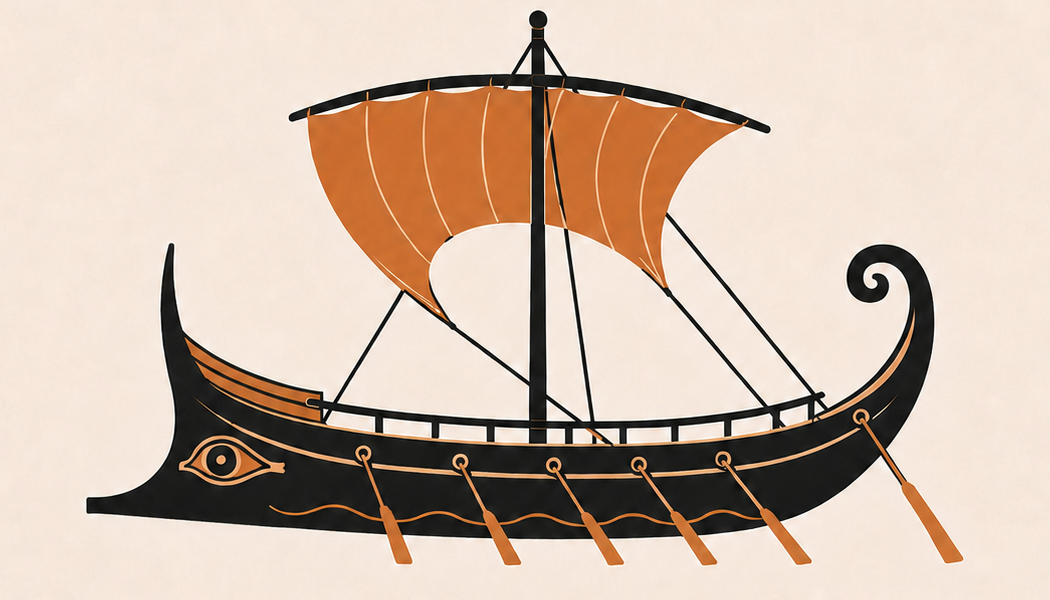
Sección titulada «The sea: route, season and risk»The sea also reveals the difference between the two poets. Hesiod says that his father left Cyme in Asia Minor under the pressure of poverty, crossed the sea in a black ship and eventually settled at Ascra in Boeotia. Yet Hesiod himself admits that he knows little about seafaring and that his only voyage was the short crossing from Aulis to Chalcis in Euboea, where he took part in the funeral games of Amphidamas and won a tripod with his song (Works and Days 630–640; 648–659).
And yet he gives very concrete advice. When the bad season arrives, the ship should be hauled ashore and its gear stored until the right time returns; anyone trading by sea should calculate the cargo and avoid risking all his property on a single voyage. He considers the period of roughly fifty days after the summer solstice especially favourable, but advises returning before the season of new wine, after the vintage and before the autumn rains and strong southerly winds.
He also allows for spring sailing and offers an almost agricultural sign by which to recognise the right moment: when the leaves of the fig tree have grown to about the size of a crow’s footprint. But he does not recommend it.
The two poets even draw on the same inherited formulas for the sea: the “wine-dark sea”, the “loud-roaring sea” or the “broad sea”. They share the words of one poetic tradition, but build very different seas from them.
While Hesiod thinks in terms of seasons, winds, cargoes, losses and profits, Homer turns the sea into narrative space: a storm diverts a route, one coast leads to another, an island opens a new episode.
Hesiod’s sailor asks when it is best to leave and when he should return; Homer’s traveller asks where he is and what lies beyond the horizon.
The difference does not tell us who knew more about navigation. It shows what kind of maritime knowledge each poem needs: Hesiod turns the sea into a practical problem; Homer turns it into the great space of adventure and return.
The poet who appears and the poet who disappears
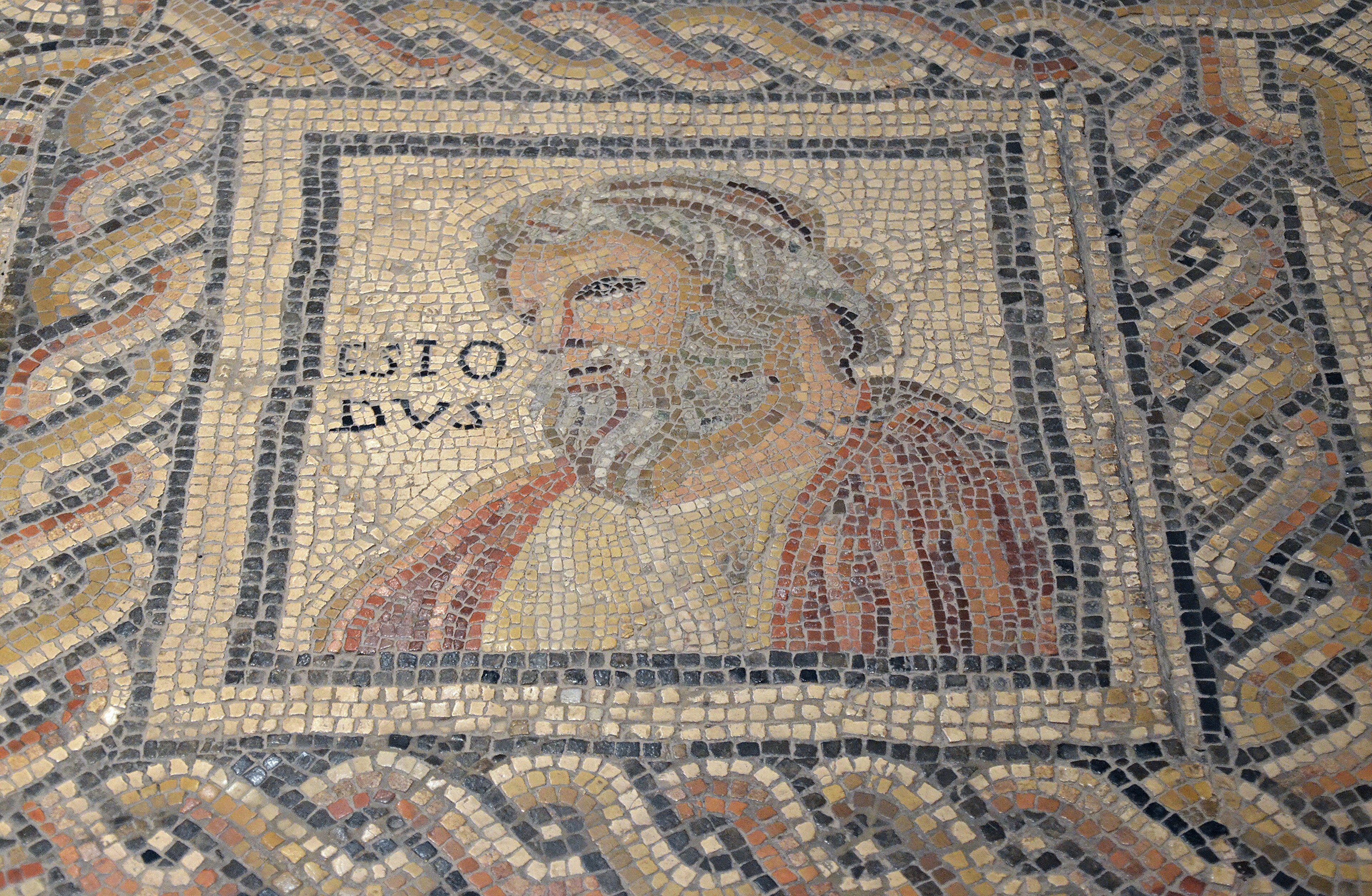
Sección titulada «The poet who appears and the poet who disappears»Hesiod appears as a character in his own verses. He tells how the Muses found him beside Mount Helicon in Boeotia; he speaks of his brother Perses, recalls his father, talks about Ascra and even mentions his journey to Chalcis. His poetic voice thus incorporates experiences that he presents as his own.
Homer does something very different. The poet who begins the Odyssey invokes the Muse, but does not tell us who he is. From the poems we know neither his city, his family nor his experiences. The narrator disappears behind what is narrated.
The Odyssey nevertheless contains two bards: Phemius and Demodocus. We cannot claim that either is a self-portrait of Homer. But if they reflect, in some way, the poet’s image of his own craft, the difference from Hesiod would be significant: the figure of the poet would appear in the third person, turned into a character and occupying a secondary place within a story that belongs to others.
Here too we can see two ways of understanding the poet’s presence. Hesiod presents himself; Homer represents himself. Hesiod can tell us what happened to him; Homer, even when he speaks about the poet’s craft, prefers to show us someone practising it.
There is also a resonance that is difficult to overlook. Homer disappears behind the story he tells, and his great hero is precisely a man who masters the art of disappearing behind an appearance and a story. Odysseus can stand before others without their knowing who he is; he can invent a name, a past and a story, and decide for himself when to reveal his identity. Homer hides behind the story; Odysseus hides behind his stories.
That does not make Odysseus an alter ego of Homer. But the resonance leads to a profoundly Homeric question: if someone can be present without being recognised, and if a false story can seem true, who possesses the truth, and how can others know it?
Truth divided
Sección titulada «Truth divided»Truth occupies a strange place in both poets. At the beginning of the Theogony, the Muses tell Hesiod that they know how to tell “many falsehoods that resemble truths” and, when they wish, how to proclaim the truth as well. The claim is especially striking because an almost identical formula appears in the Odyssey. When the disguised Odysseus invents a story about his supposed past for Penelope, the narrator observes that he tells many falsehoods resembling truths (Theogony 27–28; Odyssey 19.203).
The poem itself repeatedly insists on this ability of Odysseus. Newly arrived in Ithaca and still unable to recognise his own land, he meets Athena disguised as a shepherd and immediately tells her a false story about who he is. When the goddess reveals herself, she smiles and says:
“Very cunning indeed would anyone have to be to outdo you in deceit, even if a god were to rival you! Reckless man, trickster, always ready to devise another trap! Can you not, even now that you have returned to your homeland, give up your lies and those deceptive words you love so much?”
In Ithaca, the man of disguises meets the goddess of disguises. Both know the art of hiding the truth while remaining plausible.
Homer continually turns this relationship between truth and appearance into a narrative mechanism.
Telemachus offers an especially subtle example very early on. When Athena, disguised as Mentes, remarks on how much he resembles Odysseus, he replies (Odyssey 1.215–216):
“Well then, stranger, I will tell you the truth. My mother says I am Odysseus’ son; but I cannot know it, for no one can know for himself who his father is.”
Athena knows the truth; so does the reader. Telemachus, by contrast, has only Penelope’s word.
The Odyssey plays again and again with the fragmentation of truth and this inequality of knowledge. Odysseus can be present without others knowing who he is. He speaks with Eumaeus while hiding his identity; Penelope talks at length with her own husband without recognising him. We share in the game because we know a truth that some of the characters do not, and watch as they interpret incomplete signs, ambiguous words and deceptive appearances.
But when Odysseus begins to tell his own adventures to the Phaeacians, something different happens. For several books he controls the narrative. Alcinous praises the grace of his words and says that he has recounted his misfortunes with the skill of a bard. Odysseus ceases to be merely the protagonist of a story and becomes a narrator within it.
And we know that he is a formidable narrator precisely because he masters language and knows how to construct plausible stories. His false identities combine places, characters and details plausible enough to persuade those who listen. Odysseus does not tell the same story to everyone: he adapts what he reveals and what he conceals to the person before him and to what he hopes to achieve.
This does not require us to regard his adventures with Polyphemus, Circe or the Sirens as false. The poem incorporates them into the story of his return, and the Phaeacians accept his account. But now Odysseus controls the narrative: he decides what to tell, how much to tell and how to tell it. We do not know whether he omits or abbreviates anything, or how far he may reshape an episode, because we possess no other version against which to compare his own.
Hesiod puts into the mouths of the Muses the problem of distinguishing truth from what resembles it. Homer turns that problem into narrative experience: truth exists, but not everyone has the same access to it. It is divided among those who know, those who conceal, those who tell and those who must decide what to believe.
War: from outside and from within
Sección titulada «War: from outside and from within»In Works and Days, human war generally appears as a misfortune. Hesiod distinguishes two forms of Eris, goddess of discord, rivalry and strife: one destructive, leading to war and battle, and another fruitful, awakening emulation and driving men to work. The Bronze generation is ultimately destroyed by its own violence. Then comes the race of heroes, better than the one before it, but also marked by war: some of them die at Thebes and Troy. The just city, by contrast, enjoys peace.
Troy therefore occupies a surprisingly small place in Works and Days. Hesiod does not enter it. He does not accompany Hector or Achilles, listen to Priam or place Helen at the centre of the plot. The Trojan War appears within a much broader explanation of human generations and of violence once unleashed, carrying men towards destruction.
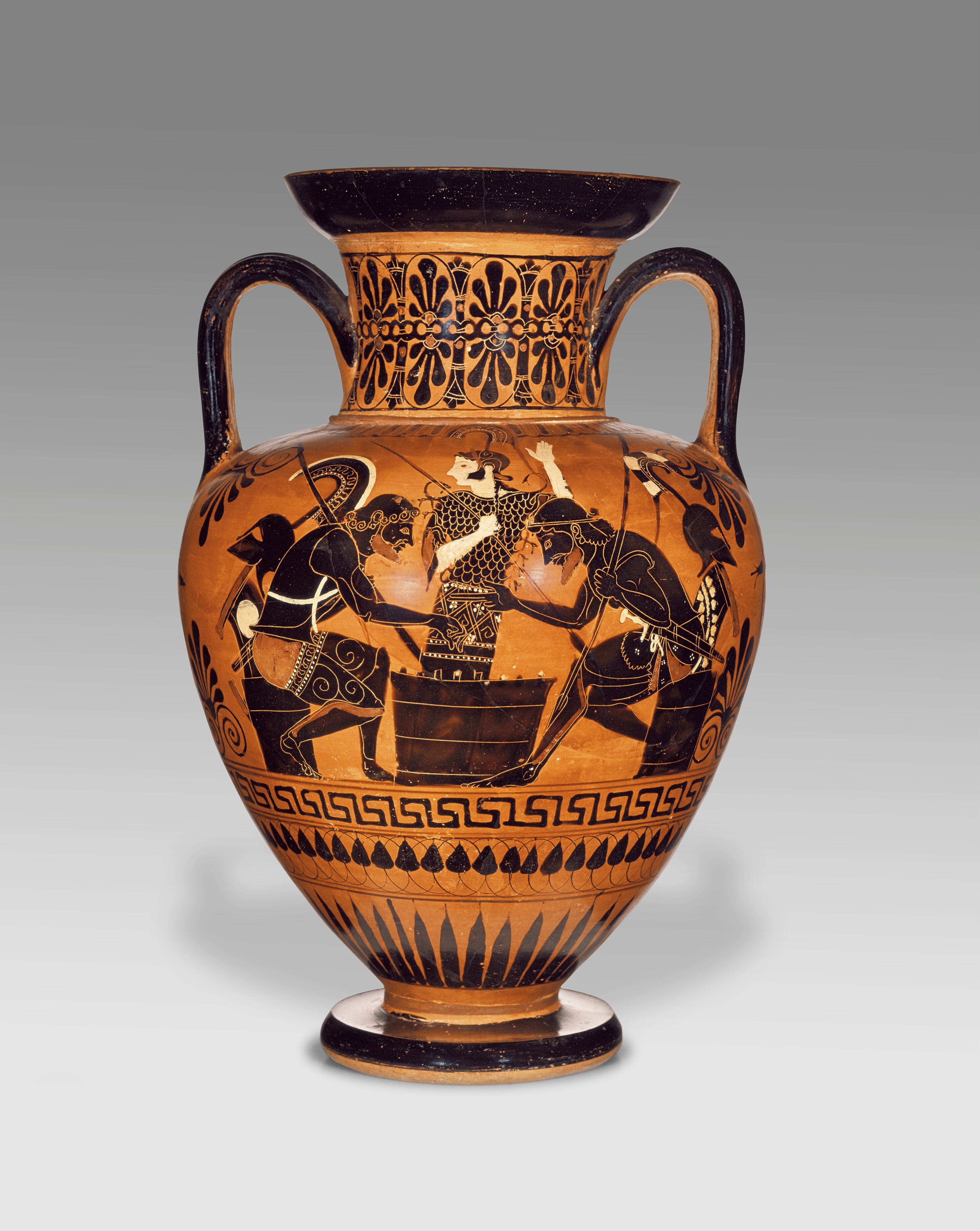
Homer does something very different. He enters the war and remains inside it. We see the pursuit of prestige and the fear of dishonour, courage and panic, revenge and reconciliation, violence and compassion, calculations and mistakes, exhaustion, the longing to return, corpses, funerals and grief. The gods intervene with their own preferences, but the consequences fall again and again on particular individuals.
Even in the Odyssey, when the war is over, it continues to weigh on those who return from it, on those waiting for them and even on the dead. Menelaus, Helen, Nestor and Odysseus himself continue to live with its consequences; Agamemnon, Achilles and Ajax still bear them in Hades. Ithaca itself is marked by an absence that began at Troy: Penelope keeps waiting, Telemachus has grown up without his father, and Odysseus’ household has filled with suitors who prosper precisely because the king has not returned.
In the Odyssey, Troy is over as a war, but not as a consequence.
Hesiod looks at war from the outside and can tell us what place it occupies in the destiny of a generation. Homer takes us inside it and makes us see what it means to fight, lose, survive or return.
Hesiod allows us to see more clearly one of Homer’s great capacities: not to define war, but to turn it into narrative experience and make the reader remain inside it.
The gods: system and scene
Sección titulada «The gods: system and scene»The Theogony needs to establish who begets whom, what power belongs to each divinity and how the rule of Zeus comes to be established. The gods are full of human passions, but those passions are ultimately integrated into an explanation of the order of the world. Even the great divine conflicts perform a cosmological function.
Homer, by contrast, constantly turns the gods into characters within a scene. They argue, deceive one another, favour some, become angry with others, and enter and leave the action.
Perhaps the most revealing example is the story sung by Demodocus in Book 8 of the Odyssey: Aphrodite’s infidelity with Ares, the trap constructed by Hephaestus, the public exposure of the lovers and the jokes of the gods who watch the spectacle. Divine material becomes a small comedy of infidelity that can also be read as a counterpoint to Penelope’s faithfulness.
But Hesiod too knows how to construct scenes, deceptions and ironies. Prometheus and Zeus provide one of his best examples. In the Theogony, Prometheus tries to deceive Zeus in the division of an ox: he hides the meat beneath an unattractive covering and presents the bones under a gleaming layer of fat. Zeus understands the trick, yet chooses the portion of bones and responds by depriving humanity of fire; Prometheus steals it back for them. The confrontation escalates: each challenge from Prometheus provokes a greater retaliation from Zeus.
Pandora carries this logic still further. In Works and Days, Zeus announces that, in exchange for the stolen fire, he will give men an evil in which they themselves will delight, and Hesiod adds that after saying this he laughed (Works and Days 59). The punishment does not arrive in a terrifying form. The gods fashion a beautiful young woman, dress and adorn her, and endow her with grace, desire and seductive words; Hermes also puts lies and deceit into her. Zeus does not force men to accept his punishment: he makes them receive it as a gift. Epimetheus, despite Prometheus’ warning, accepts Pandora and understands what has happened only when it is too late. The irony is cruel because appearance is part of the trap.
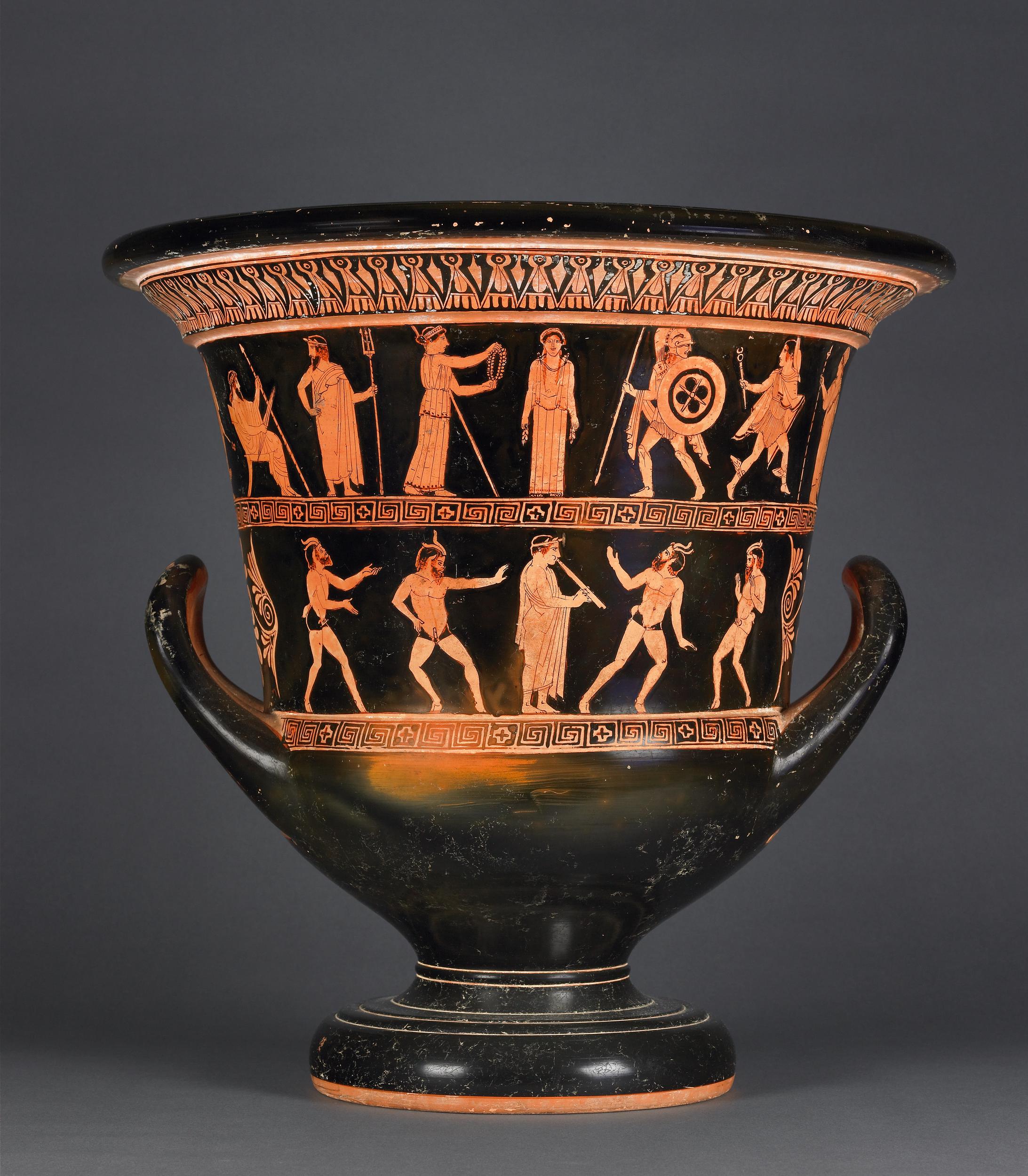
Pandora then opens the great jar — the pithos, not a “box” in the Greek text — and evils scatter among human beings. Only Elpis, the personification of hope or expectation, remains inside when Pandora replaces the lid. Hesiod does not explain unambiguously what it means for Elpis to remain there.
And then something very revealing happens: Pandora virtually disappears from the scene. Hesiod does not develop her life with Epimetheus or turn her into the protagonist of a later story. Once she has fulfilled her function within the explanation — to be accepted and to release the evils that henceforth accompany human existence — the narrative can continue without her.
Hesiod, then, also dramatises the gods. He knows how to build expectations, deceptions, punishments and ironies. But his scenes tend to lead towards an explanation: why humans possess fire, why they sacrifice in a certain way, why they know labour, disease and suffering.
Homer dramatises the gods in order to make them act within a narrative; Hesiod dramatises them in order to make the order of the world intelligible.
Few monsters, great episodes
Sección titulada «Few monsters, great episodes»Modern memory of the Odyssey is so closely associated with Polyphemus, the Sirens, Scylla and Charybdis that Odysseus’ journey can seem like a continuous succession of monsters. But Homer does not gather these beings into a homogeneous category. The Cyclopes and Laestrygonians appear as peoples; the Sirens are above all irresistible voices whose appearance is not even described; Circe and Calypso are divinities. What unites them is not so much what they are as the fact that Odysseus has to encounter them.
Hesiod gives a very different impression. The Theogony unfolds great families of extraordinary beings: Graeae, Gorgons, Echidna, Cerberus, Hydra, Chimera, Sphinx and others appear linked by lines of descent. The monster has a place within the genealogy of the cosmos.
Even the Cyclopes show how far two traditions can differ while sharing the same name. Hesiod’s are three: Brontes, Steropes and Arges, sons of Gaia and Uranus, primordial beings who fashion thunder and lightning for Zeus. The Cyclopes of the Odyssey, by contrast, form a people of shepherds among whom Polyphemus lives. And Polyphemus matters above all because Odysseus enters his cave, speaks with him, tries to deceive him and must find a way to escape.
The difference is functional once again. Hesiod places the monster within a genealogy; Homer places his hero before it.
Homer turns the monster into experience; Hesiod, into genealogy.
Hades: architecture and encounter
Sección titulada «Hades: architecture and encounter»Something similar happens with the world of the dead. Hesiod integrates Hades and Tartarus into the architecture of the cosmos. There he places Hades and Persephone, Cerberus, Styx, Night, Sleep and Death. Places, powers and beings are incorporated into a geography that orders the outer limits of the universe.
The Odyssey needs something else. Odysseus reaches the boundary of that world, performs the rite and summons the dead so that he can speak with them. Tiresias gives him the information he needs; Anticleia turns the encounter into an intimate experience; Agamemnon, Achilles and Ajax carry beyond death the conflicts, losses and questions of the living world. Hades ceases to be merely a place in the cosmos and becomes conversation and memory.
Hesiod places Hades within the order of the world; Homer makes the dead come out to speak with Odysseus.
Irony and humour: voice and scene
Sección titulada «Irony and humour: voice and scene»Hesiod knows humour, although it often takes the form of dry irony, a rebuke or a biting phrase closely tied to the poet’s own voice. When he describes the beneficial Eris, he observes that competition makes “potter rival potter, craftsman rival craftsman, beggar rival beggar and bard rival bard”. The observation about emulation ends as a small chain of recognisably human rivalries (Works and Days 23–26).
He is much less gentle with the judges who, according to Hesiod, intervened in the dispute over their father’s inheritance and ruled in favour of Perses. Hesiod calls them “gift-devouring kings” (dōrophagoi basilees), suggesting that gifts influenced them, and shortly afterwards exclaims: “Fools!” They do not understand, he says, that “half is more than the whole”: that a fair and sufficient share may be worth more than trying to seize everything through greed and injustice. Even mallow and asphodel, humble foods, may contain a richness they cannot see (Works and Days 38–41).
Perses is Hesiod’s brother and the addressee of much of Works and Days. Many of Hesiod’s exhortations to labour also have the very concrete tone of one brother scolding another. Hesiod reminds him that he has already come seeking help and warns that neighbours may respond two or three times, but will stop if he continues to trouble them. He ends sharply: “Foolish Perses! Work.” The lesson comes wrapped in the almost domestic reproach of a brother who seems to have lost patience (Works and Days 397–404).
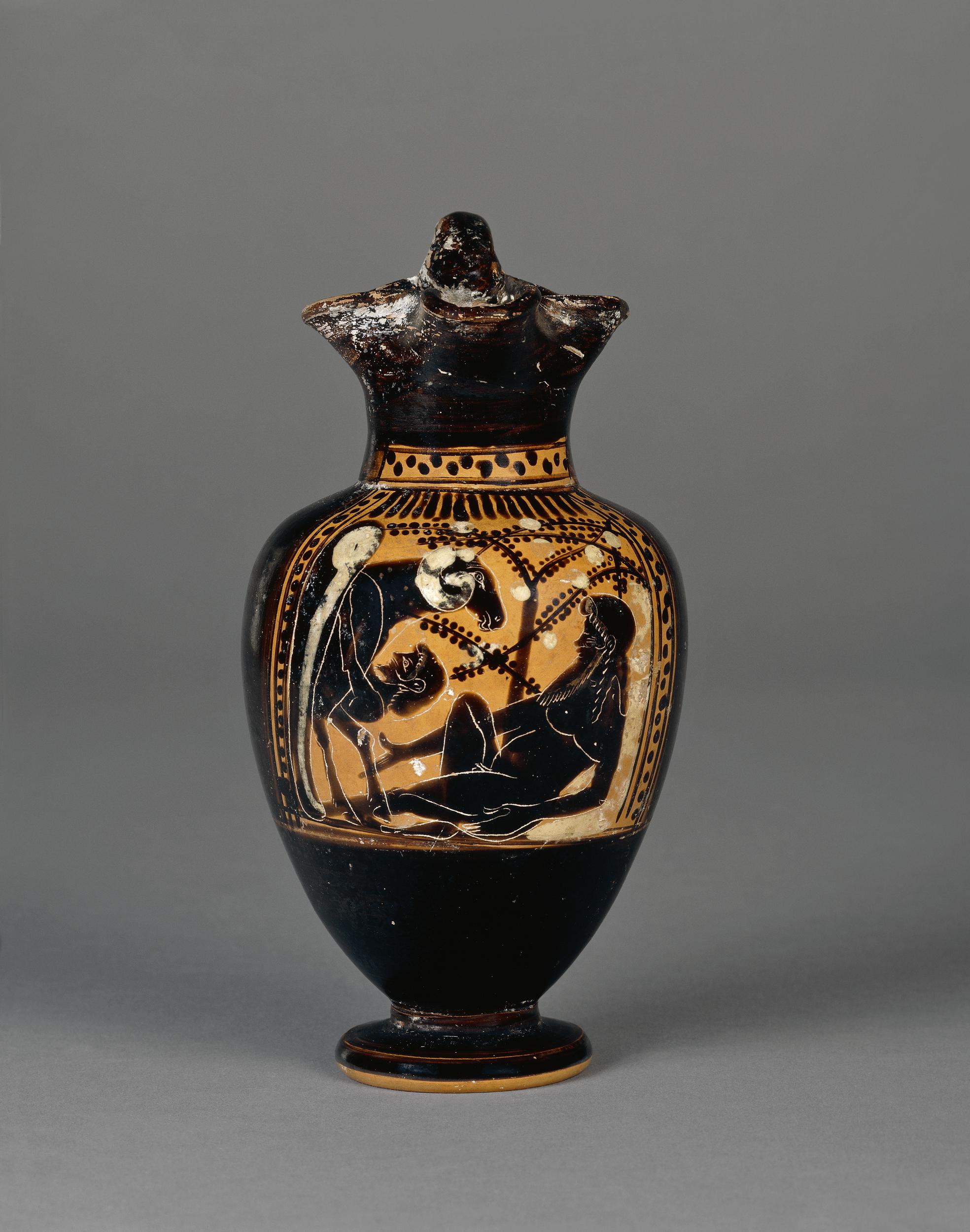
In Homer, the effect is usually constructed differently. The poet can withdraw and allow the situation itself to produce the comedy. Odysseus tells Polyphemus that his name is “Nobody”. He turns the Greek word outis, “nobody”, into the false name Outis. It is one of his most perfect acts of concealment: he does not merely adopt another identity, but erases his own.
When the blinded Polyphemus calls to the other Cyclopes for help and shouts that “Nobody” is attacking him, the deception works precisely because Odysseus has hidden behind a word that denies his own presence. The Cyclopes take the statement literally and leave.
What, told in the abstract, might sound like an almost childish pun acquires a very different depth in Homer. Odysseus has become “Nobody” through words; when Polyphemus loses his sight, that disappearance seems to become visible. The Cyclops can no longer see anyone and, while he guards the exit by feeling his rams, “Nobody” passes before him hidden beneath one of them. The scene represented on this vessel almost literally concentrates the play between name, deception and concealment:
Something similar happens when Hephaestus catches Ares and Aphrodite. He traps them, calls the gods to look at the lovers, and lets them laugh, comment on what has happened and even joke about the situation.
In Hesiod we hear very clearly the poet who ironises, rebukes or passes judgement. In Homer, the narrator often constructs the situation and steps back so that the characters themselves produce the effect.
Hesiod makes irony audible in his voice; Homer tends to turn it into a scene
What does Hesiod allow us to see in Homer?
Sección titulada «What does Hesiod allow us to see in Homer?»Hesiod does not mention Homer in the works that survive, and nothing requires us to imagine that he was writing against a particular poet called Homer. Similarities of language and formula may reflect a shared poetic tradition and related formulaic inheritance. Nor do we know with certainty which of the two should be placed earlier in time.
That is why “Homer through Hesiod’s Eyes” should not become the reconstruction of a dialogue that may never have existed. We construct that dialogue ourselves by placing the poems side by side. And what it illuminates above all is Homer.
Seen through Hesiod, Homer’s sea becomes more narrative; war, more inward; the gods, more theatrical; monsters, more episodic; Hades, more human. Even the poet’s absence becomes perceptible. Two authors can use the same hexameter and a related poetic language and yet produce different worlds because they seek different things from poetry.
Perhaps that is why tradition eventually imagined them competing in Euboea. Not because we have reason to believe that such a contest took place, but because it brought face to face two extraordinary ways of using the same inheritance. The contest may be fictitious; the contrast it represents is not.
Hesiod orders the world so that he can explain it. Homer sets it in motion so that he can tell it.