Part III. How Did the Armies of the Iliad Fight?
Homer's Armies: I. Organisation · II. The Battlefield · III. Combat
The Iliad is full of encounters between heroes. Achilles, Hector, Ajax and Diomedes stand at the centre of the narrative, and their exploits can give the impression of a war fought through a succession of individual duels. Yet Homer also describes groups of warriors advancing together, commanders deploying their men, chariots crossing the battlefield and combatants protecting one another.
How did they prepare for battle? What weapons did they use, and how did they employ them? Did they fight in organised formations, or did each warrior act independently? The poems do not provide a complete account of military tactics, but they contain enough episodes to examine how Homer imagined a battle unfolding.
Before the Fighting
Sección titulada «Before the Fighting»Before the battle begins, Nestor arranges his men in a particular order. He places the chariot warriors at the front, a large body of resolute infantry behind them and the more reluctant men in the middle, so that they cannot avoid the fighting. He also warns those using chariots not to charge recklessly ahead or withdraw on their own, but to maintain their positions in relation to their companions (Iliad 4.297–309).
The scene shows that combatants did not always enter battle as a disorganised crowd. Nestor distinguishes between those who use chariots and those who fight on foot, positions his men and gives instructions intended to maintain cohesion. We do not know whether all contingents followed a similar arrangement, but the episode reveals a concern for order and coordination in battle.
Organisation could also be adapted to circumstances. As the Trojans prepare to assault the Achaean camp, Polydamas warns that the ditch makes it dangerous to advance with the chariots. Hector accepts his advice and orders the warriors to proceed on foot, leaving the horses in the care of their chariot drivers (Iliad 12.50–107). The terrain could therefore force an army to change the way it fought.
Weapons: How They Were Made and Used
Sección titulada «Weapons: How They Were Made and Used»The spear is one of the weapons most frequently used in the battles of the Iliad. It consisted of a wooden shaft, often made of ash in descriptions of the great heroes, fitted with a metal point. Warriors could throw it at their enemies or use it to wound them at close range. Homer describes spears of various kinds, although the poem does not always allow us to distinguish between them precisely or establish their dimensions.
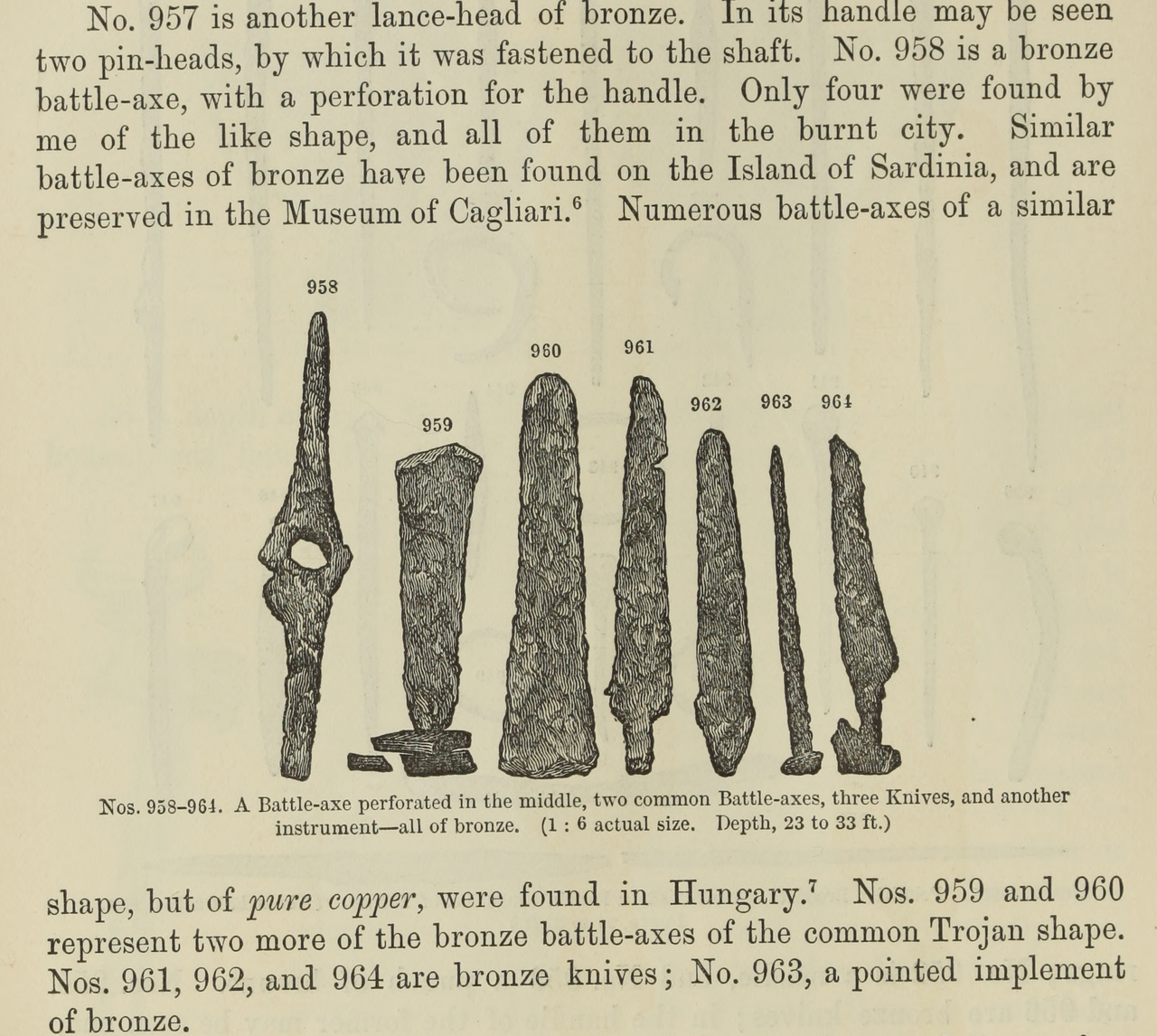
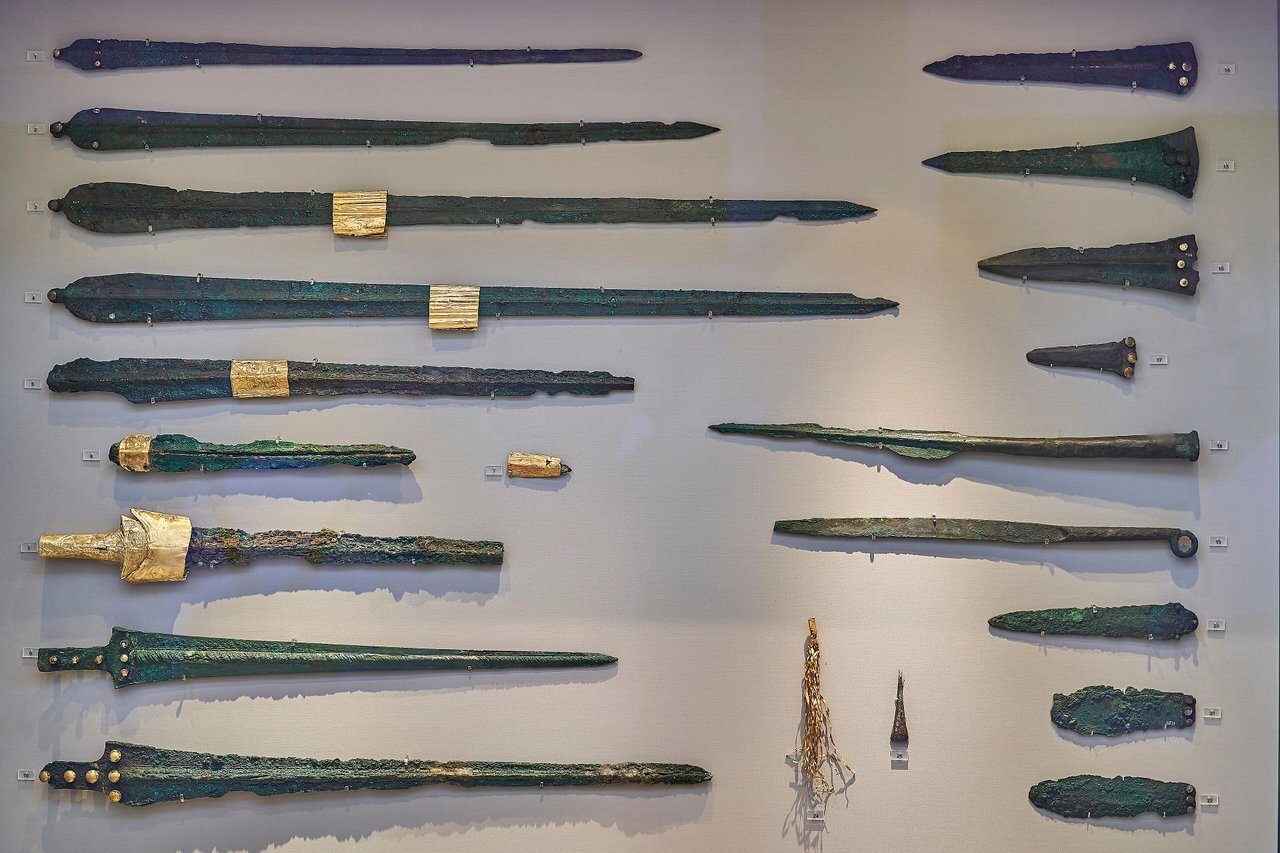
The sword was another common weapon. It was used in close combat, both for cutting and thrusting, depending on its shape and the circumstances. Archaeological finds from the Bronze Age reveal several types of bronze sword, but we cannot directly identify every sword mentioned by Homer with a particular archaeological type. The equipment described in the poem brings together elements from different traditions and periods.
Bows allowed warriors to attack from a distance. Teucer, for example, shoots while sheltered behind the great shield of Ajax (Iliad 8.266–272). The Locrians use bows and woven slings to harass their enemies with missiles, while other combatants fight at closer quarters (Iliad 13.712–722). These scenes show that not all warriors carried the same weapons or performed the same roles.
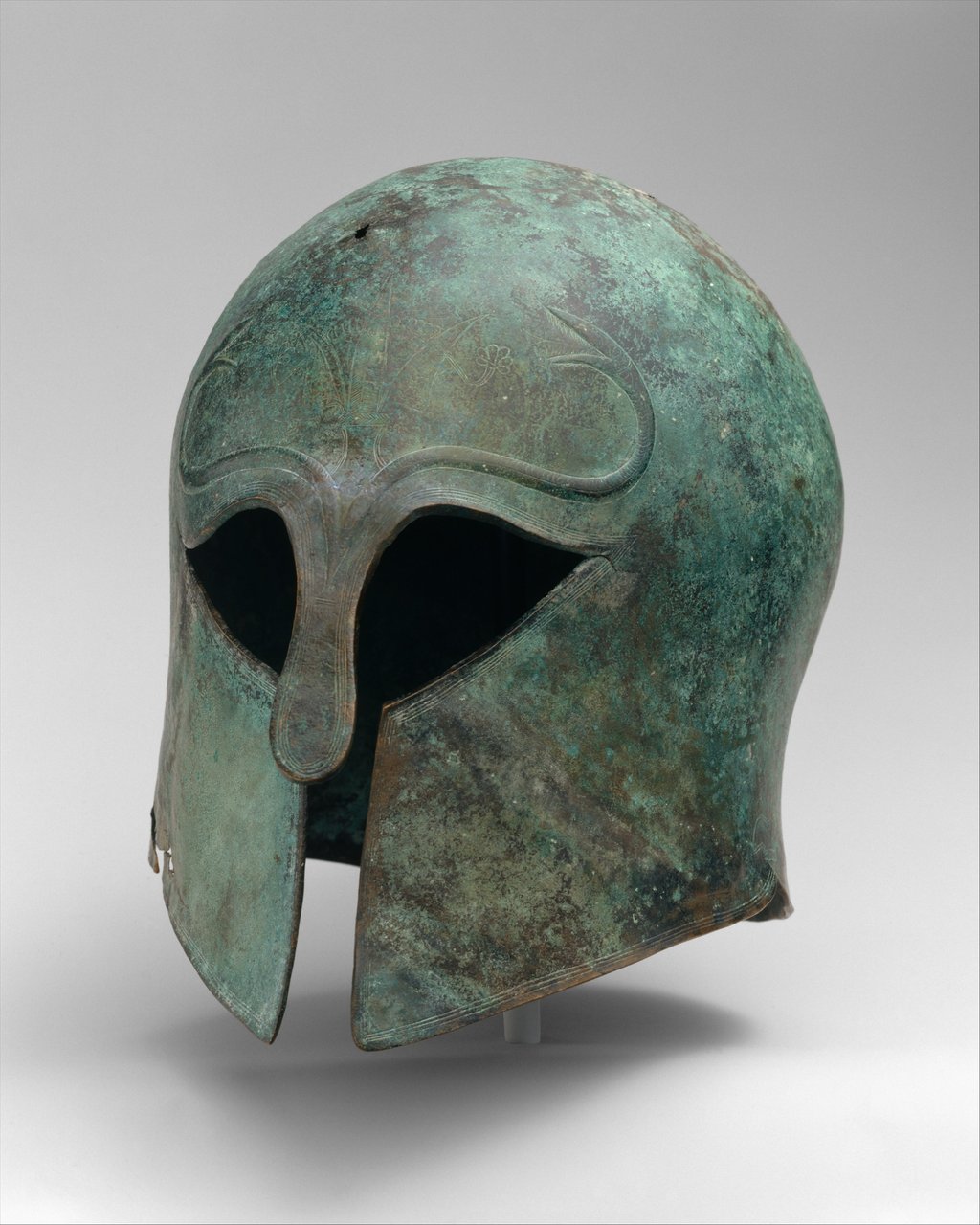
A warrior's protection depended on his equipment. Shields could stop or deflect blows and missiles; helmets protected the head, cuirasses covered the torso, and greaves protected the lower legs. Their shapes and materials varied. Homer describes Ajax's shield as having seven layers of oxhide with an outer layer of bronze (Iliad 7.219–223). This is a particular description and should not be taken to represent every shield mentioned in the poem.
Stones Thrown by Hand and Sling Projectiles
Sección titulada «Stones Thrown by Hand and Sling Projectiles»Not all weapons were specially made for combat. In several encounters, heroes pick up stones from the ground and throw them directly at their opponents. Diomedes wounds Aeneas with a stone (Iliad 5.302–310). During their duel, Hector hurls a large stone at Ajax's shield; Ajax responds by throwing an even larger one, knocking Hector to the ground (Iliad 7.264–272). Homer attributes extraordinary strength to these heroes, enabling them to lift and throw stones far beyond the capacity of an ordinary man.
Stones were also used in attacks on fortifications. In Book 12 of the Iliad, warriors on both sides hurl them during the assault on the Achaean defences. The sling, by contrast, allowed warriors to launch projectiles over greater distances. The Locrians, for example, fought with bows and woven slings, harassing the Trojans from positions behind the front line while other warriors fought at close quarters (Iliad 13.712–722). These scenes show that missiles could play an important role both in assaults on fortified positions and in battles on open ground.
The Chariot: Warrior, Driver and Horses
Sección titulada «The Chariot: Warrior, Driver and Horses»Chariots play an important role in the battles of the Iliad. They are generally drawn by two horses and carry two men: a driver who controls the horses and a warrior who wields the weapons. Patroclus, for example, enters battle in Achilles' chariot, driven by Automedon (Iliad 16.145–154). Later, Automedon needs the help of another warrior because he cannot control the horses and fight at the same time (Iliad 17.456–481).
Chariots allowed warriors to move quickly across the battlefield, approach the enemy, pursue opponents or retreat. In many scenes, the warrior steps down to fight on foot while the driver remains with the horses. Yet the chariot could also be involved directly in combat. Its effectiveness depended on the skill of the driver, the behaviour of the horses and the conditions of the terrain. The ditch protecting the Achaean camp illustrates how an obstacle could prevent chariots from advancing.
Although horses feature prominently in the Iliad, Homer does not describe organised units of mounted cavalry. Warriors are primarily associated with chariots rather than fighting on horseback. The Greek term hippêes, which in later periods could refer to mounted horsemen, is also used in the poem for men who fight from chariots.
This does not mean that horse riding was unknown. A disputed episode occurs during the night raid by Odysseus and Diomedes on the camp of the Thracian king Rhesus (Iliad 10.498–530). After seizing his horses, the heroes return towards the ships in a passage that some interpreters regard as an allusion to riding them. Others consider the poem's language compatible with the use of a chariot. In either case, the episode does not establish the existence of organised cavalry contingents.
Animals and the Needs of an Army
Sección titulada «Animals and the Needs of an Army»Horses were essential to war chariots, but they were not the only animals accompanying armies. Mules were used to transport heavy loads, such as the timber the Achaeans gather to build Patroclus' funeral pyre (Iliad 23.110–126). In another episode, Priam uses a mule-drawn wagon to carry Hector's ransom, while he himself travels in a horse-drawn vehicle (Iliad 24.265–280).
Oxen, sheep and goats provided meat and were also used in sacrifices. Supplying men and animals required food and other provisions. In Book 8, Hector orders the horses to be fed and livestock, bread and wine to be brought from the city to sustain his warriors through the night (Iliad 8.489–553). Caring for animals was therefore part of the logistical demands of an army and affected its ability to move and fight.
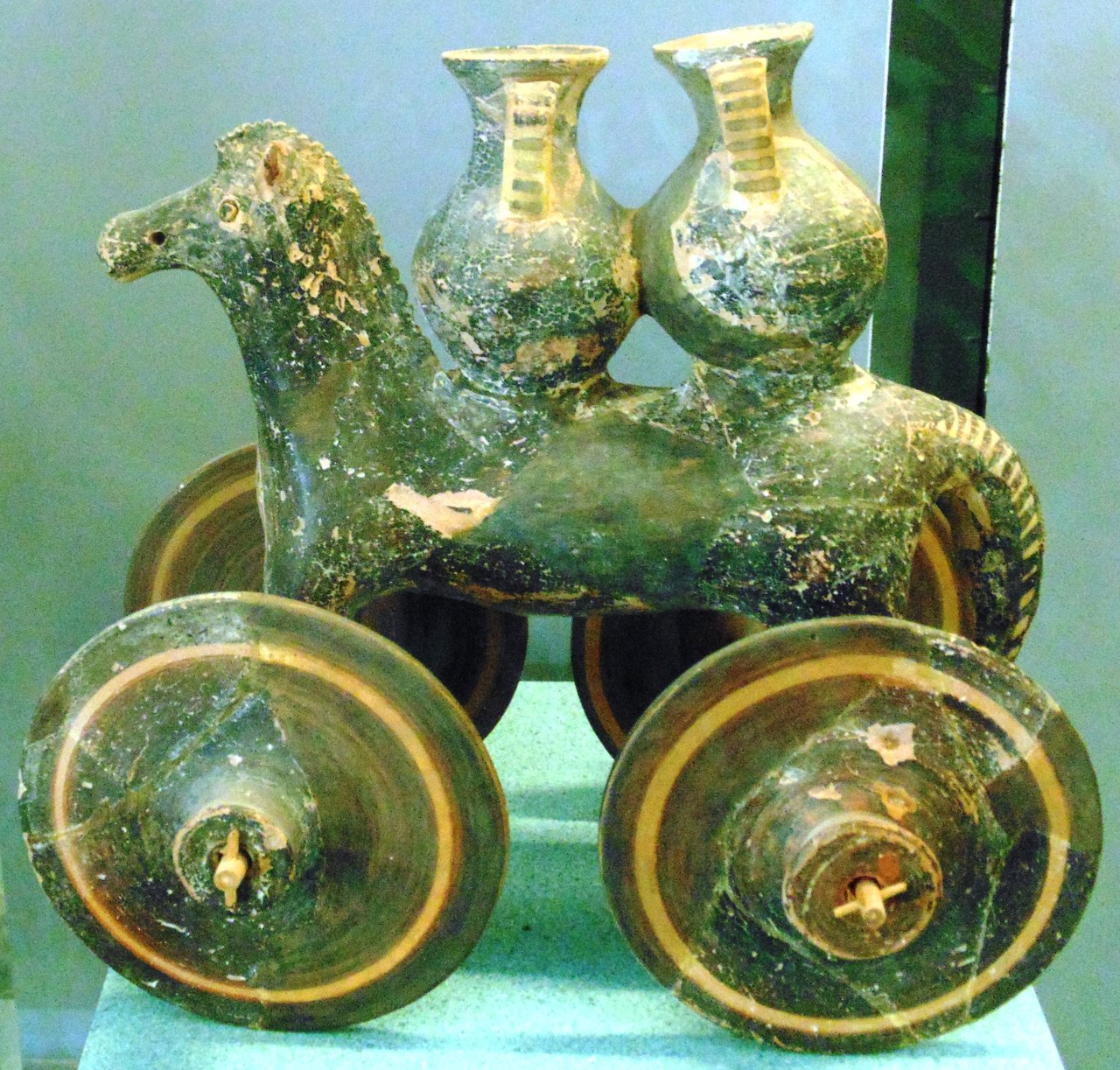
Feeding horses could present serious difficulties. Pandarus says that he left his chariots and horses at home because he feared he would not find enough fodder to maintain them during the expedition (Iliad 5.192–203). His decision shows that possessing horses and chariots was not enough to use them on campaign: their feeding and upkeep also had to be secured.
When Warriors Met: Homer’s ‘Phalanxes’
Sección titulada «When Warriors Met: Homer’s ‘Phalanxes’»The Iliad also describes groups of warriors fighting in close formation. One of the clearest examples comes in Book 13, when the Achaeans prepare to resist a Trojan offensive against their positions. Chosen warriors gather around the two Ajaxes, forming a compact defence against Hector and his men.
Around the two Ajaxes, strong phalanxes had been drawn up, so well ordered that neither Ares nor Athena, leader of armies, could have found fault with them. There stood the finest warriors, chosen to resist the Trojans and godlike Hector.
Spear stood beside spear and shield beside shield, closing the formation. Shield pressed against shield, helmet against helmet, and man against man. The horsehair crests of their gleaming helmets brushed together as the warriors lowered their heads, so closely were they packed.
The spears shook in the powerful hands of the fighters, whose resolve remained firm and who were eager for battle.
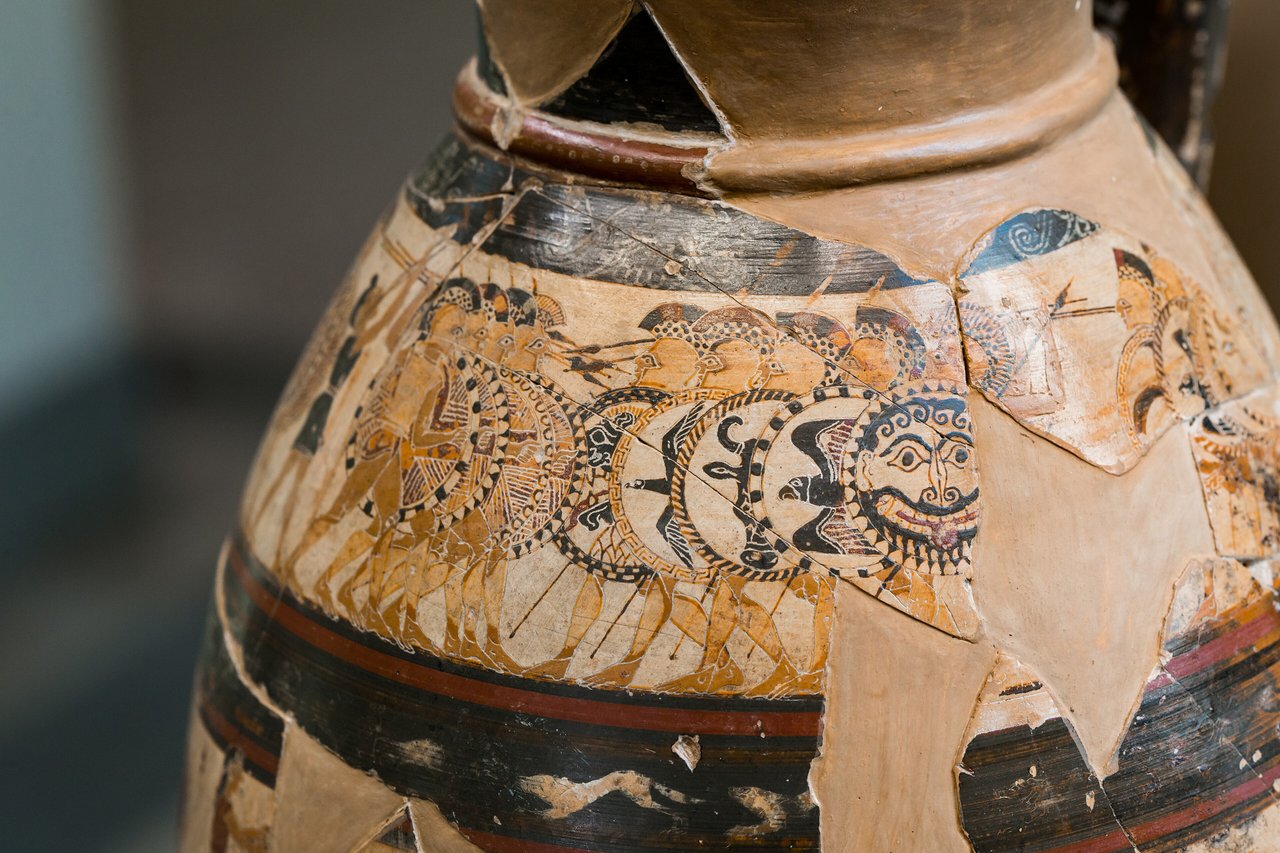
The Greek text uses phálanges, the plural of phálanx, a term that can describe groups of warriors drawn up for battle. Here Homer describes a compact defensive formation, with men standing so close together that their shields and helmets touch. Yet he does not specify how many ranks these groups comprised or how they manoeuvred during battle. Although the same word would later designate the hoplite phalanx, we cannot assume that the two forms of fighting were identical.
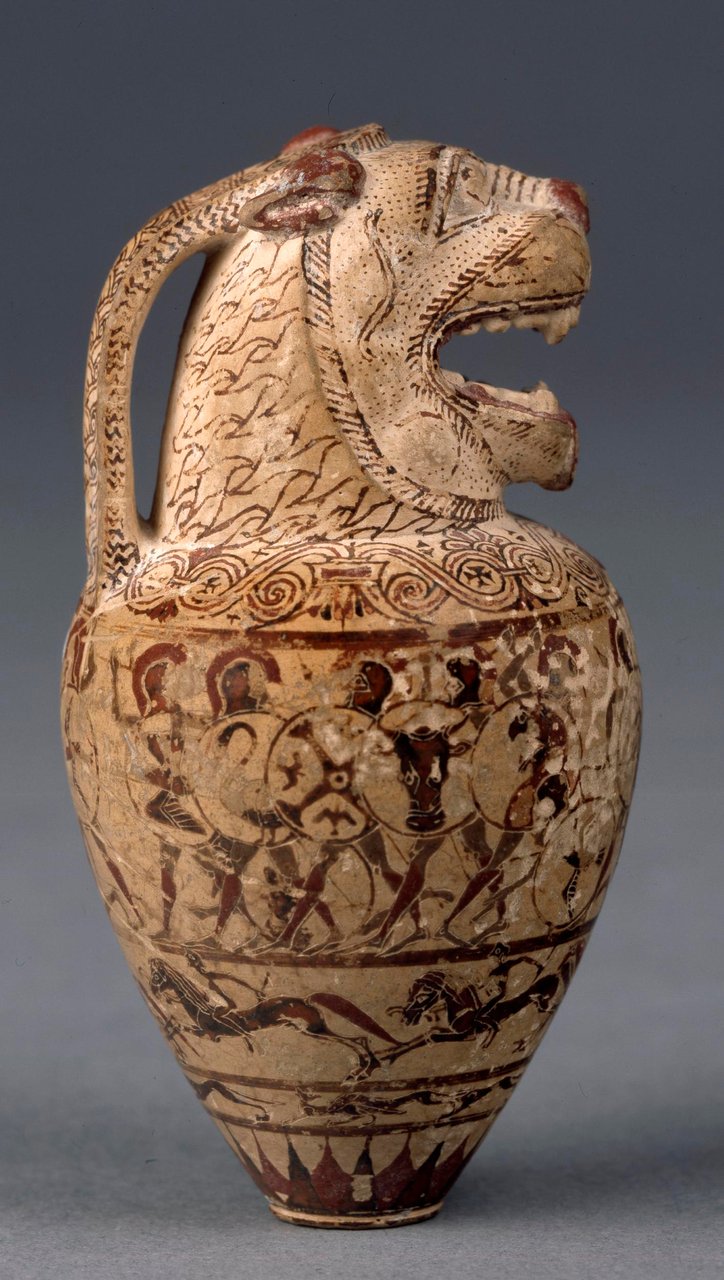
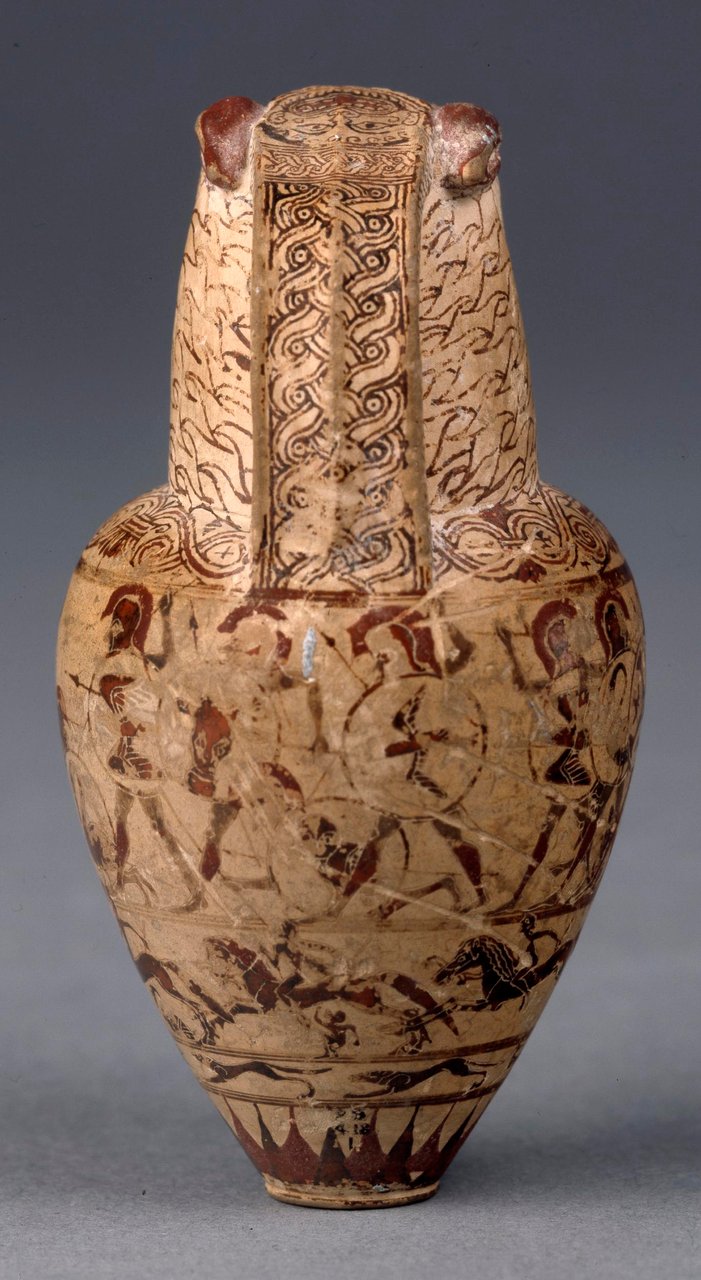
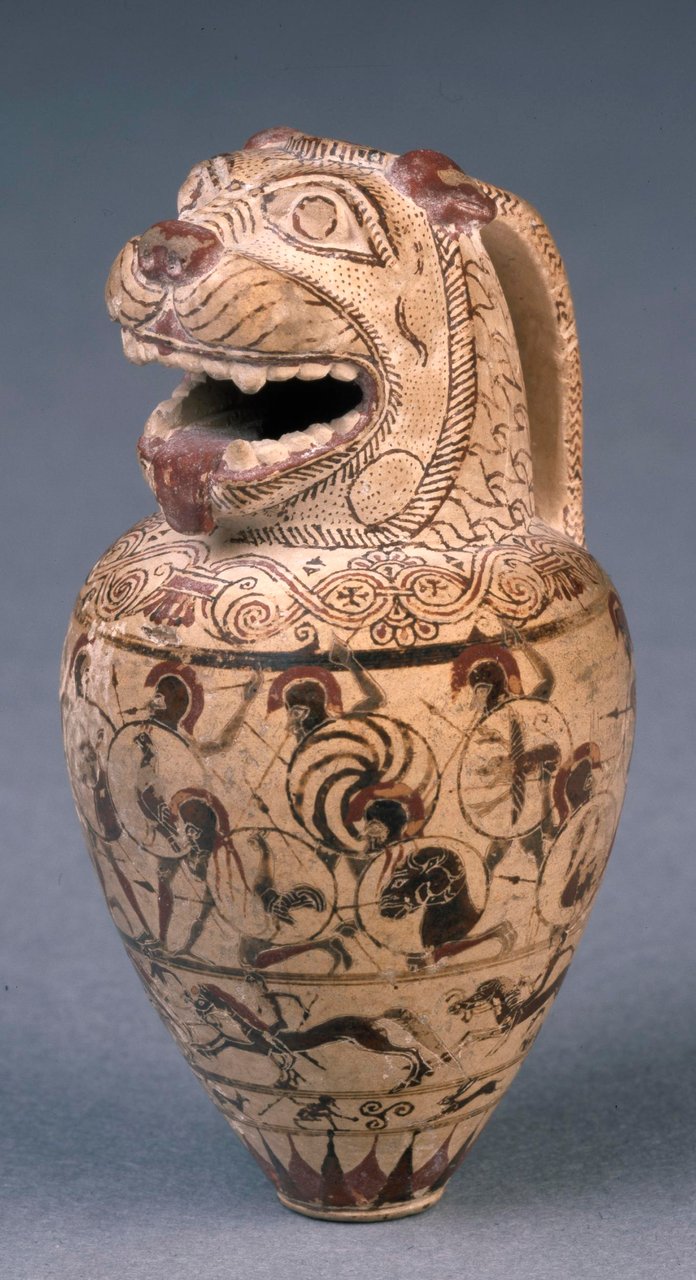
A similar description appears when Achilles prepares the Myrmidons to enter battle under Patroclus' command. Homer compares their close formation to the stones of a well-built wall, fitted tightly together to withstand the force of the wind. He also describes shields and helmets touching as the men advance together (Iliad 16.211–217).
Both scenes show warriors maintaining a compact formation, whether to withstand an attack or prepare to engage the enemy. The proximity of the men and their weapons suggests a concern for group cohesion, although it does not allow us to reconstruct precisely how these formations manoeuvred in battle.
The Hero and the Troops: Duels Amid Battle
Sección titulada «The Hero and the Troops: Duels Amid Battle»The Iliad gives great prominence to encounters between heroes. Some duels are arranged before both armies, as in the case of Paris and Menelaus, whose single combat is intended to settle the dispute over Helen (Iliad 3). Others arise in the midst of battle, when two warriors encounter one another and fight. The confrontation between Achilles and Hector (Iliad 22) focuses attention on the two protagonists, but this does not mean that the war consisted of a succession of individual duels.
The poem also contains episodes of aristeía, a term referring to a hero's outstanding performance in battle. In these episodes, a warrior distinguishes himself through courage and a series of victories over different opponents, as Diomedes does in Book 5 of the Iliad. Homer recounts his deeds, identifies his enemies and often gives their names and genealogies, while other combatants receive little attention.
This distinction is important when reading the poem. The Iliad describes collective clashes and warriors fighting in groups, yet its narrative concentrates especially on the exploits of the great heroes. Individual encounters therefore occupy a central place in the story, even though they were not the only form of combat.
Assaulting, Holding Ground, Pursuing and Retreating
Sección titulada «Assaulting, Holding Ground, Pursuing and Retreating»Battles in the Iliad involve more than two groups of warriors clashing. Fighters advance, encounter resistance, attempt to break through enemy positions and retreat when the pressure becomes too great.
During the Trojan assault on the Achaean camp, the attackers leave their chariots at the ditch and continue on foot. While some approach the gates and try to force their way through, the defenders hold their positions on the wall, using spears and stones. Hector smashes the fastenings of a gate with an enormous stone, allowing the Trojans to enter the enclosure (Iliad 12.445–471). The episode shows different forms of combat within a single operation: advancing towards a defended position, fighting from an elevated fortification and assaulting a fortified entrance.
Another situation unfolds in Book 17, during the prolonged struggle over Patroclus' body. Menelaus attempts to protect it, but Hector seizes his armour. Achaeans and Trojans fight repeatedly around the body, advancing either to recover it or to prevent the enemy from carrying it away. Warriors come to the aid of their companions and try to hold their positions as the fighting shifts back and forth.
These episodes show that battle demanded more than individual courage. Men had to support one another, make use of advantageous positions and respond to enemy movements. Fighting could become a succession of advances, resistance and retreats, without every participant fighting in the same way.
A War That Extended Beyond the Plain
Sección titulada «A War That Extended Beyond the Plain»The war described by Homer was not confined to the area beneath Troy's walls. Achilles claims to have sacked twelve cities by sea and eleven more by land, seizing their wealth and handing much of the booty to Agamemnon (Iliad 9.328–332). Among the cities captured by Achilles and mentioned elsewhere in the poem are Thebe under Plakos and Lyrnessus. These references show that the war included attacks on settlements and plundering expeditions, although they do not allow us to reconstruct those campaigns in detail or establish the political ties between all these places and Troy.
Raids could also be directed against contingents allied with the enemy. In Book 10, Odysseus and Diomedes enter the camp of the Thracians, allies of the Trojans, at night. They kill their king, Rhesus, and several of his men before seizing his horses (Iliad 10.469–514). The operation takes place near Troy, not in Thrace itself.
The Iliad thus presents a war in which major battles were accompanied by attacks on other cities, night raids, the capture of animals and plundering. The confrontation between the two principal armies was only part of the military activity described in the poem.
What Sort of Battle Can We Reconstruct?
Sección titulada «What Sort of Battle Can We Reconstruct?»The battle scenes in the Iliad show preparations, orders, chariots, missiles, groups of warriors, hand-to-hand fighting, assaults on fortifications and retreats. They also reveal the importance of cooperation between combatants, the experience of commanders and the difficulties posed by the terrain. Yet they do not provide a systematic account of military tactics or allow us to reconstruct a single, uniform way of fighting.
Their interest lies precisely in this variety. Behind the duels and heroic exploits, Homer describes very practical problems: how to assemble and organise men, how to approach the enemy, protect companions, use different weapons and respond when the course of battle changes.
The Iliad is not a military manual, but neither are its battles simply a succession of duels. We find warriors acting individually and groups fighting together, decisions made by commanders and collective movements, initiatives that succeed and others that fail. Taken together, these scenes, rather than any single formation or tactic, bring us closer to warfare as the poet imagined it.