A Word to Seafarers
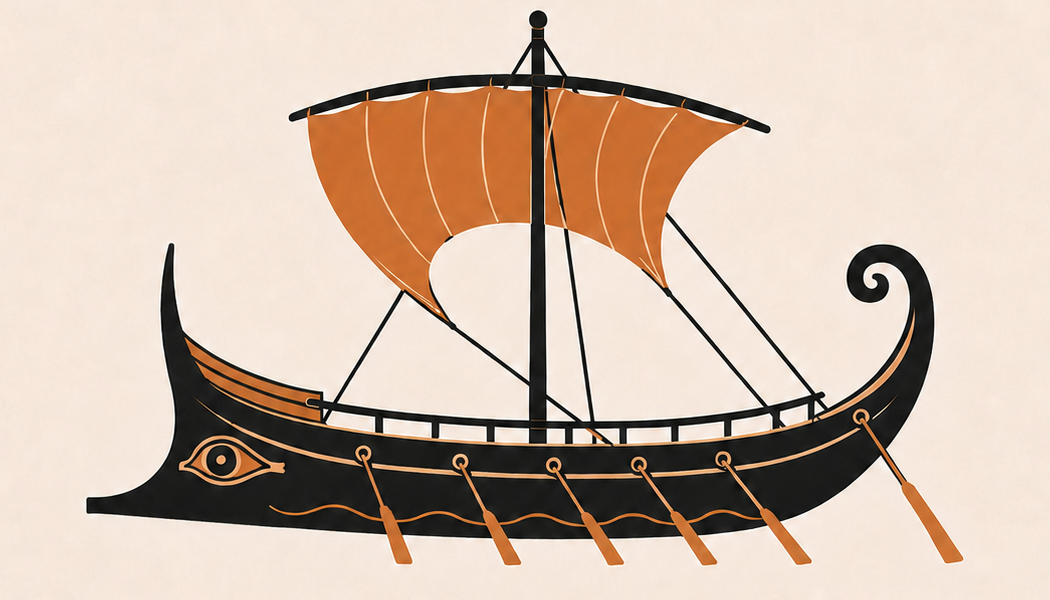
Homer’s people did not navigate by maps. Before them stretched a single sea of many shades: grey, violet, wine-dark, shrouded in mist or swept by waves. They followed paths that left no visible trace, guided by coastlines, islands, stars, winds and even the will of the gods, aboard the swift black ships that Penelope calls “horses of the sea” (Odyssey 4.708–709).
Homer does not set out to teach us how to navigate. In his poems, the sea is far more than the setting for a voyage: it separates people from their homes, exposes them to unexpected dangers and opens the way to unknown lands. It is where a journey becomes an adventure.
Did Homer Know Several Seas?
Sección titulada «Did Homer Know Several Seas?»Not in the modern sense. Homer knows many coasts, islands and routes, but he does not divide the Mediterranean into the geographical seas marked on our maps today. Ithaca is surrounded by the broad sea; so is Circe’s island. Between them lie beaches, harbours, headlands and places where ships can come ashore.
Homeric Greek has several words for the sea. Their meanings overlap, though each can bring particular aspects into focus:
- θάλασσα (thálassa): the sea, particularly as a visible, recognisable expanse of water.
- πόντος (póntos): the open sea, evoking the voyage across it, distance and danger.
- ἅλς (háls): salt and the salt sea; a word that can evoke the very substance of the water.
- πέλαγος (pélagos): the broad expanse of the sea, far from shore.
Ὠκεανός (Ōkeanós, “Ocean”) occupies a different place. In the Homeric view of the world, it is the immense stream that encircles the earth and marks the outer limits of the known world.
These words do not form a geographical classification. They are different ways of naming and experiencing the sea.
Even when Homer uses the plural, we need not imagine separate seas. In Odyssey 5.335, we find ἁλὸς ἐν πελάγεσσι, “amid the expanses of the sea”, in a reference to Ino-Leucothea, once a mortal woman and now a sea goddess. She comes to Odysseus’ aid as his raft is breaking apart and gives him a protective veil to help him survive the waves. The plural πελάγεσσι draws no boundaries between seas: it evokes the vast reaches of the water.
For Homer’s seafarers, there were many shores and many possible routes, but all belonged to one vast expanse of sea.
A World of Shores
Sección titulada «A World of Shores»The Odyssey is, in many ways, a poem that moves from shore to shore. Its characters reach a beach, haul their ship ashore, eat, sleep, look for water, welcome or fear the inhabitants of the land, and then put to sea again.
When Telemachus leaves the coast of Pylos and travels overland to Sparta, he exchanges his ship for a chariot and horses. On land there are roads and horses; at sea, pathways and ships.
What Are the Pathways of the Sea?
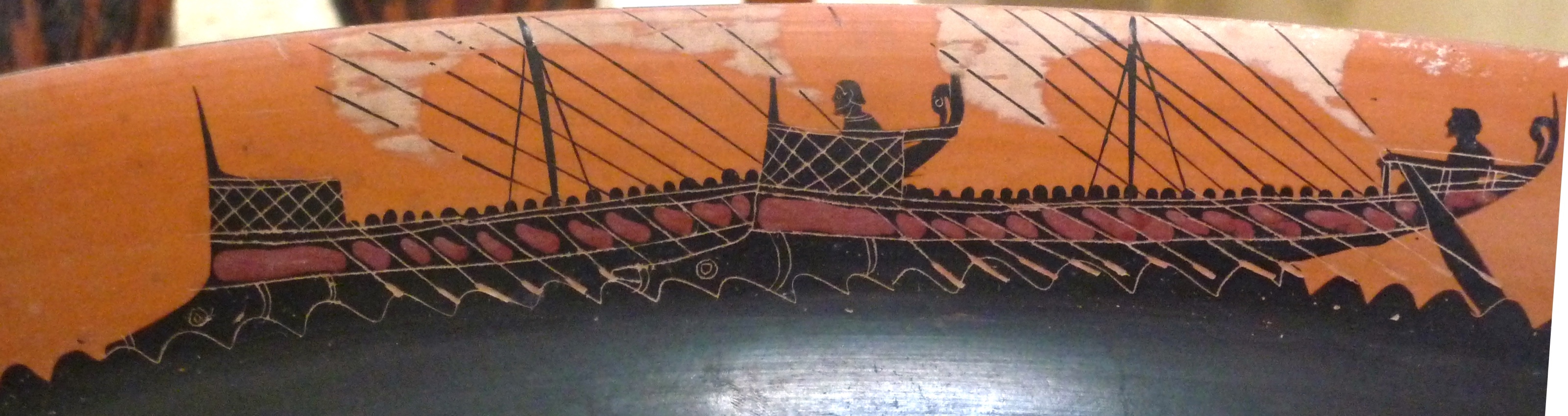
Sección titulada «What Are the Pathways of the Sea?»Homer uses the expression ὑγρὰ κέλευθα (hygrà kéleutha), literally “wet pathways”, for the routes ships follow across the sea. We hear it even from Polyphemus, when he asks Odysseus and his companions where they have come from (Odyssey 9.252). These are paths that leave no visible trace, known to those who can read the coastlines, islands, the position of the sun, the stars and the behaviour of the winds.
Homer does not chart the world as we do. Direction is expressed through sunrise and sunset, the winds, the stars and the relative positions of coasts and islands. Seafarers find their way by observing these signs and drawing on their knowledge of familiar routes.
The episode of Aeolus illustrates this particularly well. After leaving his island, Odysseus sails for nine days and nine nights; on the tenth, he can already make out Ithaca and the smoke rising from his homeland (Odyssey 10.28–30). The poem conveys the duration of the voyage and the emotion of drawing near, not a measurable distance or a course we can plot with certainty on a Mediterranean chart. When his companions open the bag of winds, the journey is undone, and the winds drive them back to Aeolia.
Nor was night sailing unknown. Calypso tells Odysseus how to navigate by the stars and instructs him to keep the Bear on his left (Odyssey 5.270–277). Later, the Phaeacian ship speeds onward while Odysseus sleeps in the stern. These two scenes reveal different aspects of the poem’s familiarity with seafaring: in one, the hero must guide his own craft; in the other, he entrusts his homecoming to extraordinary sailors.
The stars, the winds and knowledge of the coasts make it possible to follow these invisible pathways. We need not imagine compasses or nautical charts to understand how Homer conceived of a voyage by sea.
See also: Homer Through Hesiod’s Eyes, section “The Sea: Route, Season and Risk”.
How Do the Winds Govern a Voyage?
Sección titulada «How Do the Winds Govern a Voyage?»The names of the winds are part of the language through which Homer describes direction, time and danger:
- Boreas (north),
- Zephyrus (west),
- Notus (south),
- Eurus (east).
These are the four principal winds of the Homeric world.
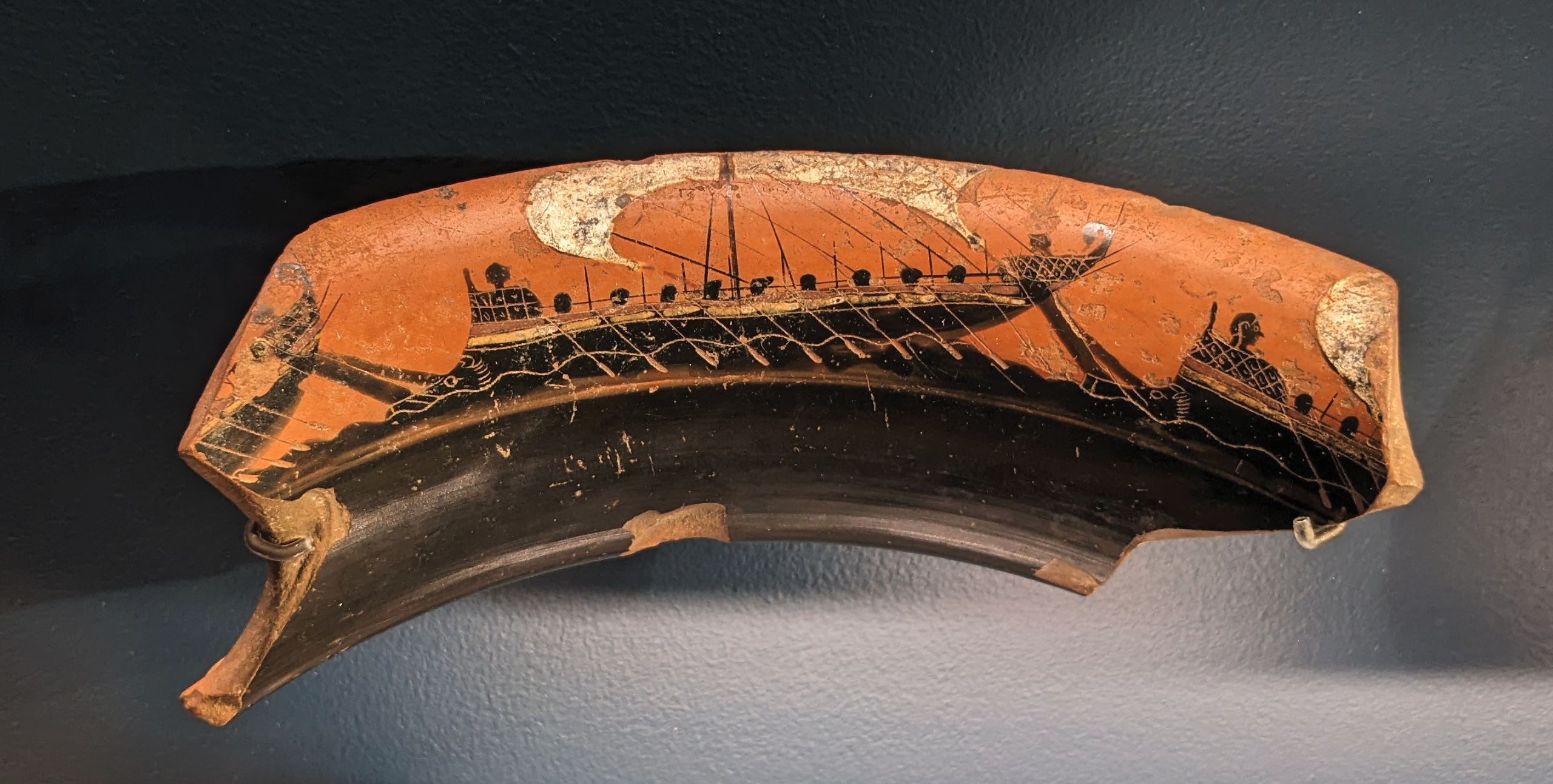
A favourable wind opens a route; a contrary wind forces sailors to wait, row harder or change course; winds blowing from different directions can make it impossible to hold a steady course. Waiting, then, is part of seafaring.
Telemachus leaves Ithaca with a favourable wind sent by Athena (Odyssey 2.420–423). On Aeolia, Aeolus confines the adverse winds and releases the one intended to carry Odysseus home (Odyssey 10.19–27). In Book 5, by contrast, Poseidon gathers and unleashes conflicting winds over the sea. Odysseus’ raft is eventually broken apart by the waves, leaving him exposed to the swell, the currents and an unfamiliar coast (Odyssey 5.282–387).
What Did the Homeric Sea Look Like?
Sección titulada «What Did the Homeric Sea Look Like?»Homer does not give the sea a single appearance. His words evoke colours, light, movement and expanses that change from scene to scene:
| Greek expression | English rendering | What it evokes |
|---|---|---|
| οἶνοψ πόντος | The wine-dark sea | Colour, appearance |
| ἰοειδής | Violet, violet-hued | Colour |
| πολιός | Grey, greyish | Colour, light |
| ἠεροειδής | Mist-shrouded, veiled in mist | Visibility |
| ἰχθυόεις | Teeming with fish | Marine life |
| ἀτρύγετος | Barren, yielding no harvest | An uncultivatable expanse |
| πολύκλυστος | Wave-beaten | Waves, surf |
| κυμαίνων | Undulating, stirred by waves | Movement |
| ἀπείρων | Boundless, without limits | Extent |
The celebrated “wine-dark sea” need not describe a literally red sea. The expression may evoke its surface, the reflections and shifting gleam of the waves rather than a precise colour. In any case, it reminds us that the words Homer uses to describe the sea do not always correspond to our modern categories of colour.
Something similar is true of the “violet”, “grey” or “mist-shrouded” sea. Each expression brings out a different quality, depending on the light, the weather or the state of the water. These are not fixed colours, but ways of describing what the sea offers to the eye, whether from the stillness of a beach or from a ship moving among the waves.
It is equally revealing that the sea can be “teeming with fish” and yet “barren”. There is no necessary contradiction: it contains life, but cannot be cultivated like the land.
The poem also evokes the broad back of the sea, its great depths, its foam and its deep roar. Such images allow us to sense its vastness, depth, power and even its voice. They do not distinguish one maritime region from another, but express different experiences of the same immensity.
These are different ways of looking at a single sea, whose appearance changes with the light and wind, with the movement and texture of its surface, and with the gaze of those who cross it. Homer’s sea is never uniform: it can be beautiful, immense and rich in life, yet also inhospitable and threatening.
The Sea as a Path and a Destiny
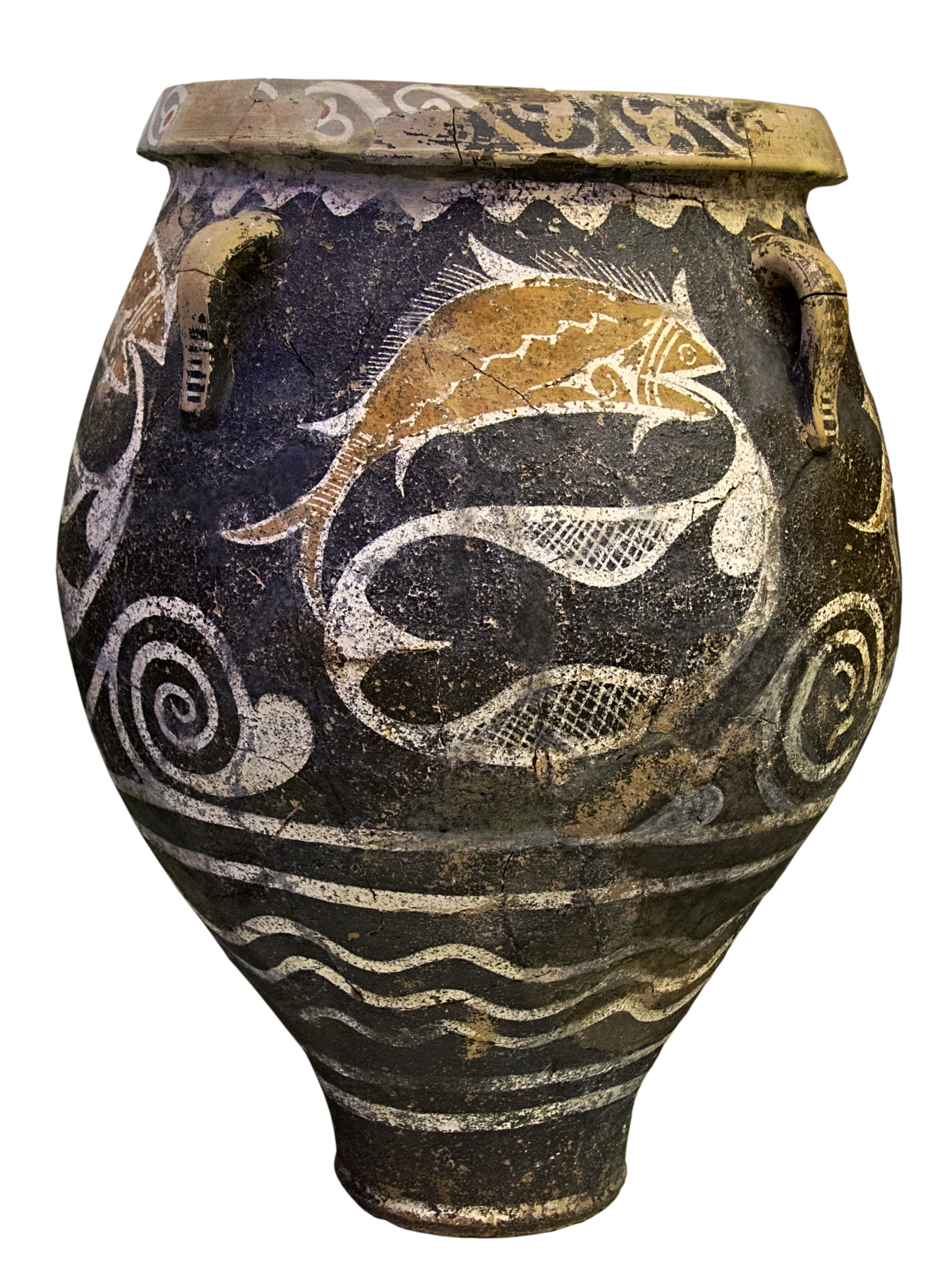
Sección titulada «The Sea as a Path and a Destiny»For Odysseus, the sea is the path home and, at the same time, the force that delays his return. The same waters that allow sailors to reach a shore can carry them away from it; winds that favour departure can turn a voyage into a shipwreck. Across this single, ever-changing expanse, Homer sets encounters, losses and hopes.
But what were the ships that followed these pathways actually like? Their forms, their rowers and the traces they have left in the archaeological record deserve a closer look.
See also: “What Were Homer’s Ships Like?”
Sources and Method
Sección titulada «Sources and Method»Literary sources. Homer, Iliad and Odyssey, especially Odyssey 2.420–423 (Athena sends a favourable wind for Telemachus’ departure), 4.708–709 (ships as “horses of the sea”), 5.270–277 and 282–387 (navigation by the stars and the storm), 5.335 (the plural πελάγεσσι), 9.252 (ὑγρὰ κέλευθα, “wet pathways”) and 10.19–30 (Aeolus and the frustrated homecoming).
See Also
Sección titulada «See Also»- Who Was Aeolus?
- How Far Did Homer’s World Extend?
- The Voyage of Odysseus
- Homer Through Hesiod’s Eyes — “The Sea: Route, Season and Risk”
- What Were Homer’s Ships Like?