Names and Places Before Homer
Clay before the poems
Sección titulada «Clay before the poems»Long before the Iliad and the Odyssey took the form in which we know them, scribes in the Mycenaean palaces used clay tablets to record names of people and places, occupations, workers, land, livestock, inventories of goods, distributions of food, and offerings to deities. These are administrative documents, not narratives, and they offer us a glimpse into the organisation and everyday life of the Bronze Age.
The surviving Linear B tablets date mainly from the fifteenth to the thirteenth centuries BC, with some archives dating to around 1200 BC. They were found at palatial centres such as Knossos, Pylos, Mycenae, and Thebes. In 1900, the British archaeologist Arthur Evans began excavating Knossos on Crete, where he discovered numerous written documents. He distinguished two writing systems, which he named Linear A and Linear B, although neither script had yet been deciphered.
Phases of Mycenaean Civilisation
Sección titulada «Phases of Mycenaean Civilisation»| Approximate date | Phase | Main features |
|---|---|---|
| 1700–1600 BC | Early developments | Development of elites on the Greek mainland during the final Middle Helladic period. |
| 1600–1500 BC | Formation of Mycenaean culture | Shaft graves at Mycenae, rich grave goods, weapons, and prestige objects. |
| 1500–1400 BC | Expansion and consolidation | Growth of the main Mycenaean centres. Expansion of their influence across the Aegean and increasing presence on Crete. |
| 1400–1300 BC | Development of the palaces | Consolidation of major mainland centres such as Mycenae, Tiryns, and Pylos. Administrative organisation and use of Linear B. |
| 1300–1200 BC | Peak and crisis of the palatial system | Major building projects, fortifications, trade networks, and complex administrations. Crises and destruction intensify towards the end of the period. |
| Around 1200 BC | Destruction of the major palaces | Destruction or abandonment of numerous palatial centres and the gradual disappearance of their administrative systems. |
| 1200–1050 BC | Postpalatial period | Communities and Mycenaean traditions survive, but the system of great palaces no longer exists and the use of Linear B is no longer attested. |
The dates are approximate. Mycenaean civilisation did not develop uniformly across the Mycenaean world: while some centres prospered, others underwent periods of change or crisis.
Archaeologists distinguish its successive phases on the basis of material remains, especially pottery. Its origins lie chiefly in the Middle Helladic period (c. 2000–1600 BC), while the Late Helladic period (c. 1600–1050 BC) encompasses the formation, peak, and decline of Mycenaean civilisation.
Linear A and Linear B
Sección titulada «Linear A and Linear B»Linear A and Linear B are related but distinct writing systems. They share many visually similar signs, but this does not necessarily mean that those signs had the same pronunciation or that the systems recorded the same language. Linear A was used primarily in Minoan Crete; Linear B, attested both on Crete and in the Mycenaean palatial centres of mainland Greece, adapted that scribal tradition to represent an early form of Greek.
No generally accepted decipherment of Linear A has yet been achieved, and we still do not know with certainty which language it recorded.
In 1952, Michael Ventris deciphered Linear B and identified the language of its documents as Mycenaean Greek. The script was used chiefly in palace administration. Thanks to the decipherment of Linear B, the surviving tablets provide insights into that society’s economy, activities, and beliefs. Paradoxically, many of these documents have survived because the fires that destroyed the palaces accidentally baked the clay, helping to preserve them.
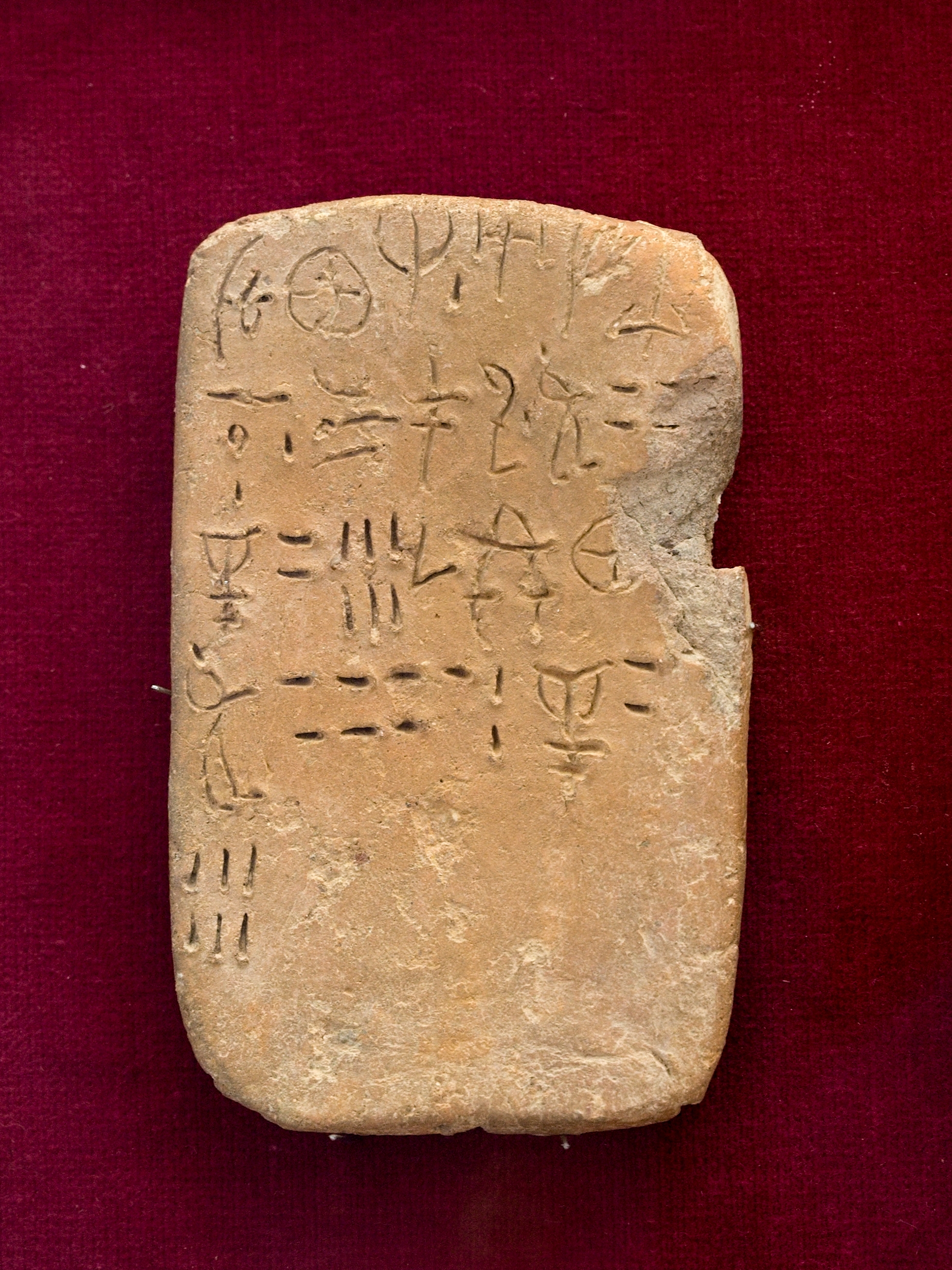
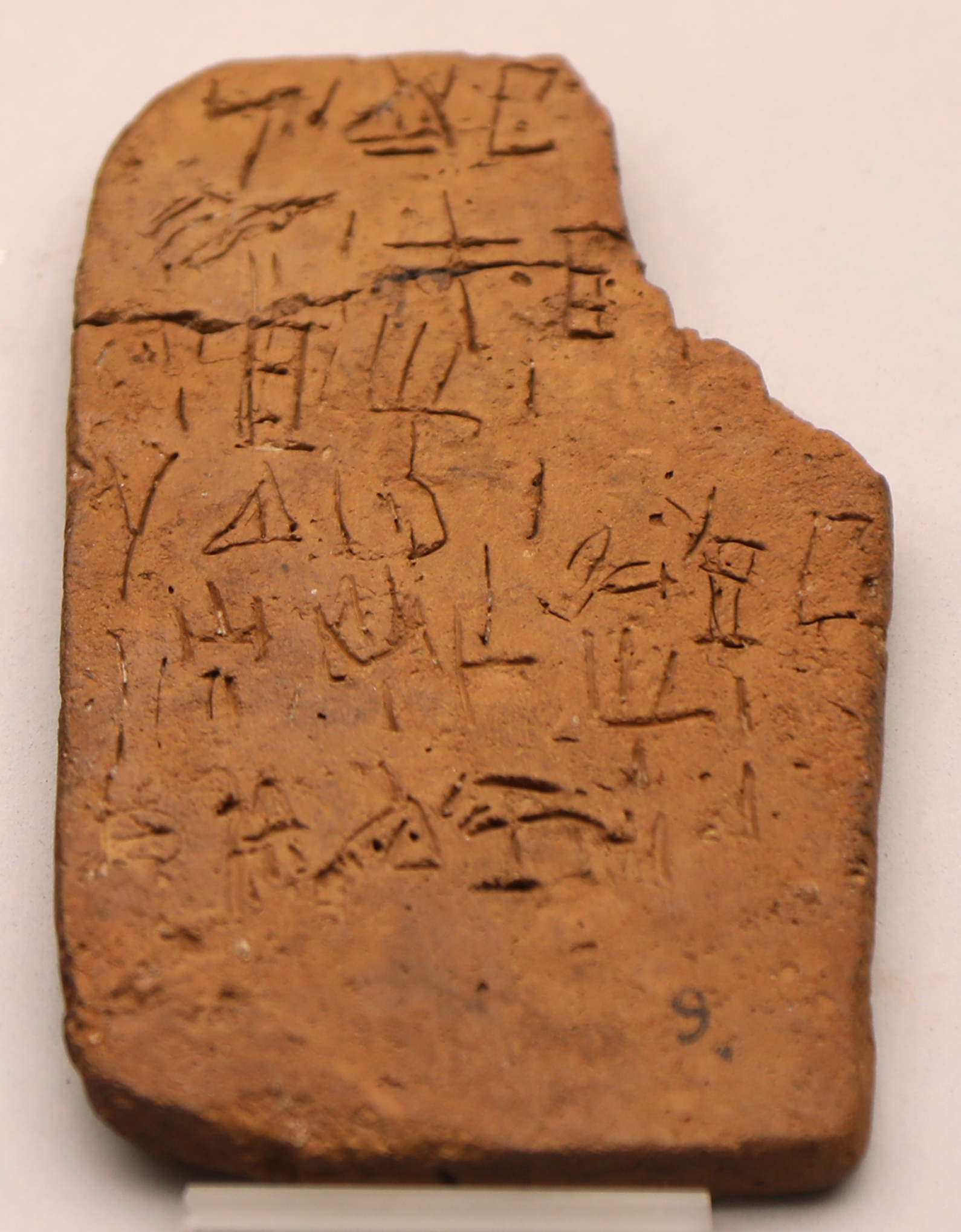
In 1939, the archaeologist Carl Blegen discovered a major archive of tablets at the palace of Pylos. Emmett Bennett systematically studied and catalogued these documents; Alice Kober identified grammatical patterns that proved crucial to deciphering the script; and in 1952 Michael Ventris deciphered Linear B, demonstrating that it represented an early form of Greek. John Chadwick, a specialist in Greek philology, subsequently worked with Ventris on the interpretation and publication of the results.
Linear B is a predominantly syllabic writing system: its phonetic signs represent syllables, generally consisting of a consonant followed by a vowel. This differs from the Greek alphabet used to write down the Homeric poems, whose letters represent individual sounds.
Homeric poetry also depended on syllables, but in a very different sense. Its verses were composed in dactylic hexameters, whose rhythm was based on patterns of long and short syllables.
What We Look for in the Tablets
Sección titulada «What We Look for in the Tablets»Tablets written in Linear B served primarily administrative purposes, but among their records we find names familiar to readers of Homer.
Let us examine some of the connections these documents allow us to establish with the Iliad and the Odyssey. The initial abbreviations identify where the tablets were found: PY stands for Pylos, KN for Knossos, and TH for Thebes. The following letters indicate the documentary series, while the number identifies the individual tablet. The table brings together a selection of names and places that can be related to the Homeric tradition.
Names and Places Attested in Linear B
Sección titulada «Names and Places Attested in Linear B»| Document | Mycenaean form | Identification or possible correspondence |
|---|---|---|
| PY Tn 316 | di-we, e-ra, e-ma-a₂ a-re-ja, di-u-ja |
Zeus, Hera, Hermes Areias, and Diwia |
| PY Fr 1224 | po-se-da-o-ne |
Poseidon |
| KN As 40 + 5093 | ko-no-so |
Knossos |
| KN Dd 1171 / KN Sd 4413 | pa-i-to |
Phaistos |
| KN Gg(3) 705 | a-mi-ni-so, e-re-u-ti-ja |
Amnisos and Eileithyia |
| PY Ep 705 | to-ro-ja |
a possible connection with Troy, disputed |
| TH Fq 229 | ra-ke-da-mi-ni-jo |
a form related to Lacedaemon |
| PY Aa 798 / PY Ab 186 | mi-ra-ti-ja, ra-mi-ni-ja |
Miletus and a possible connection with Lemnos |
| PY Fn 79 | a-ki-re-we, ne-e-ra-wo |
names comparable to Achilles and Neleus |
| PY En 74 | te-se-u, e-ko-to |
names comparable to Theseus and Hector |
| PY Cn 655 | i-wa-so |
a possible connection with Jason |
| KN Fp(1) 1 + 31 | di-ka-ta-jo di-we |
Zeus of Dicte |
| TH Av 106 | si-mi-te-u |
Form related to Smintheus, an epithet of Apollo |
A note on the identifications. The correspondences assembled in this table are of different kinds and are not all equally certain. Some allow us to recognise names of places and deities known from later Greek tradition; others are personal names resembling those of Homeric heroes. None of these correspondences, on its own, demonstrates the historical existence of those heroes or the events recounted in the poems.
Diwia. The Mycenaean form di-u-ja refers to a female deity whose name is linguistically related to that of Zeus. She does not appear as such in the Homeric poems, and her place within Mycenaean religion is not fully understood.
Hermes Areias. The expression e-ma-a₂ a-re-ja is commonly interpreted as a particular invocation of Hermes, probably associated with Ares or the sphere of warfare. The precise meaning of the epithet remains uncertain.
Smintheus. The form si-mi-te-u has been linked to Smintheus, an epithet of Apollo found in the Iliad (1.39). This correspondence does not establish that the cult associated with the name in Mycenaean times was identical to the one described by Homer.
PY Fn 79: Looking at Two Names on a Tablet
Sección titulada «PY Fn 79: Looking at Two Names on a Tablet»PY Fn 79 records the allocation of barley and olives to individuals and occupational groups. It includes a-ki-re-we, interpreted in The New Documents in Mycenaean Greek as the dative form of a name comparable to Achilles, and ne-e-ra-wo, generally associated with Neleus. The document says nothing about war, Troy, a king of Pylos, or genealogies: it simply records the distribution of goods.
The recent epigraphic edition places a-ki-re-we on line 2 and ne-e-ra-wo on line 5. It also describes the tablet as a palimpsest, preserving traces of earlier writing that had been erased, as well as corrections. This provides tangible evidence that such documents were used for everyday administration and could be amended (The Palace of Nestor at Pylos in Western Messenia, IV.1, 2025, p. 67).
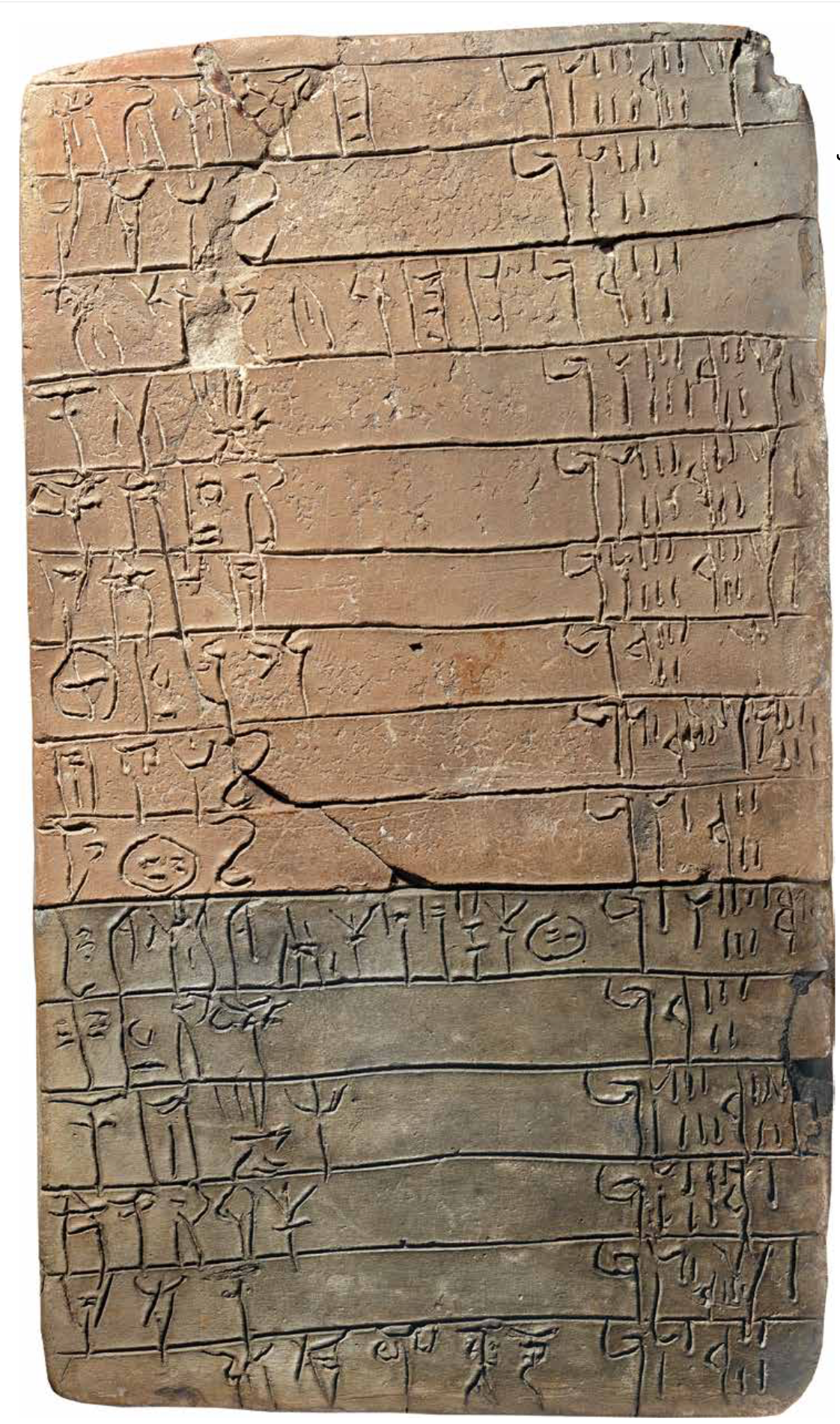
a-ki-re-we and ne-e-ra-wo. Photograph: Emil Seraf. © The Department of Classics, University of Cincinnati. Reproduced with permission from the University of Cincinnati, to whom we are grateful for their support of El mundo de la Odisea.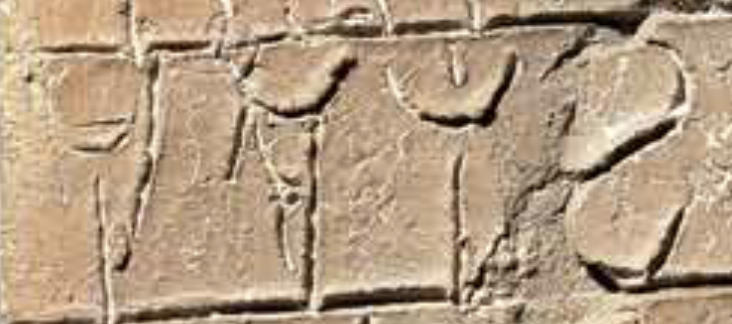
a-ki-re-we, the dative form of a name comparable to Achilles.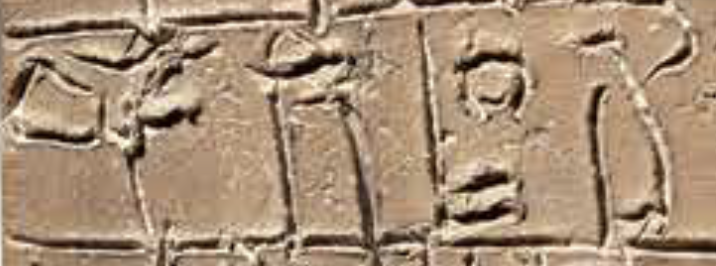
ne-e-ra-wo, a name related to Neleus.Details of tablet PY Fn 79. Photographs: Emil Seraf. © The Department of Classics, University of Cincinnati. Reproduced with permission from the University of Cincinnati, to whom we are grateful for their support of El mundo de la Odisea.
The names a-ki-re-we and ne-e-ra-wo appear in an ordinary administrative record, several centuries before the composition of the Homeric poems. Their similarity to the names of Achilles and Neleus does not, however, mean that the individuals mentioned in the tablet were the heroes of epic tradition.
PY Tn 316: a cultic document
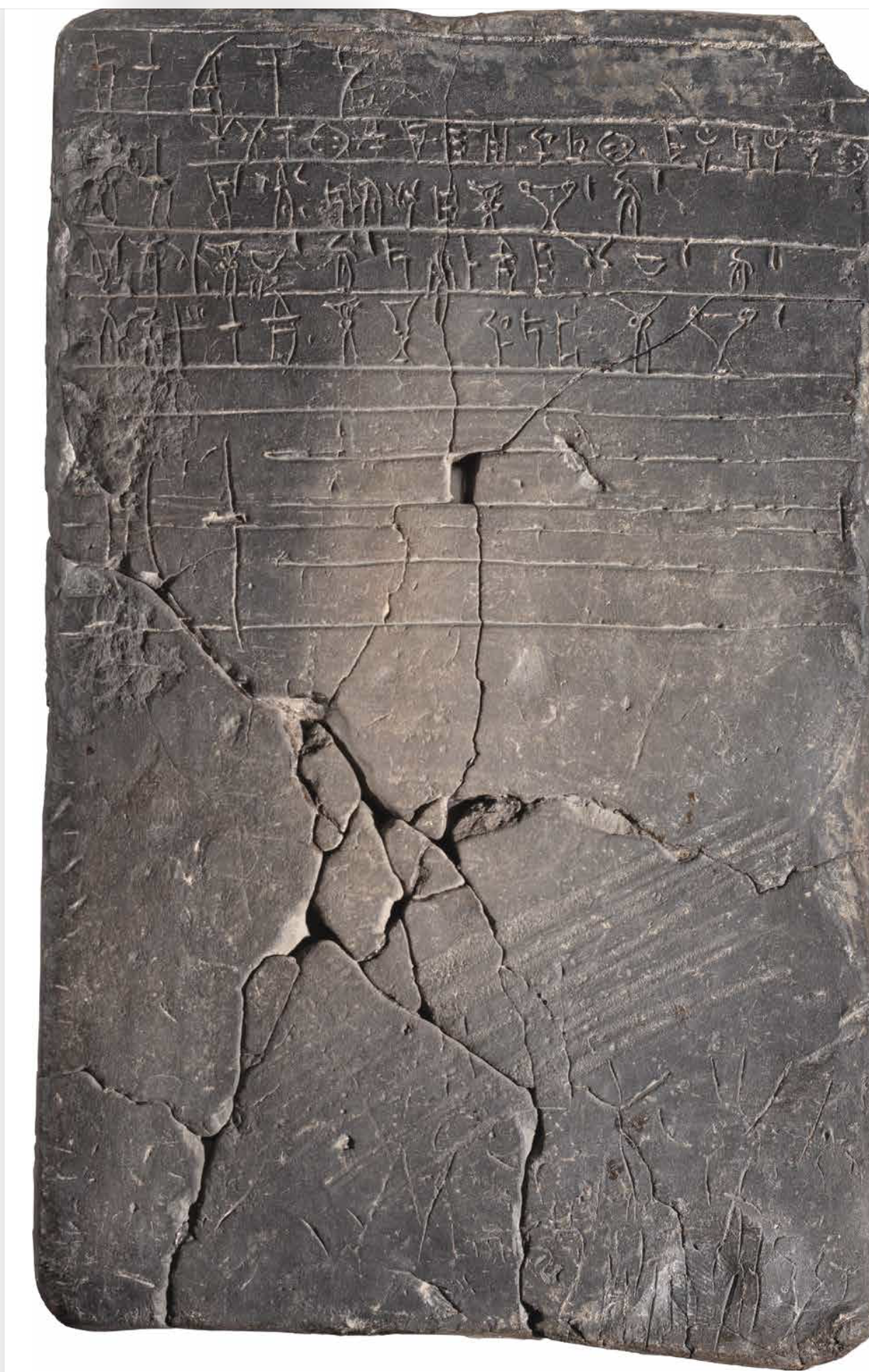
Sección titulada «PY Tn 316: a cultic document»PY Tn 316 is one of the most interesting cultic documents in the Pylos archive. It records gold vessels, people, and other goods in a ritual context that continues to raise questions of interpretation.
For readers of Homer, its interest lies in the names of deities appearing on the reverse of the tablet. Among them are di-we (Zeus), e-ra (Hera), e-ma-a₂ a-re-ja (Hermes Areias), and di-u-ja (probably Diwia). Some of these names reappear centuries later in Greek religious and poetic tradition (The Palace of Nestor at Pylos in Western Messenia, IV.1, 2025, pp. 194–195).
The tablet shows that several deities familiar to readers of Homer were already mentioned in the religious records of Mycenaean palaces. It does not, however, allow us to reconstruct their myths or to claim that their cults were identical to those known in later periods.
And Odysseus?
Sección titulada «And Odysseus?»Here the silence recalls the Nobody who deceived Polyphemus. We have no securely attested Mycenaean form of the name Odysseus. This does not mean that the name necessarily arose at a later date, nor does it establish that the character was a historical person. It simply marks the limits of our evidence: the surviving tablets represent only a very small fraction of the original archives, and the absence of a name from them does not prove that it was unknown at the time.
Map of the Aegean
Sección titulada «Map of the Aegean»The map distinguishes the centres where the tablets were found from the places named or evoked in their texts. Pylos and Knossos belong to both categories; the correspondence between to-ro-ja and Troy, by contrast, remains disputed.
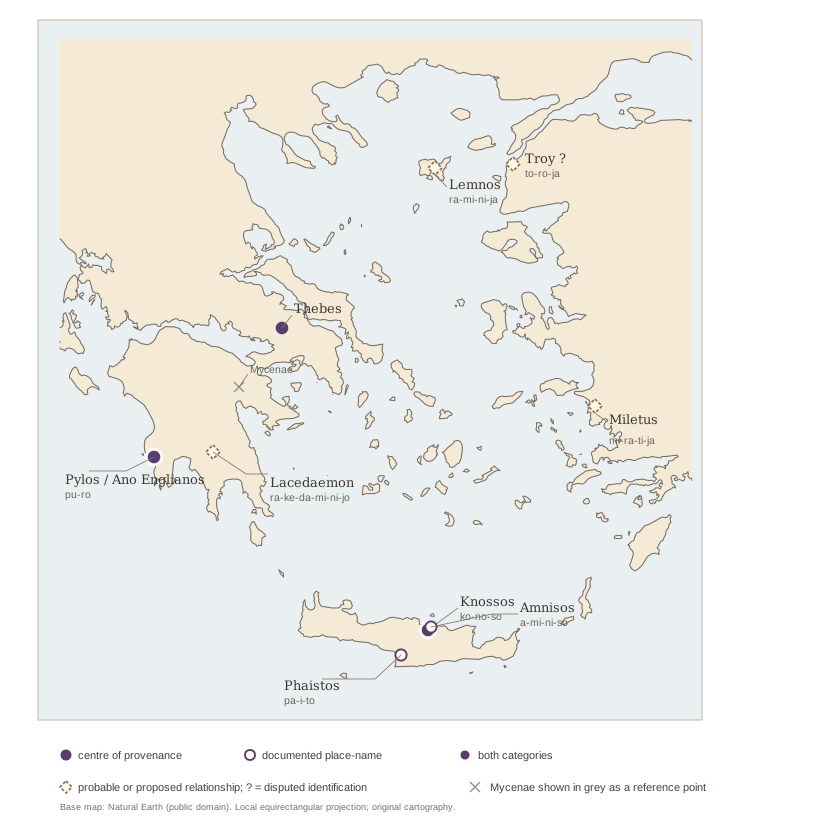
to-ro-ja and Troy is disputed. Editorial cartography: The World of the Odyssey. Base map: Natural Earth, public domain.The tablets speak from some places and name others. The map does not reconstruct routes or demonstrate specific contacts: it allows us to observe the geographical distribution of the surviving evidence and the names it contains.
When the poems mention Pylos, Knossos, or Amnisos, they use place names already attested in the Bronze Age. When they speak of Achilles or Hector, they use names with linguistically comparable forms in the Mycenaean archives. This does not demonstrate that their stories were true, but it reveals the extent to which the world of the poems preserves elements of a much older tradition.
See Also
Sección titulada «See Also»What Did Homer Know About the World He Described? I: Objects and Techniques