In Search of Homer
Homer’s name has been associated with the Iliad and the Odyssey since antiquity. Yet behind that name we can scarcely discern a person: the figure of the poet took shape over the centuries through ancient accounts, legends and biographies that cannot be verified. His fame is ancient; his life remains unknown.
To search for Homer, then, is not to piece together a lost biography from anecdotes. It is to examine what the earliest surviving sources say about him, how the Greeks imagined their poet, and what we can learn from the long oral tradition from which the poems emerged.
The word ‘author’ is convenient, but it can be misleading. Composing a poem, performing it and committing it to writing are different activities, and we do not know whether they were carried out by one person or by several. We may call someone an author if they gave decisive shape to an inherited tradition, without imagining a solitary writer who produces a finished work entirely on his own.
It is this distance between the celebrated name and the unknown person that makes the search so difficult. The point is not to deny Homer’s existence, but to discover what we can say about him and what belongs to the image the ancients constructed.
When Homer First Appears, He Is Already Famous
Sección titulada «When Homer First Appears, He Is Already Famous»Our earliest surviving references to Homer do not allow us to trace his emergence and development as a cultural figure. By the time he appears in them, his name is already familiar and his authority firmly established. Towards the end of the sixth century BC, Xenophanes criticises Homer and Hesiod for attributing to the gods behaviour he considers reprehensible among human beings: theft, adultery and deceit.
Heraclitus was even harsher: he declared that Homer deserved to be expelled from poetic competitions and beaten with a stick (Diogenes Laertius, Lives of the Eminent Philosophers, 9.1; Heraclitus, fr. B42 DK).
Among other things, he reproached Homer for failing to understand the importance of strife. In the Iliad, after Patroclus’ death, Achilles wishes that strife would disappear from among gods and mortals (Iliad, 18.107). For Heraclitus, the world as we know it could not exist without the tension between opposites: just as there can be no musical harmony without high and low notes, there can be no natural order without opposing forces (Aristotle, Eudemian Ethics, 1235a25–29).
To cast doubt on Homer’s supposed wisdom, Heraclitus also recalled the story of some boys who had tricked him with a riddle about lice, an anecdote we shall encounter again in the poet’s later biographies (Heraclitus, fr. B56 DK, preserved by Hippolytus, Refutation of All Heresies, 9.9.6).
At the beginning of the fifth century BC, Pindar refers to the Homeridae, whom he calls ‘singers of verses stitched together’ (Nemean Ode 2.1). His testimony points to a tradition of reciters associated with Homer’s name, although it tells us nothing certain about its origins.
Decades later, Herodotus treats the Iliad and the Odyssey as works by Homer. In Histories 2.116 he quotes verses from both poems while discussing different accounts of Helen’s journey. This shows that both works were attributed to Homer in the fifth century BC, but it tells us neither how they were composed, nor who may have contributed to them, nor when they acquired the form in which we know them.
Herodotus also tries to place the poet in time. In Histories 2.53 he reckons that Homer and Hesiod lived some four hundred years before his own day, and no earlier. That would place them roughly in the ninth century BC. Modern scholarship generally dates the formation of the Homeric poems to the late eighth or seventh century BC, although both the dates and the different stages of composition and the establishment of a written text remain debated. The estimates are not so far apart, but they concern different things: Herodotus was trying to date a poet’s life, whereas we are trying to date the poems themselves.
Thucydides, for his part, quotes lines from the Hymn to Apollo which he attributes to Homer. In them, the singer asks the maidens of Delos—a small island in the Cyclades and home to one of Apollo’s principal sanctuaries—to reply, if anyone asks which poet has delighted them most with his song, that it is ‘a blind man who dwells in rugged Chios’.
The hymn has survived, but it does not name Homer. Thucydides’ attribution is nevertheless one of the ancient testimonies linking the poet with blindness and the island of Chios (Thucydides, History of the Peloponnesian War, 3.104.4–5, Greek text).
All these testimonies confirm the extraordinary authority Homer had acquired among the Greeks. But we still do not know who may have existed behind that name.
How the Ancients Imagined Their Poet
Sección titulada «How the Ancients Imagined Their Poet»The so-called Lives of Homer do not form a single work. They are separate biographical accounts, written at different times and subsequently grouped under that name. Among the best known is a lengthy biography traditionally attributed to Herodotus, although he was not its author. Other texts survive under Plutarch’s name, alongside several anonymous biographies. None is contemporary with the poet.
These narratives provide Homer with everything the historical evidence cannot tell us: parents, teachers, journeys, friendships, financial difficulties and even the circumstances of his death.
The Life attributed to Herodotus tells us, for example, that his mother was called Critheis and had become pregnant by a man whose identity the story does not reveal. The child was born beside the river Meles, near Smyrna, and was therefore named Melesigenes, interpreted in the narrative as ‘born beside the Meles’. His mother supported herself and her son through her work until she met Phemius, a schoolmaster who eventually took charge of the boy’s education. As he grew older, the young man travelled widely, developed an eye disease and eventually lost his sight.
One of those journeys took him to Ithaca, where, according to the story, he was welcomed by a man named Mentor, who cared for him during his illness. There he supposedly heard tales of Odysseus that he would later weave into his poems. The coincidence of names is striking: Phemius is also the singer who appears in Odysseus’ palace, while Mentor is the friend to whom the hero entrusts his household before leaving for Troy. Even Mentes, the seafarer who takes the young Homer to distant lands in the biography, has a counterpart in the Odyssey: he is the man whose identity Athena assumes when she first visits Telemachus.
The blindness traditionally attributed to Homer inevitably brings to mind Demodocus, the blind bard of the Odyssey, who enjoys extraordinary prestige at the court of Alcinous. The poem tells us that the Muse deprived him of sight but granted him the gift of song (Odyssey, 8.62–64).
This coincidence raises a question: was Demodocus blind because Homer was, or did tradition make Homer blind because Demodocus was? We cannot know. Perhaps blindness was also a way of expressing the idea that both could perceive and describe things the rest of us cannot see.
As for the coincidences of names, the biography itself offers an explanation: Homer supposedly included those people in his poems out of gratitude for the help they had given him. This is a good example of how a biography could be constructed from the characters of a literary work. What strikes the modern reader as a curious coincidence served the ancient biographer as confirmation of the story he was telling (Pseudo-Herodotus, Life of Homer, §§ 3–8 and 26).
According to the same biography, Homer’s life was far from easy. He asked the authorities of Cyme to support him at public expense in return for the glory his verses could bring the city. His request was refused, and Homer had to continue travelling and earning a living by reciting poetry.
Another tradition tells of a poetry contest between Homer and Hesiod at Chalcis, on the island of Euboea. Although the audience admired Homer’s verses, Panedes, the judge, awarded the victory to Hesiod because he considered poetry that praised peace and the work of the fields preferable to verse about wars and slaughter. The episode survives in the Contest of Homer and Hesiod (Greek text), a work whose surviving version dates from long after the lifetimes of both poets, although it draws on older traditions.
Even Homer’s death became the subject of unusual stories. One tradition tells how, while he was on the island of Ios, some young fishermen posed him a riddle: ‘What we caught we left behind; what we did not catch we carry with us.’ The boys had caught no fish and, while resting on the shore, had been picking lice off themselves. Those they caught they killed and left behind; those that escaped remained on their bodies. That was the riddle Homer had failed to solve.
According to some versions, he died of grief because he could not solve the riddle. The biography attributed to Herodotus, however, states that he died from an illness and explicitly rejects that explanation (Pseudo-Herodotus, Life of Homer, §§ 34–36).
None of these episodes should be treated as established historical fact, however entertaining they may be. Yet their contradictions do not make them worthless: they show how the Greeks constructed the biography of their most famous poet from local traditions, characters in his poems and stories devised to explain what no one knew about him. We know nothing certain about Homer’s childhood, travels or death; what survives instead are the stories the ancients told to fill those gaps, without our being able to say how much truth they contained, if any.
Homer: The Two Sides of a Coin
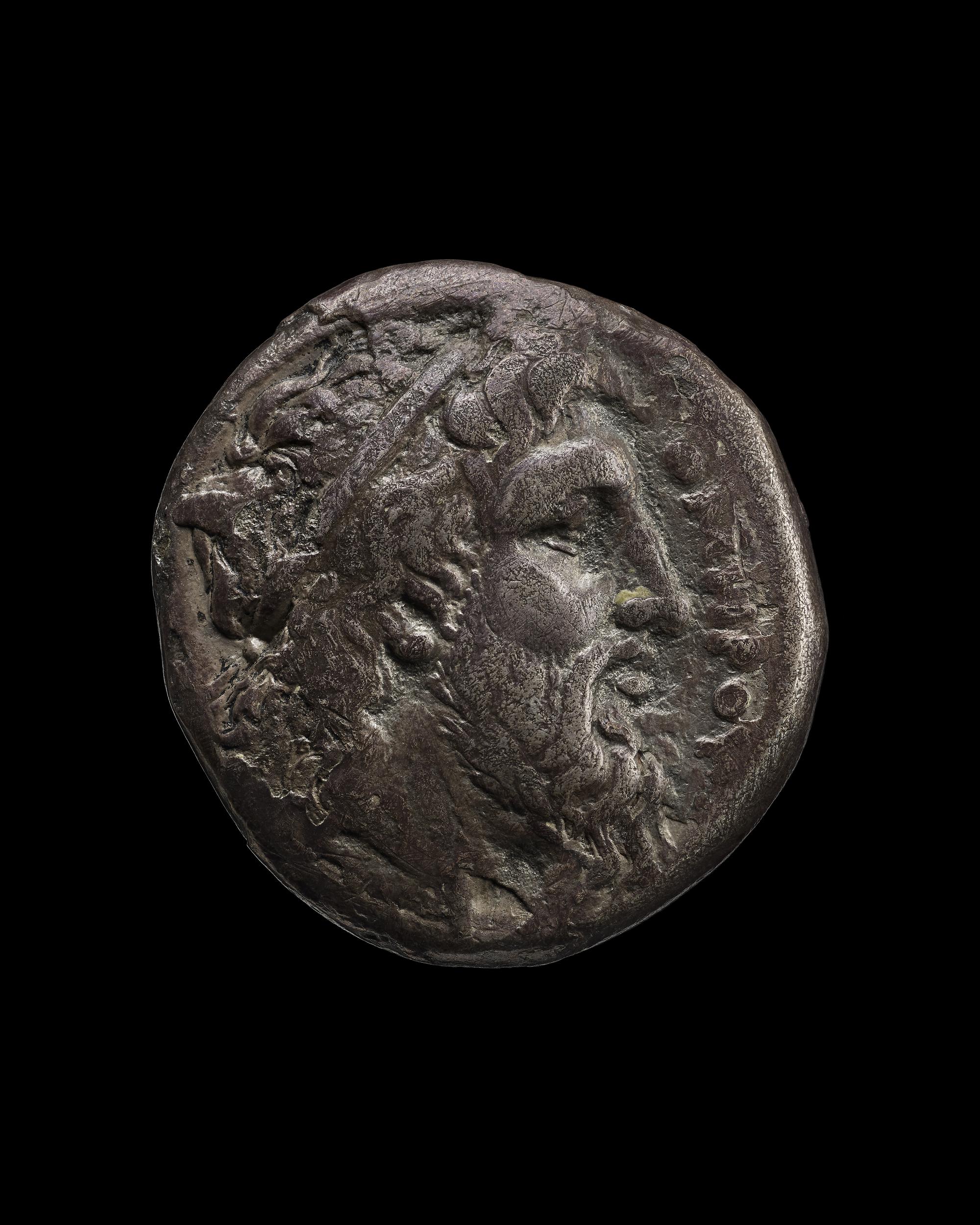
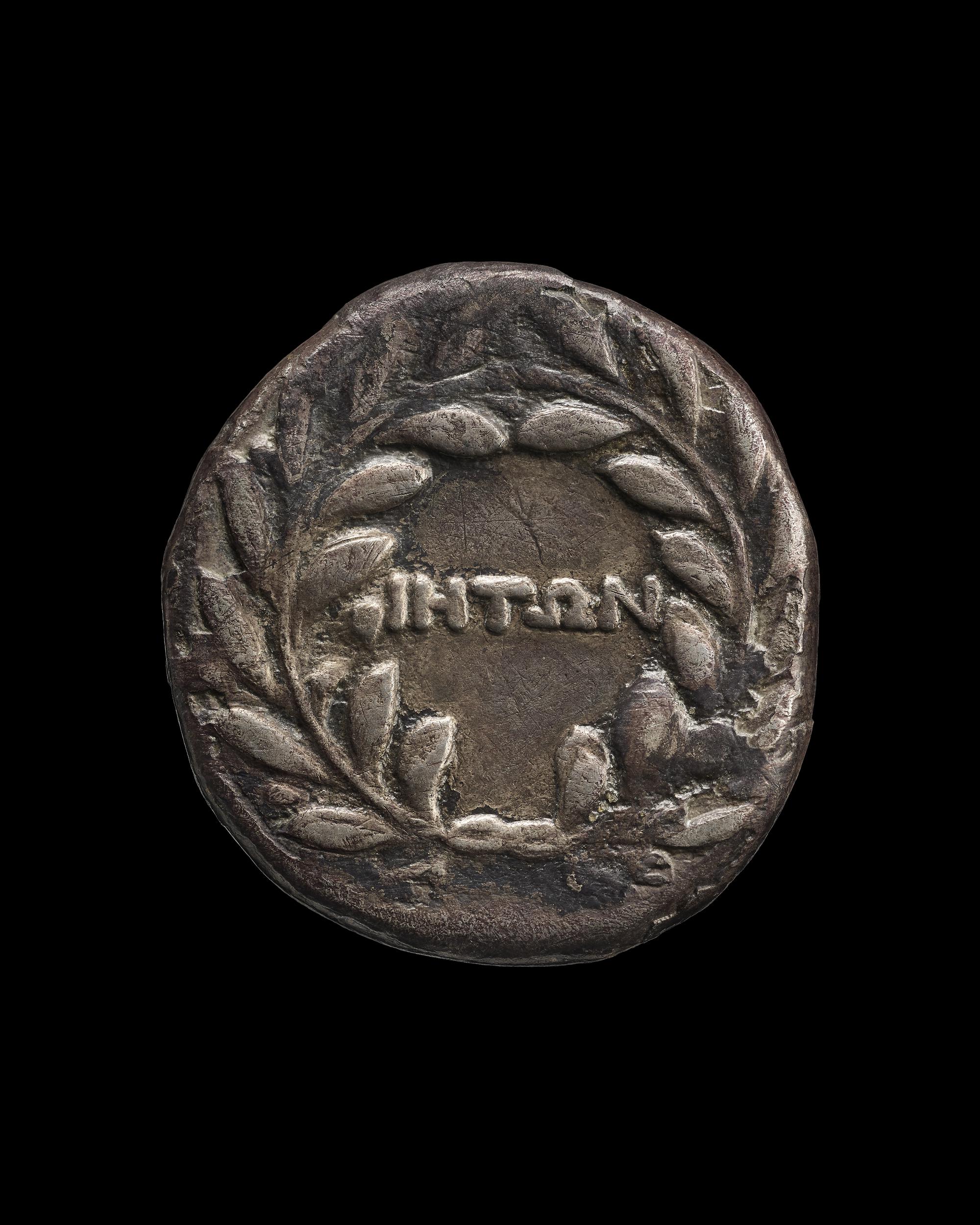
Sección titulada «Homer: The Two Sides of a Coin»A silver didrachm minted on Ios, in the Cyclades, during the fourth century BC bears on its obverse a bearded head representing Homer, facing right and wearing a ταινία (tainia, a ribbon or headband), alongside the inscription ΟΜΗΡΟΥ (‘of Homer’). On the reverse, a wreath surrounds the inscription ΙΗΤΩΝ (‘of the people of Ios’).
We do not know what Homer looked like, or whether he ever visited the island. What we do know is that Ios identified itself with the poet so closely that it placed his image and name on a coin.
Several Greek cities competed for the honour of claiming Homer as their own. Chios had an ancient connection with the poet: the blind singer of the Hymn to Apollo describes himself as an inhabitant of the island, while the Homeridae, reciters associated with Homeric poetry, were also linked with Chios in ancient tradition (Hymn to Apollo, 165–173; Pindar, Nemean Ode 2.1 and its ancient scholia).
Smyrna also claimed that Homer had been born there, near the river Meles. According to Strabo, the city even had a monument known as the Homereion, containing a sanctuary and a statue of the poet (Geography, 14.1.37). Colophon, meanwhile, was associated with Margites, a poem attributed to Homer in antiquity, and also claimed him as one of its citizens.
Cicero neatly sums up these rivalries when he tells us that the people of Colophon, Chios, Salamis and Smyrna all claimed Homer as their own, and that the people of Smyrna had even built him a sanctuary (Pro Archia, 8.19).
Ios occupied a rather different place in these traditions: it was chiefly the island where Homer was said to have died and been buried (Pseudo-Herodotus, Life of Homer, 36). Another tradition associated the island with his mother, Clymene, whose homeland it was said to be (Pausanias, Description of Greece, 10.24.2).
None of these claims establishes where Homer was actually born. They do, however, reveal just how eager Greek cities were to associate their names with the most celebrated poet of their tradition.
Language, Ionia and the Elusive Poet
Sección titulada «Language, Ionia and the Elusive Poet»Nor can the language of the Iliad and the Odyssey tell us where Homer lived. It is a traditional poetic language, predominantly Ionic, but drawing on dialectal features from different regions and periods. It points to a tradition associated with Ionia and the eastern Aegean, but provides no means of identifying the birthplace of any particular poet.
Nor do we know how far Homer himself shaped the Iliad and the Odyssey from the oral traditions through which their stories had been passed down, or how much of his possible individual contribution survives in the poems as we know them.
Oral Tradition, Composition and the Written Text
Sección titulada «Oral Tradition, Composition and the Written Text»These uncertainties are compounded by the history of the poems’ transmission. According to a tradition recorded by Cicero, Peisistratus, the tyrant who ruled Athens for much of the sixth century BC, was the first to collect and arrange Homer’s books, which had previously been scattered (De oratore, 3.137). Pausanias reports a similar story, even claiming that the name of a place was mistakenly altered during the compilation (Description of Greece, 7.26.13).
This supposed undertaking is known as the ‘Peisistratean recension’, although we do not know whether it actually took place or what its scope may have been. Another tradition, preserved in the dialogue Hipparchus, attributed to Plato, says that Hipparchus, Peisistratus’ son, organised recitations of Homer during the Panathenaea, the great Athenian festival in honour of Athena. Rhapsodes were required to recite the poems in turn and in narrative sequence, each continuing where the previous performer had left off (Hipparchus, 228b–c).
This arrangement may have helped to preserve and stabilise the poems. It does not prove that Peisistratus had them written down for the first time or definitively established the text that has come down to us. It does, however, remind us that between the composition of the poems and the versions we read today lies a history of performances, transmission and possible alterations that we cannot fully reconstruct.
We may therefore be unable to distinguish with confidence how much of what we read comes from a man called Homer and how much belongs to the tradition that preceded him and continued after him. This question is explored in greater detail in ‘How Did Homer Reach Us?’
Conclusion
Sección titulada «Conclusion»Our search for Homer has led us, above all, to those who spoke about him: philosophers who challenged his poetry, cities that claimed him as their own, and biographers who imagined his life. It has also led us to a tradition of singers and reciters through which the poems may have changed before acquiring the form in which we know them.
Perhaps an exceptional poet gave decisive shape to that inheritance; perhaps the name Homer came to represent a tradition shaped by several generations. The surviving evidence does not allow us to know for certain what belonged to an individual poet and what was inherited from others. We can trace the history of his fame far more clearly than that of his life.