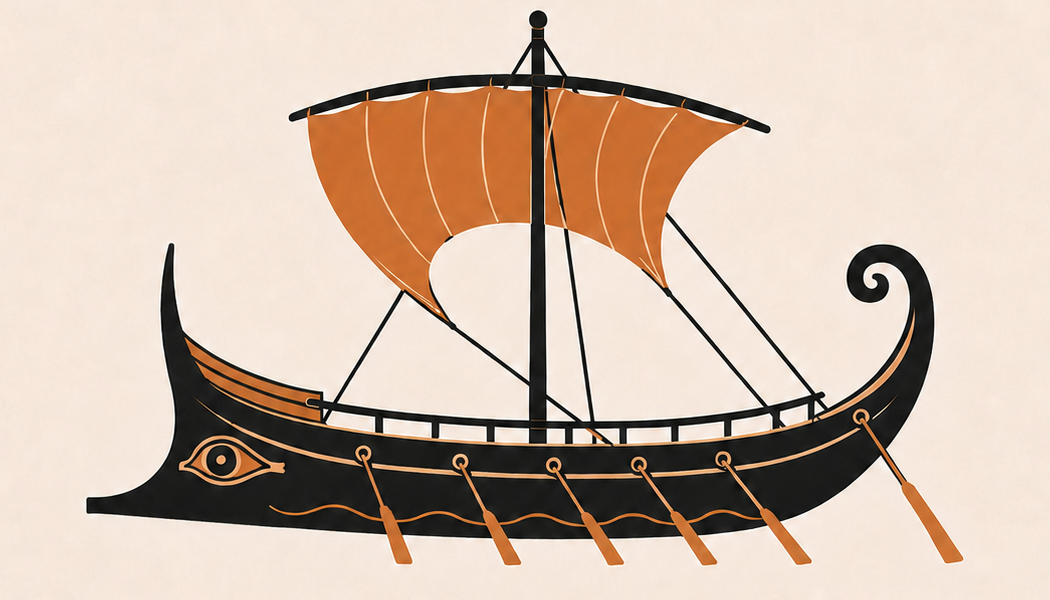
The Price of Victory
Troy falls, but for many of its victors the war does not end with the destruction of the city. The homecoming brings shipwrecks, murders, vengeance and years of wandering. Greek tradition thus turns the Achaean victory into an uncomfortable question: what remains of a victory when the return home carries an unexpected price?
To understand that price, we have to return to the conflict itself. Every death has created new debts; every offence has demanded redress. The characters continue to make decisions, but they no longer seem able to control the war as a whole. They are bound to others by honour, loyalty, shame, friendship, family and obligation.
This page offers an interpretation grounded in the structure of the Iliad and in later traditions. The war has taken on a life of its own. It resembles a storm: no single man can be said to control it, yet everyone is caught within it.
It is not a force of nature: men make it. But the sum of their decisions ends up producing something greater than the will of any one individual.
Why does the war begin?
Sección titulada «Why does the war begin?»The best-known explanation places the origin of the war in Helen’s departure with Paris. When the Iliad begins, Helen is already living in Troy; the Achaean expedition has gathered its allies, and the Achaeans are fighting to recover her and punish the city that shelters her. Homer does not narrate the Judgement of Paris or the oath of Helen’s suitors, nor other episodes that we know chiefly through the Epic Cycle and later authors.
Helen remains crucial in Book 3. The Trojan elders look at her from the walls, and the duel between Paris and Menelaus offers a possible way out: if Menelaus wins, Helen and her possessions are to return with him. But Helen does not appear merely as an abstract cause. She weaves the struggles of Achaeans and Trojans who suffer on her account, expresses guilt and longing, and understands the consequences of her presence in Troy. Later, while mourning Hector in Book 24, she says that it is now the twentieth year since she left her homeland: a difficult chronological detail, which does not simply mean that the siege itself lasted twenty years.
Aphrodite saves Paris when the duel turns against him. The truce might still have contained the conflict; later, Athena induces Pandarus, an archer allied with the Trojans, to break it, and the war resumes. Helen remains the initial cause, but the war no longer depends on her in order to continue.
How does a war become difficult to stop?
Sección titulada «How does a war become difficult to stop?»The Iliad begins with another quarrel: Agamemnon and Achilles clash over Chryseis and Briseis.
Briseis → wrath of Achilles → withdrawal of Achilles → Patroclus → Hector → return of Achilles → death of Hector.
Agamemnon cannot accept a public loss of authority without putting his position as leader into question. Achilles cannot absorb humiliation without damage to his honour. Hector cannot abandon the defence of Troy without thinking of the shame he would face before Trojan men and women. And the death of Patroclus creates a new obligation for Achilles that no longer has any direct connection with Helen.
The war is not sustained simply because someone orders it to continue. It is sustained because each man is bound to others. Honour, shame, friendship, family and the memory of the dead form a social web from which it becomes increasingly difficult to escape. Each loss, and each dispute over honour, generates new obligations.
What place do the gods occupy?
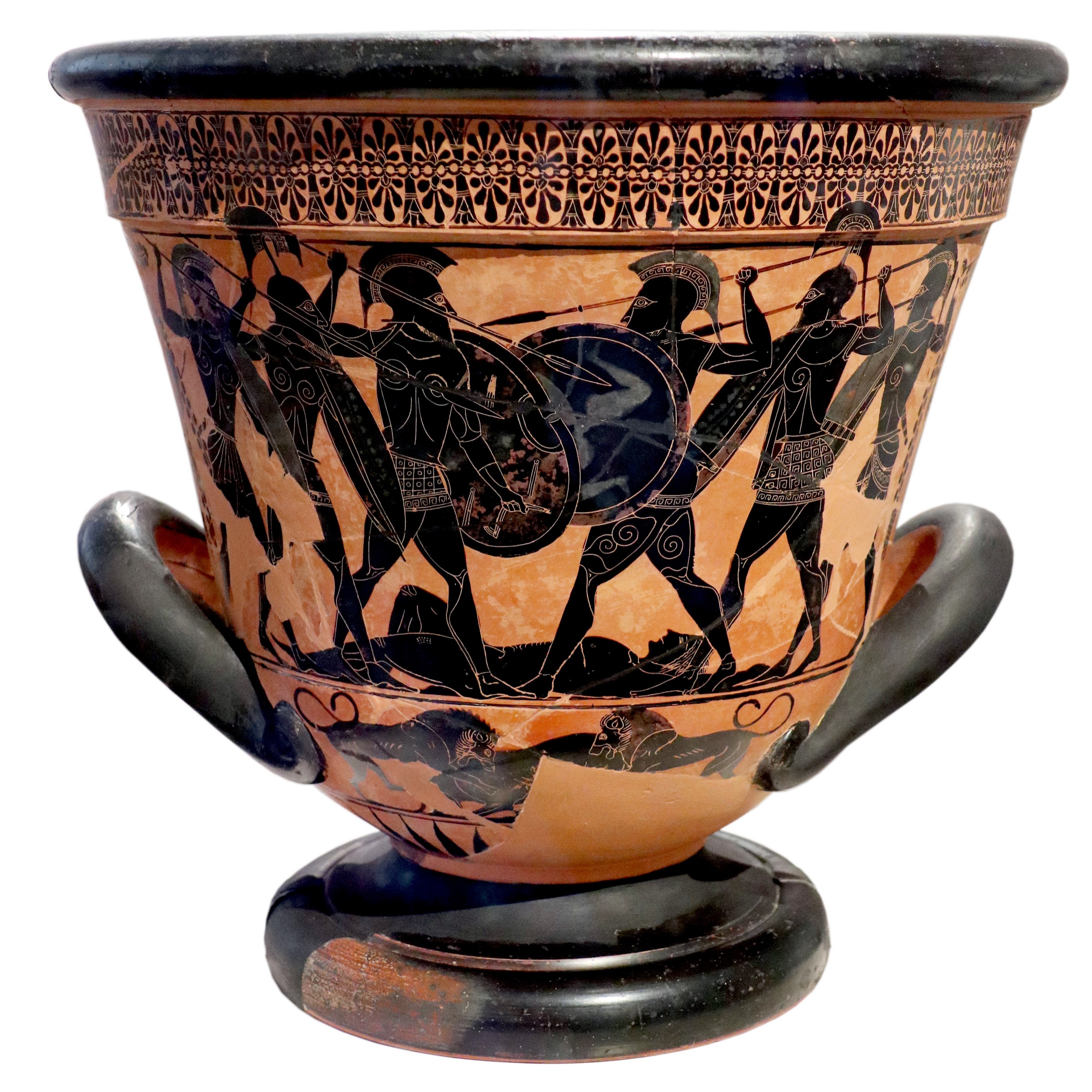
Sección titulada «What place do the gods occupy?»Zeus does not govern the war as though it were a simple administrative decision. In the Iliad, he allows the Achaeans to suffer for a time in order to honour Thetis’ request on behalf of Achilles and, at the same time, declares that Ilios, Priam and the Trojans are dear to him. Hera wants the destruction of Troy; Athena precipitates the breaking of the truce; Zeus contemplates Hector’s fate with sorrow. The gods can favour, delay, protect or hasten events, but they do not erase the weight of human decisions or turn the war into a simple story of reward and punishment.
Glory, honour and community
Sección titulada «Glory, honour and community»Kleos, public honour, gifts, booty and prestige are real values in the heroic world. They should not be reduced to a lie that Homer exposes from outside. Achilles knows that he can choose between a long life without glory and a short life with enduring fame; Hector fights because the shame of abandoning the Trojans would be unbearable. But the question remains: what does a mortal receive in exchange for glory?
M. I. Finley drew attention to a fundamental tension: heroic excellence is profoundly individual, while the community needs prudence, limits and the capacity to yield. Achilles withdraws from battle when Agamemnon publicly wounds his honour, even though he endangers the Achaean army; Hector ignores advice and pleas until he faces Achilles. What preserves the hero’s honour can be disastrous for those who depend on him.
Heroic rank brings privileges, but it also creates obligations. Sarpedon reminds Glaucus that in Lycia they receive places of honour, the best portions, wine and land and that, precisely for that reason, they must fight among the foremost (Iliad 12.310–321). Honour requires public recognition: privilege, risk, reward and redress belong to the same social logic. Those who receive more must risk more.
What happens when Troy falls?
Sección titulada «What happens when Troy falls?»The Iliad does not narrate the fall of Troy: it ends with Hector’s funeral. The Horse does not appear in it either, although the Odyssey preserves Demodocus’ song. The entry into the city, the deaths of Priam and Astyanax, the sacrifice of Polyxena and the division of the captive women are developed chiefly in the Epic Cycle and later traditions. See also: How Do We Know What Happened in the Trojan War?.
They are not secondary stories for that reason. The fall of Troy is the culmination of the storm: the moment when the war reaches the city whose possession has been contested.
The homecomings: the victors’ price
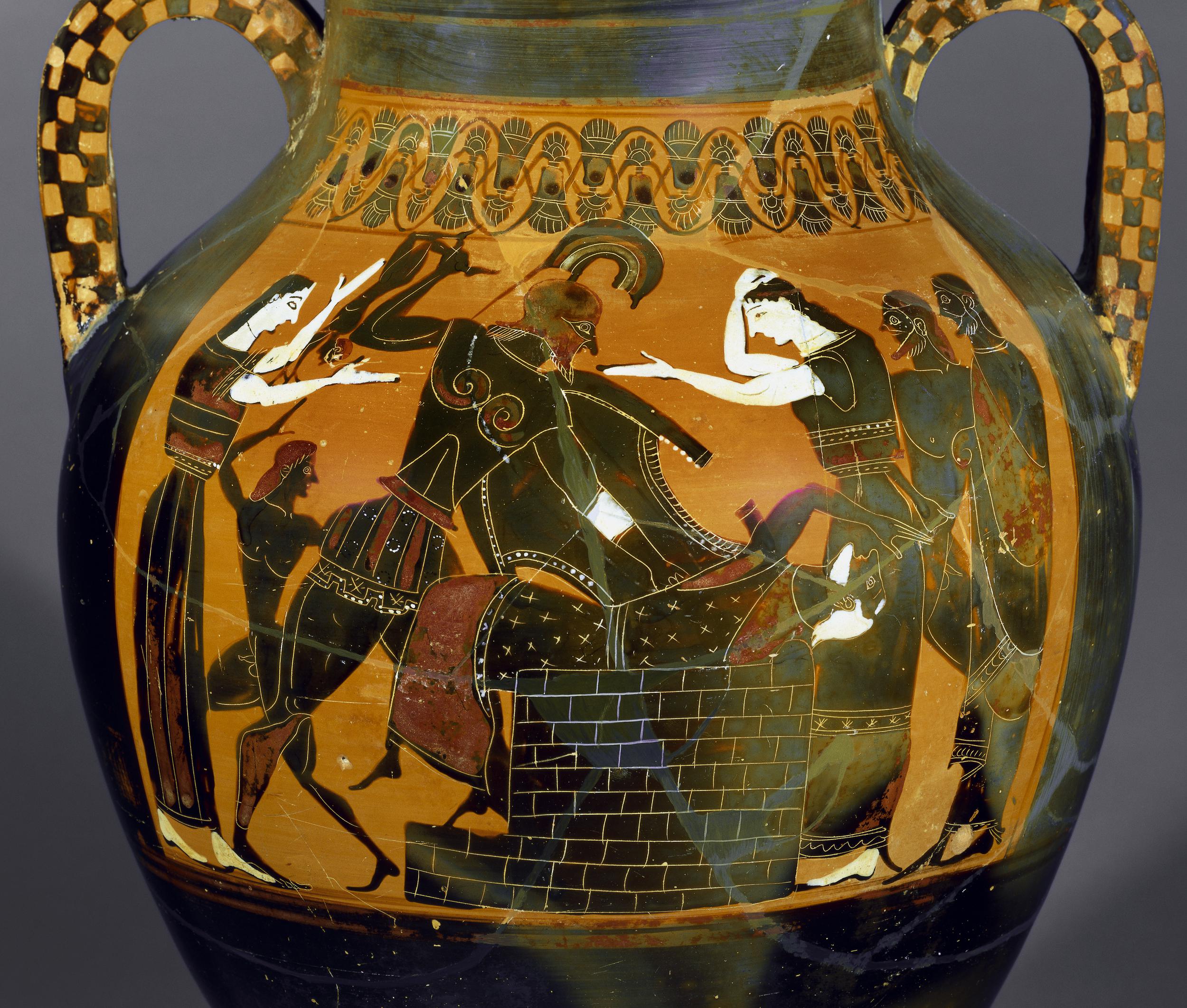
Sección titulada «The homecomings: the victors’ price»The war can end, but its consequences remain. Nestor returns in relative safety. Agamemnon returns to Mycenae and is murdered. Menelaus takes years to return. Odysseus needs another ten years to reach Ithaca. Ajax, son of Oileus, dies at sea on the voyage home from Troy.
The Odyssey and the Nostoi, known only indirectly, do not present these outcomes as automatic punishment. The causes vary: family conflicts, human decisions, storms, gods, errors and rivalries. Taken together, however, they show that the fall of Troy does not simply return the victors to a better life than the one they had before they left.
Menelaus: what has the victor really gained?
Sección titulada «Menelaus: what has the victor really gained?»Menelaus recovers Helen, survives and returns with great wealth. Yet in Odyssey 4 he remembers the companions who died at Troy and says that he would exchange part of his wealth to have them alive. He does not declare that he regrets the war, nor does he renounce Helen. The passage allows a more limited conclusion: if he has obtained what he fought for and victory still does not fully compensate for the losses, then winning Troy is not enough to establish the human value of the war.
The victors are not exempt from loss.
Priam and Achilles: when loss weighs more than sides
Sección titulada «Priam and Achilles: when loss weighs more than sides»In Book 24, Priam enters Achilles’ hut to ask for Hector’s body. He does not cease to be king of the enemy city, nor does Achilles cease to be its destroyer. Priam asks him to remember Peleus; Achilles thinks of his father and of Patroclus. For a moment, the logic of opposing sides is crossed by something more elemental: father, son, loss and death.
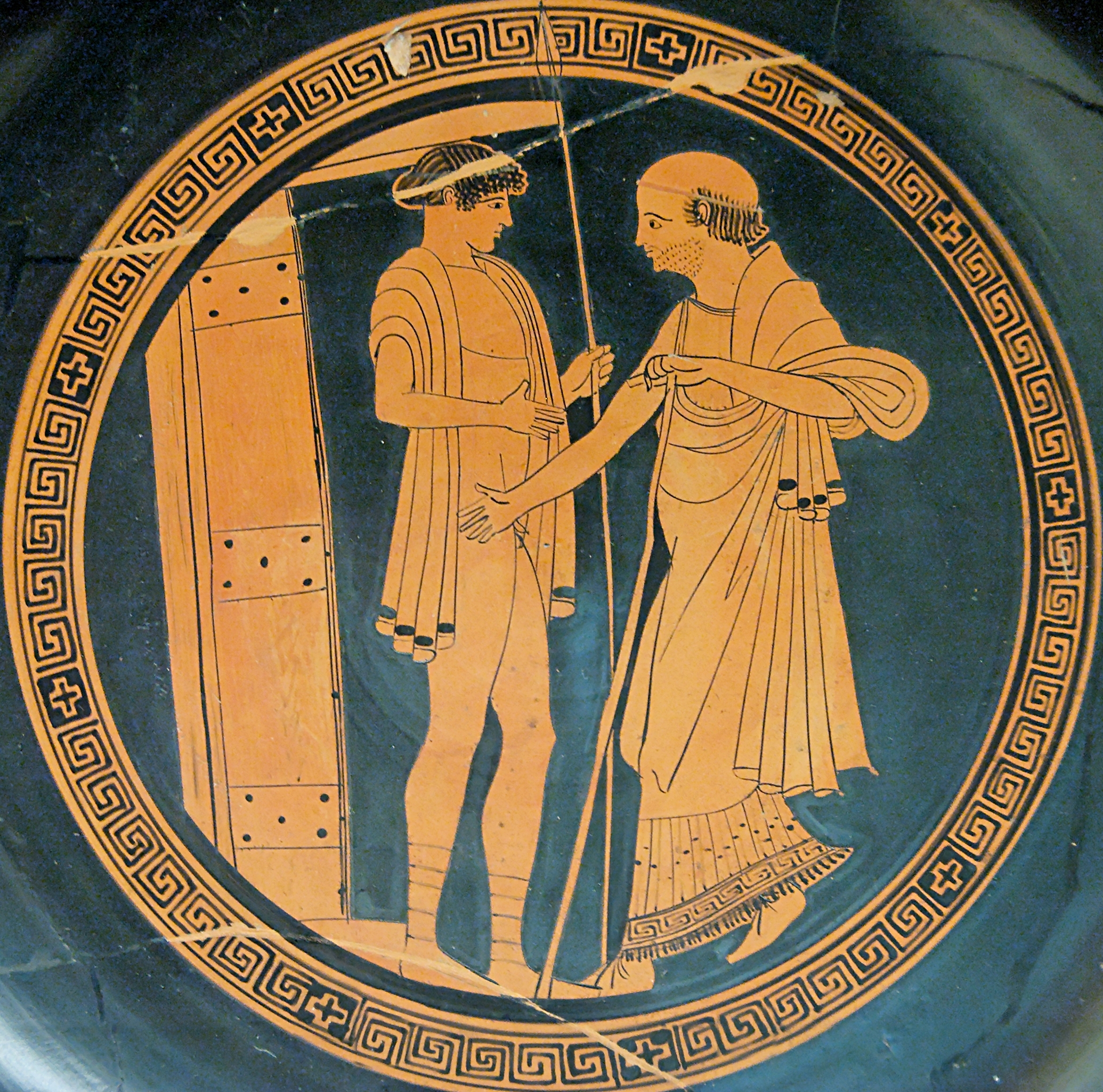
It is not the end of the war, nor a pacifist proclamation. It is a temporary suspension of enmity in which grief weighs more than immediate victory.
Hector remains within the doomed city; Aeneas, by contrast, represents within the tradition the possibility of surviving its destruction. This is an editorial synthesis, not a conscious theory formulated by the characters: two narrative responses to a city destined to fall.
A bitter victory
Sección titulada «A bitter victory»Troy finally falls and the storm seems to have ended. But the homecomings show that its effects continue long after the battlefield has disappeared.
The Achaeans have won. Some return; others die; others take years to recover their homes. Menelaus recovers Helen and yet still remembers the dead as a loss that his wealth cannot compensate.
The Achaeans conquer Troy, but Greek tradition turns that triumph into a bitter victory. The destruction of the city does not erase the violence of war: it extends it into the homes, the seas and the homecomings of those who won.