Does It Help to Know the Future?
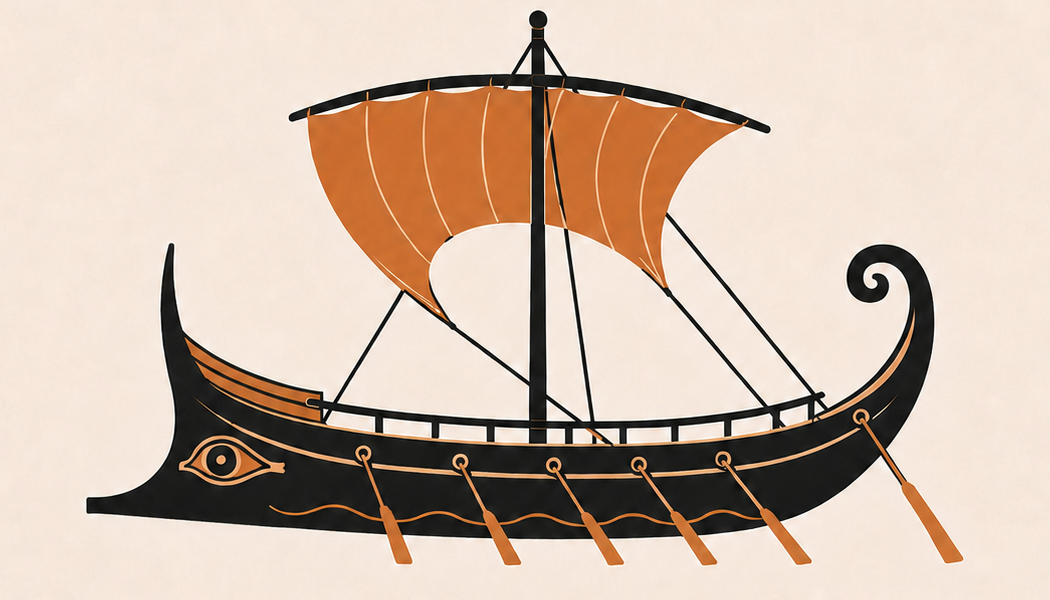
Theoclymenus is a seer who has arrived in Ithaca aboard the ship of Telemachus, Odysseus’ son. He comes from a family of seers and is now in the palace, among the suitors who hope to marry Penelope and have occupied her home for years in her husband’s absence.
During one of their feasts, Theoclymenus sees what no one else can see. Darkness seems to engulf the hall; the walls appear spattered with blood, and shadows make their way towards Erebus, the realm of the dead. He warns the suitors of the disaster approaching them. They laugh at him. Theoclymenus does not argue: he rises and leaves the house. Soon afterwards, the men who mocked his vision die in that very hall (Odyssey 20.350–370).
The scene raises a question more interesting than the mere possibility of foretelling the future. Theoclymenus knows—or believes he knows—what is about to happen; his listeners do not believe him. The knowledge that fails to save the suitors from the catastrophe at least allows him to save himself. What, then, is the use of knowing what has not yet happened? Is knowledge enough, or must someone listen, believe what they cannot fully understand, and act accordingly?
The Iliad and the Odyssey are full of warnings, dreams, signs and revelations. Yet they offer no single answer: there are warnings that prove true but go unheeded, messages sent to deceive, destinies that offer alternatives, and dangers that, even when known in advance, no one can—or wants to—avoid. Homer seems as interested in what is foretold as in what his characters do with that information.
Knowing What Others Do Not
Sección titulada «Knowing What Others Do Not»In Homer’s poems, divination is not simply a matter of predicting the future. When Homer introduces Calchas, the seer of the Achaeans, he describes him as knowing ‘what is, what will be, and what was’ (Iliad 1.68–72). His knowledge extends across past, present and future: he can bring to light something hidden, even if it has already happened.
The plague that strikes the Achaean army provides the first demonstration of his powers. Its cause lies in a decision made by Agamemnon. Chryses, a priest of Apollo, had come to the camp offering a generous ransom for his daughter Chryseis, who had been awarded to the king as part of the spoils of war. The other Achaeans favoured accepting the ransom and honouring the priest, but Agamemnon refused and sent him away with threats. Chryses then prayed to Apollo, and the god responded by sending a plague that began to devastate the army.
When Achilles proposes consulting a seer to discover the cause of the calamity, Calchas knows the answer: Apollo is punishing the Achaeans for the insult to his priest. He is not predicting a future disease; he is explaining the one they are already suffering. With that explanation, they can return Chryseis, offer a sacrifice and bring the punishment to an end (Iliad 1.12–52; 1.68–100; 1.430–456). Here, knowledge of a hidden cause makes it possible to intervene in the present.
But Calchas asks Achilles to protect him before he speaks. He knows that telling the truth will provoke Agamemnon’s anger and fears the king’s response. It is a revealing detail: the seer may know more than the king, yet wield far less power. Discovering the truth is one thing; persuading others to accept it is another.
Nor is there just one way of acquiring such knowledge. Some characters specialise in interpreting the flight of birds, dreams or signs found in sacrifices; others interpret omens without holding any religious office. Sometimes a god speaks directly, while at other times someone visits a sanctuary to seek an answer. Tiresias represents an extraordinary case: even after death, he retains the ability to reveal what Odysseus needs to know. Homer does not present these different practices as branches of a single discipline.
We must distinguish between the period in which Homer’s stories are set and the period in which the poems took shape. The Iliad and the Odyssey evoke a past associated with Mycenaean civilisation in the Bronze Age, but the poems took shape many centuries later, between the eighth and seventh centuries BCE, when Greece was already in the Iron Age. This raises a difficulty: we cannot always tell whether the religious customs described by Homer belong to the world of his heroes or to that of the people who transmitted and composed the poems.
Mycenaean tablets written in Linear B show that the palaces had an organised religious life. They record deities, offerings and people associated with religious worship, as we can see in PY Tn 316, a religious document. Yet they do not establish whether specialists comparable to the manteis—the seers who interpret signs and omens in Homer—already existed. We know more about these practices from evidence dating to the Archaic and Classical periods, but we cannot assume that they were carried out in exactly the same way in Mycenaean palaces several centuries earlier.
The Odyssey itself describes a family in which prophetic knowledge passes from one generation to the next. Both Amphiaraus and Polyphides descended from Melampus. Polyphides, favoured by Apollo, practised divination at Hyperesia and was the father of Theoclymenus (Odyssey 15.225–256). The genealogy does not explain how divination worked, but it reminds us that prophetic authority could derive not only from a divine gift, but also from the prestige of a family tradition.
A World That Can Speak Through Signs
Sección titulada «A World That Can Speak Through Signs»In the poems, birds are not merely part of the landscape. An eagle carrying its prey, the direction of its flight, or the unexpected appearance of certain animals may be read as omens. Nothing extraordinary need happen: what matters is recognising an event as a sign. Yet those who witness the same event do not necessarily agree on its meaning.
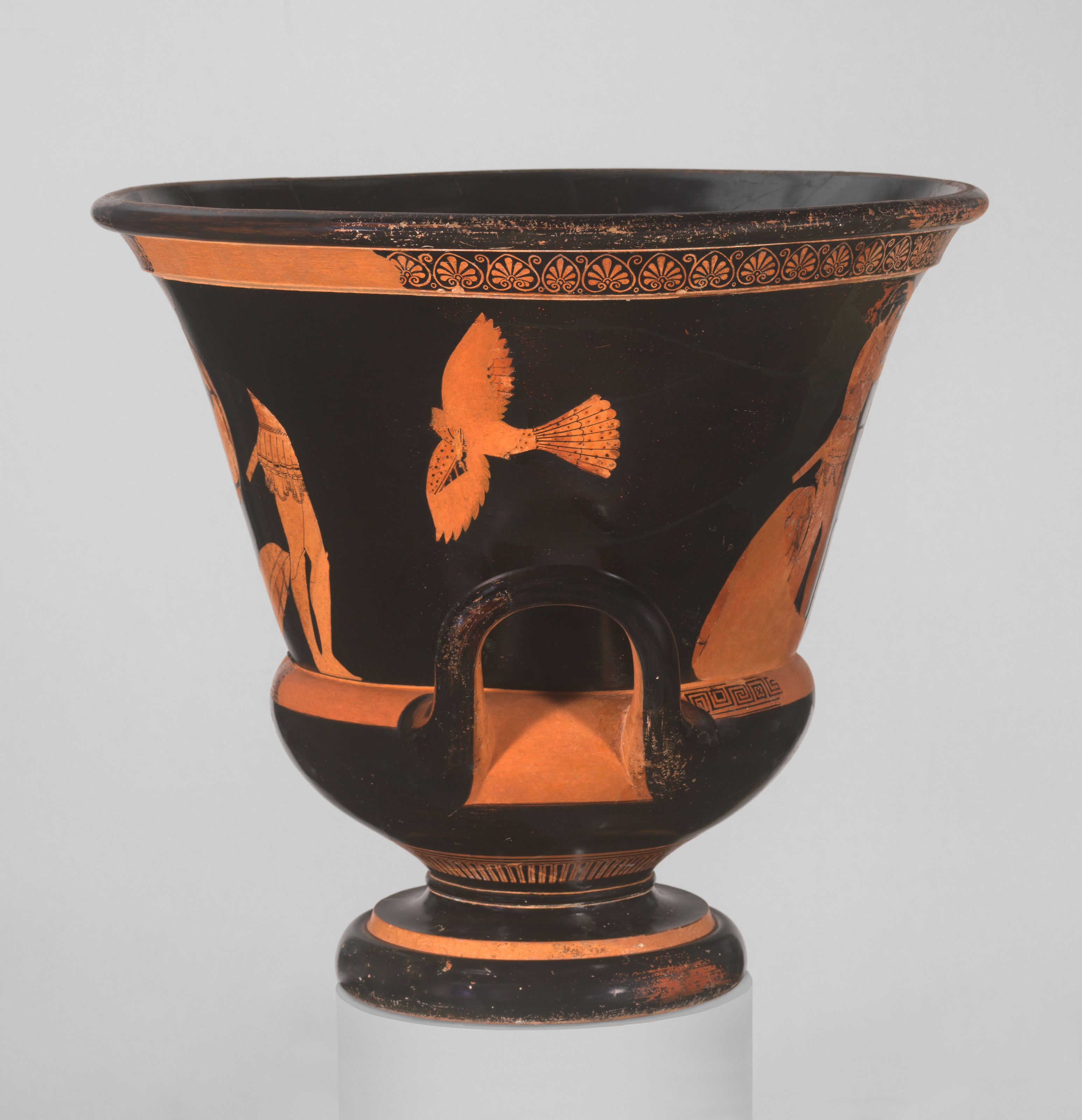
As the Trojans prepare to attack the wall defending the Achaean camp, an eagle appears carrying a live snake in its talons. The snake wounds the bird, which eventually drops it. Polydamas, one of the leading Trojan advisers, interprets the omen as a warning: even if they break through the enemy defences, they will suffer heavy losses and fail to return victorious. Hector rejects his interpretation and declares that the best omen is to fight for one’s country (Iliad 12.195–250). Their disagreement concerns more than the meaning of the bird’s flight: it is also a choice between heeding a warning and pressing ahead despite it.
The scene contrasts with another near the end of the Iliad. Priam, king of Troy, is preparing to enter the enemy camp to plead with Achilles for the return of his son Hector’s body. Before undertaking such a dangerous journey, he asks Zeus for a favourable sign. The god sends an eagle, and Priam sets off when he sees it. He needs no seer to interpret the sign he himself has requested (Iliad 24.290–321).
Helen is not a professional seer either. As Telemachus leaves Sparta, an eagle appears carrying a domestic goose in its talons. Helen interprets the omen: just as the eagle has seized the goose, Odysseus will return home and punish the suitors (Odyssey 15.160–178).
Penelope, too, dreams of an eagle that kills her twenty geese. The bird then returns and, speaking in a human voice, identifies itself as Odysseus: the geese represent the suitors whom the hero will kill. The dream therefore contains its own interpretation. Yet Penelope doubts that it truly foretells the future. She recalls that some dreams pass through the gate of horn and come true, while others pass through the gate of ivory and deceive those who receive them (Odyssey 19.535–569). The problem is no longer how to decipher a symbol, but whether we can trust a message whose meaning seems perfectly clear.
These four episodes show that interpreting signs was not the exclusive preserve of professional seers. But they reveal something more important: understanding a warning does not necessarily mean believing it or being willing to follow it. Hector refuses to let an omen deter him from attacking; Priam asks for a sign and acts when he receives it; Helen interprets a sign that seems to announce Odysseus’ return; Penelope understands what her dream foretells but doubts whether it will come true. The difficulty does not always lie in interpreting a message correctly. Sometimes it lies in deciding how much credit to give it.
There are, however, situations in which no sign needs to be interpreted. Achilles knows from his mother, Thetis, that he may return home and enjoy a long life, or remain at Troy and win undying glory at the cost of dying young (Iliad 9.410–416). Later, when Achilles decides to avenge Patroclus, Thetis warns him that his own death will follow Hector’s. Achilles knows the consequences and chooses to fight nonetheless (Iliad 18.94–126).
Homer even offers an example in which the deception comes not from a mistaken interpretation but from the source of the message itself. Zeus sends Agamemnon a dream announcing that the moment has come to conquer Troy. The king believes the revelation, but the god has deliberately sent it to mislead him (Iliad 2.1–75). A message’s divine origin guarantees neither benevolence nor even truth.
The contrast with Penelope is particularly revealing. She doubts a dream that foretells what will in fact happen, while Agamemnon trusts one that was sent to deceive him. How, then, can we distinguish a true revelation from a false one, when the gods themselves may lie?
Asking a God
Sección titulada «Asking a God»Signs and dreams were not the only ways of seeking knowledge of the unknown. One could also visit a sanctuary and put a question to a god. In such cases, rather than waiting for a sign to appear, people deliberately sought an answer.
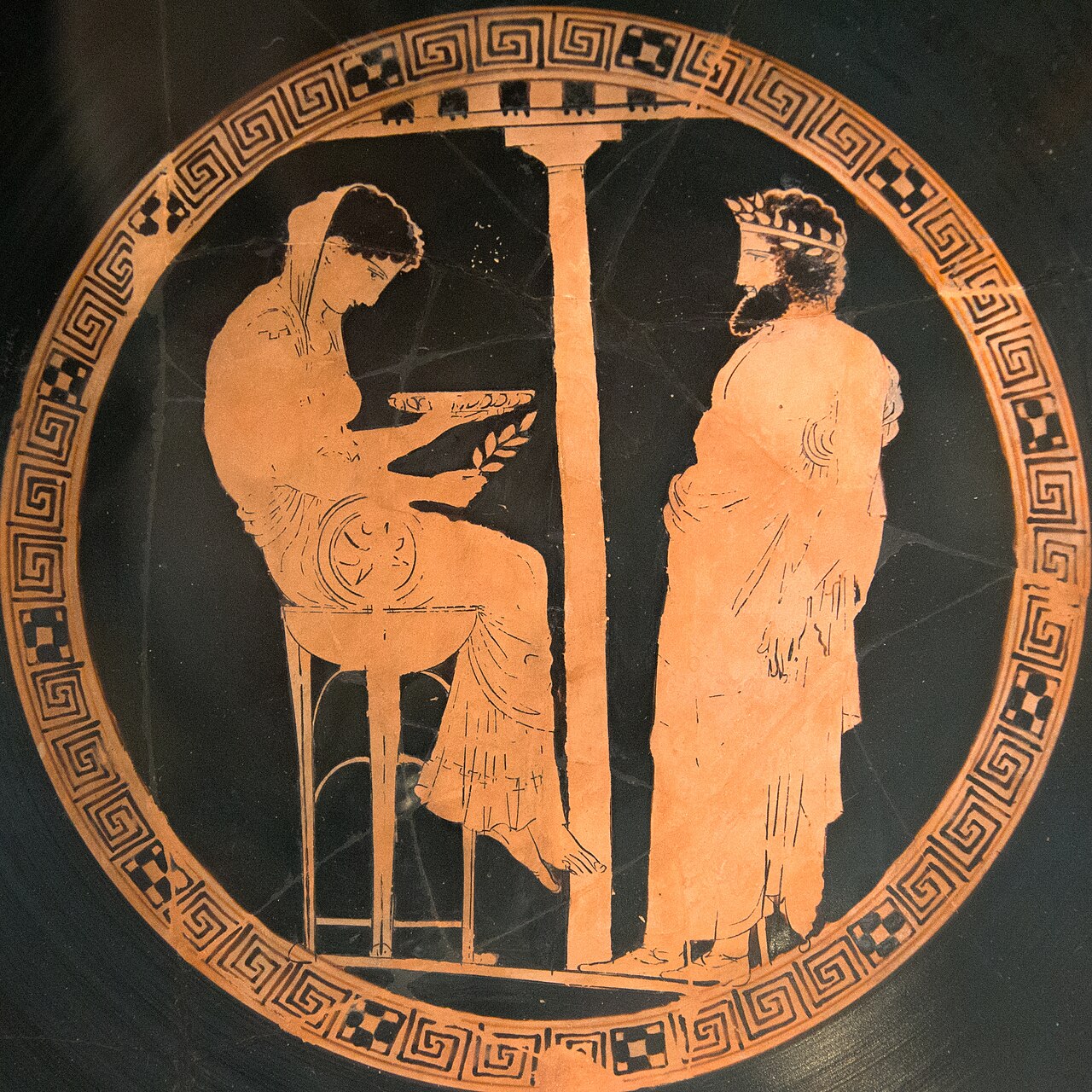
Homer refers to Pytho, Apollo’s sanctuary at Delphi. In the Odyssey, Agamemnon is said to have consulted the god there (Odyssey 8.79–82). In later centuries, Apollo’s answers at Delphi were delivered through the Pythia, a priestess who communicated the god’s revelations to those who came to consult him. Homer, however, does not mention the Pythia or describe how such consultations took place. We cannot therefore assume that the oracle operated in the world depicted by the poems exactly as it did in later periods.
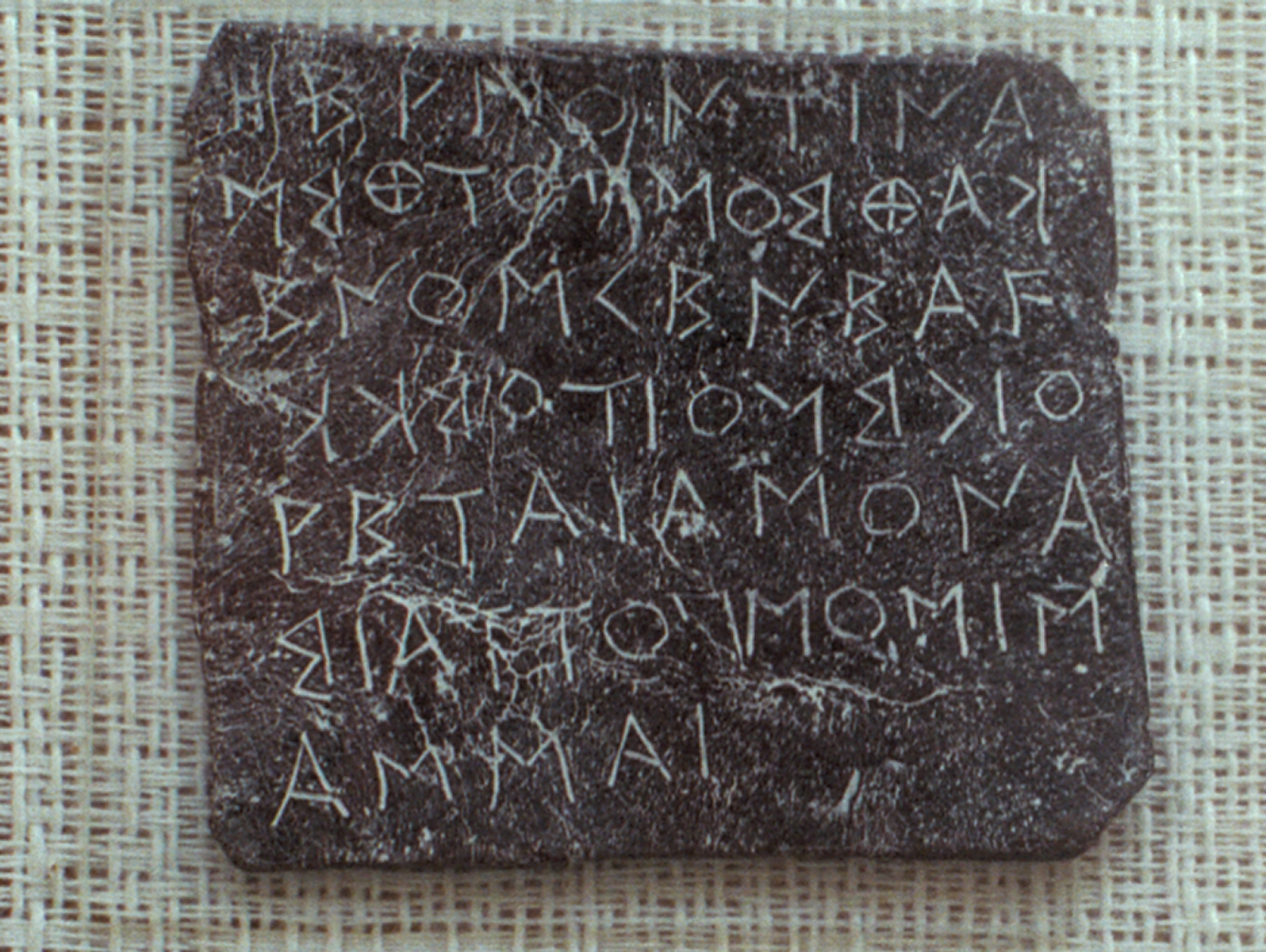
Dodona was a sanctuary of Zeus, where people sought to learn the god’s will through a sacred oak. Homer mentions it in two very different contexts. In the Iliad, Achilles invokes Zeus of Dodona when he asks for protection for Patroclus (Iliad 16.233–235). In the Odyssey, the sanctuary appears in a story invented by Odysseus himself. The hero has already returned to Ithaca, but conceals his identity and poses as a stranger before Eumaeus, his swineherd. To offer Eumaeus news of his absent master, he claims to have heard that Odysseus is at Dodona, consulting Zeus about whether to return to Ithaca openly or in secret (Odyssey 14.327–330).
The supposed visit is part of Odysseus’ invented story. Yet the detail matters: he invokes a well-known sanctuary to make his account more convincing. The lie does not mean that Odysseus actually consulted the oracle, but it shows that Homer could present a consultation with Zeus at Dodona as something entirely plausible.
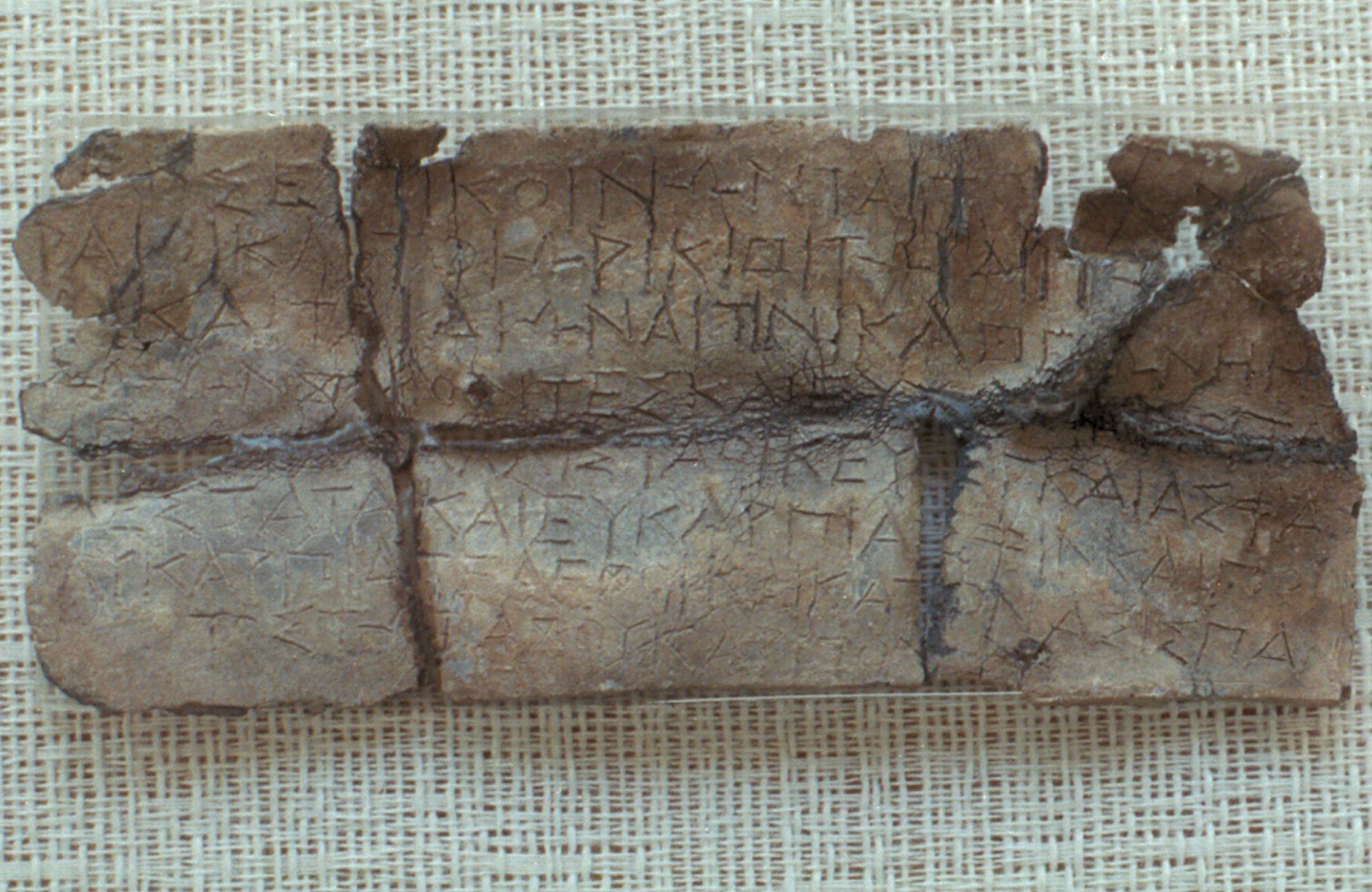
Long after the world evoked by Homer, some of the questions addressed to Zeus at Dodona were inscribed on small lead tablets. They concerned children, harvests, safety and practical decisions in everyday life. These documents do not tell us how divination was practised in the Homeric world, and we should not assume that the same procedures were followed centuries earlier. They do, however, help us understand why people might consult a god when faced with practical decisions that ordinary knowledge could not resolve.
A Truth No One Wants to Hear
Sección titulada «A Truth No One Wants to Hear»Knowing what is going to happen may be of little use if those who receive the warning are unwilling to believe it or act on it. Merops of Percote, renowned for his prophetic knowledge, tries to prevent his sons Adrastus and Amphius from taking part in the Trojan War. They disobey him and later die at the hands of Diomedes (Iliad 2.831–834; 11.328–334). Homer does not reproduce Merops’ words or explain how he learned of the danger. It is enough to show the helplessness of a father whose knowledge cannot change his sons’ minds.
Something similar happens on Ithaca. During the assembly called by Telemachus, two eagles sent by Zeus fly over those gathered and tear at each other with their talons. Halitherses, an old man skilled in interpreting the flight of birds, foretells Odysseus’ imminent return and the destruction of the suitors. Eurymachus dismisses his interpretation, and the suitors continue to occupy the palace (Odyssey 2.146–176). The prophecy is not wrong; it simply fails to convince those who most need to heed it.
Halitherses appears again at the end of the poem, when the relatives of the dead suitors gather to decide whether to take revenge on Odysseus. He reminds them that he had already warned of what would happen and urges them not to take up arms again. This time, more than half of those present withdraw, but the others follow Eupeithes, the father of Antinous, one of the suitors killed by Odysseus (Odyssey 24.451–470).
Halitherses’ first warning did nothing to stop the suitors. His second persuades at least some of their relatives to abandon the idea of revenge. This time, those who listen have seen what happened when his earlier warnings went unheeded. Yet they still do not all respond in the same way: some choose to withdraw, while others prefer to fight.
The vision of Theoclymenus, with which we began, takes this divide between knowledge and the response of others to its extreme. The seer foretells death to those who are about to die, but they laugh at him. Theoclymenus, by contrast, acts on what he has seen and leaves the hall. His warning cannot save the suitors, but it allows him to escape the catastrophe.
Homer introduces an even more bitter irony: possessing prophetic knowledge does not necessarily protect anyone from misfortune. Ennomus, an interpreter of the flight of birds among the Mysians, is killed by Achilles (Iliad 2.858–861). Eurydamas interprets dreams, but he fails to interpret those of his sons Abas and Polyidus when they set out for war. Both are killed by Diomedes (Iliad 5.148–151). Homer does not suggest that these men had foreseen their misfortunes. What he shows is something different: specialised knowledge offers no protection against death or suffering.
The contrast with Calchas at the beginning of the Iliad is revealing. His interpretation exposes the cause of the plague, but he needs Achilles’ protection before he dares to reveal it to Agamemnon. Only when the Achaeans accept his explanation and act upon it can they bring the punishment to an end. Knowledge becomes useful when it finds someone willing and able to act on it.
Time in Prophecy
Sección titulada «Time in Prophecy»We call what has already happened the past, and what is still to come the future. The present would be the boundary between them. Yet these labels depend on the moment we choose as our point of reference. An event that belongs to the past today lay in the future for those who lived before it happened. Its position in relation to other events has not changed; what has changed is the temporal perspective from which we view it.
Consider Penelope’s suitors. When Theoclymenus foretells their death, they are still alive and laugh at him. Soon afterwards, Odysseus kills them. In the final book of the poem, we encounter their souls in Hades, where one of them, Amphimedon, tells Agamemnon how it all happened. When Theoclymenus announces their deaths, they still lie in the future; when Amphimedon recounts them, they belong to the past. The events are the same, but each man views them from a different point in time.
Here we encounter the extraordinary feature of divination: Theoclymenus seems to know in advance something that Amphimedon will only be able to recount after it has happened. It is as though the seer could look back from a moment he has not yet reached. But the fact that an event may belong to the past or the future, depending on our point of reference, does not explain how anyone could know of it before it occurs.
What happens when what is foretold depends on a decision that has not yet been made? Does the seer know what will happen, or what might happen under certain conditions?
Futures That Still Leave Room for Choice
Sección titulada «Futures That Still Leave Room for Choice»Not every prediction announces a single, inevitable outcome. Polyidus knows two possible fates for his son Euchenor: if he stays at home, he will die of illness; if he goes to Troy, he will fall in battle. Euchenor knows both possibilities and chooses to go: he prefers to avoid the fine for failing to join the war and the suffering of a fatal illness. At Troy, he is killed by Paris (Iliad 13.663–672). The prophecy does not allow him to escape death, but it does let him choose between two ways of dying. It is a limited freedom and, for that very reason, a tragic one.
Tiresias gives Odysseus a prophecy in which the future depends, at least in part, on human conduct. If he and his companions respect the herds of Helios, a route home remains open; if they harm them, he will lose his ship and his men (Odyssey 11.104–115). The warning does not remain in Hades. Circe repeats it and makes it more specific (12.127–141), and Odysseus passes it on to the crew (12.260–276). When they reach the island of Thrinacia, Odysseus makes his companions swear not to slaughter any of the animals. They all promise. But the winds keep them there, their provisions run out, and, driven by hunger, the sailors eventually break their oath. They sacrifice the cattle, and disaster follows (12.297–419).
Throughout this chain of events, everyone has, in one way or another, the information they need. But necessity, fear and human choices intervene between knowledge and outcome. The prophecy is conditional: the men know what they must not do, they have promised not to do it, and yet they find reasons to justify their disobedience. The disaster therefore does not show that the warning was useless; it reveals how difficult it can be to heed it.
The relationship between knowledge and responsibility reappears when Zeus recalls the fate of Aegisthus. Hermes had warned him not to kill Agamemnon or pursue Clytemnestra, for Orestes would avenge the murder. Aegisthus knew the consequences but ignored the warning (Odyssey 1.32–43). Zeus cites his fate precisely to show that mortals can bring further suffering upon themselves through their own decisions. Prophecy does not replace human will; it makes the choices people make all the more apparent.
Some warnings, however, offer no way to avoid harm entirely. Circe explains to Odysseus the dangers posed by the Sirens, Scylla and Charybdis. Before reaching the Sirens, the hero shares the instructions he has received with his companions, insisting that it would not be right for only one or two men to know the goddess’s warnings. By following her advice, they pass through that danger without losses (Odyssey 12.153–200). But the passage between Scylla and Charybdis presents a very different situation. Circe has warned him that it is better to lose six men than the entire crew. Odysseus therefore decides not to tell his companions what awaits them: he fears that, paralysed by terror, they will stop rowing and endanger the whole ship (Odyssey 12.101–126; 12.223–259).
Is it always wise to tell everything one knows? The same man who insisted that his companions should hear the warnings now decides to conceal one of them. Yet Odysseus does not seem resigned to the sacrifice. Forgetting Circe’s warning not to arm himself against Scylla, since resistance would be futile, he puts on his armour, takes two spears and moves to the foredeck, hoping to discover where the monster is hiding.
His efforts prove useless, and six men die. His silence may have helped to save the others, but it has also deprived those six men of the chance to know the danger they faced. The episode does not settle whether Odysseus was right to keep silent. It raises a more troubling question: someone who knows of a disaster before others do may decide not only how to confront it, but also how much those who will suffer it ought to know. In other words, how much truth one can bring oneself to tell—and how much another can bear.
How Prophecy Depends on Who Hears It
Sección titulada «How Prophecy Depends on Who Hears It»Telemus had foretold that a man named Odysseus would rob Polyphemus of his sight. The prophecy comes true, but the Cyclops later admits that he had imagined a huge, powerful adversary, not the stranger who defeated him with wine and cunning (Odyssey 9.507–516). The information was correct; the image he had formed of the man was not. Receiving a prophecy does not mean understanding how it will come to pass.
Another complication arises in Odysseus’ own storytelling. We know Tiresias’ prophecy through the account the hero gives to the Phaeacians. It is not the poem’s narrator who directly relates their meeting, but Odysseus himself, recalling and repeating the seer’s words. Alcinous praises his storytelling, comparing it to that of a bard (Odyssey 11.363–369). This does not mean that we should distrust his account, but it reminds us that even prophetic revelations may reach us through someone who heard them and later tells the story.
After twenty years away, Odysseus is finally reunited with Penelope. Yet he tells her that his homecoming will not bring his travels to an end. Tiresias, whom he consulted in the world of the dead, revealed that he must leave Ithaca once more to appease Poseidon. Penelope asks him to explain what lies ahead: if she must learn of it eventually, she would rather know now (Odyssey 23.248–287).
The contrast with the episode of Scylla is revealing. Odysseus concealed a terrible warning from his companions because he feared that, overcome by terror, they would abandon the oars. With Penelope, something different happens. She wants to know what the future holds for them, even if it means another separation, and Odysseus tells her. This time, it is Penelope who insists on knowing the truth.
The Odyssey constantly distributes information among characters who do not share the same certainties. The suitors dismiss warnings, convinced that nothing threatens their hold over the house; Polyphemus is misled by his own expectations; Odysseus’ companions must make decisions while tormented by hunger and fear; Penelope has spent years amid doubtful reports and false hopes. No one receives a revelation from a neutral position. It always reaches someone who already fears something, hopes for something, or wishes the world to be a certain way.
We may be surprised by the trust the ancient Greeks placed in seers, dreams and omens. Yet today we still need to anticipate what has not yet happened. How many predictions do we encounter every day? Weather forecasts tell us what conditions to expect; doctors anticipate the course of illnesses; economists forecast how markets will behave; and governments try to predict the consequences of their decisions. Much of everyday life depends on this ability to look ahead. And then life goes its own way—or whichever way it can.
A scientific forecast is not, of course, a divine revelation. The methods, evidence and grounds for trusting them are different, even if that trust still has its limits. But the human need behind them remains recognisable: we want to know what lies ahead so that we can decide what to do. A warning may be useful precisely because it allows us to prevent what it predicts. Or perhaps not. We may ignore it, misunderstand it, or discover that it was wrong. We may even be deceived. Does this mixture of accurate predictions, mistakes and deception not sound familiar from the Homeric poems?
Does it help, then, to know the future? In Homer, divination can reveal what is hidden and make action possible, as in the case of the Achaean plague, or encourage someone to act, as with Priam’s journey. Sometimes it announces alternatives between which a choice can still be made, as with Euchenor; sometimes it warns of a disaster that those most at risk refuse to believe will happen, as with Halitherses; and sometimes it offers no path free from suffering, as in the encounter with Scylla. A revelation may even be intended to deceive, as when Zeus sends Agamemnon a misleading dream.
Divination does not turn the characters into puppets. On the contrary, it often illuminates the space between knowing something and deciding what to do. A prophecy may be true, but its usefulness depends on who receives it, how much they understand, what room for action remains, and what price they are willing to pay to heed it.
Theoclymenus understands what the suitors refuse to believe. He sees that death is near and leaves the palace. They remain where they are, laughing, convinced that nothing threatens their power. In that simple decision to leave, Homer offers an answer that no catalogue of omens could express more clearly: knowing the future does not necessarily mean being able to change it, but it can change what we do before it happens.
Sources and Approach
Sección titulada «Sources and Approach»Ancient texts. The principal sources for this article are Homer's Iliad and Odyssey. The passages discussed are identified by book and line number. Episodes are interpreted within the narrative of the two poems, without introducing events or explanations drawn from the Epic Cycle, tragedy or later mythographic traditions.
Historical context. We must distinguish the world depicted in the Homeric poems from the periods in which they took shape and those for which Greek divination is better documented. Mycenaean records, together with evidence from the Archaic and Classical periods, provide historical context and opportunities for comparison, but they do not establish that the same institutions or procedures existed in the Bronze Age.
Further reading
Flower, Michael A. The Seer in Ancient Greece. University of California Press, 2008.
Johnston, Sarah Iles. Ancient Greek Divination. Wiley-Blackwell, 2008.
Beerden, Kim. Worlds Full of Signs: Ancient Greek Divination in Context. Brill, 2013.
Dodds, E. R. The Greeks and the Irrational. University of California Press, 1951.
These works offer historical and religious perspectives for further study of Greek divination. The literary interpretations presented here are based primarily on the Homeric poems themselves.