Sex in the Odyssey
In the Odyssey, sleeping with someone does not always mean the same thing. A bed can bring two people together, but it can also reveal an imbalance, harbour a threat, or recall an intimacy that has been lost. There is desire without love, marriages that never take place, and an extraordinary bond between a man and a goddess in which sex plays no part.
Desire, moreover, is not always mutual, even when a bed is shared. Sometimes one person wants more than the other; sometimes they want different things altogether. But unequal desire is not the same as being unable to say no. The Odyssey is attentive to these distinctions. Calypso wants to keep Odysseus with her; he longs to leave. Nausicaa imagines a husband like the shipwrecked stranger, while Odysseus is intent on returning home. Penelope and Odysseus both long to be reunited, yet they approach that reunion in different ways.
The poem is not a treatise on the sexual customs of ancient Greece. It tells stories, and in those stories what happens between the characters matters as much as how Homer chooses to reveal it.
What Homer Tells Us—and What He Leaves Out
Sección titulada «What Homer Tells Us—and What He Leaves Out»Homer does not describe sexual encounters in physical detail. Instead, he tends to suggest them through references to a shared bed, to lovers lying together, or to a night spent in each other’s company. This does not mean that sex is absent from the poem: the narrator expects us to understand what has happened without spelling it out.
Desire, by contrast, can be expressed with remarkable frankness. In the Iliad, Paris tells Helen that he has never desired her so intensely and urges her to go to bed with him; Zeus expresses a similarly powerful desire for Hera (Iliad, 3.441–446 and 14.294–328). The contrast helps us read the Odyssey as well: Homer can be explicit about desire while leaving the sexual act itself undescribed.
Calypso: The Desire of One Who Will Not Let Go
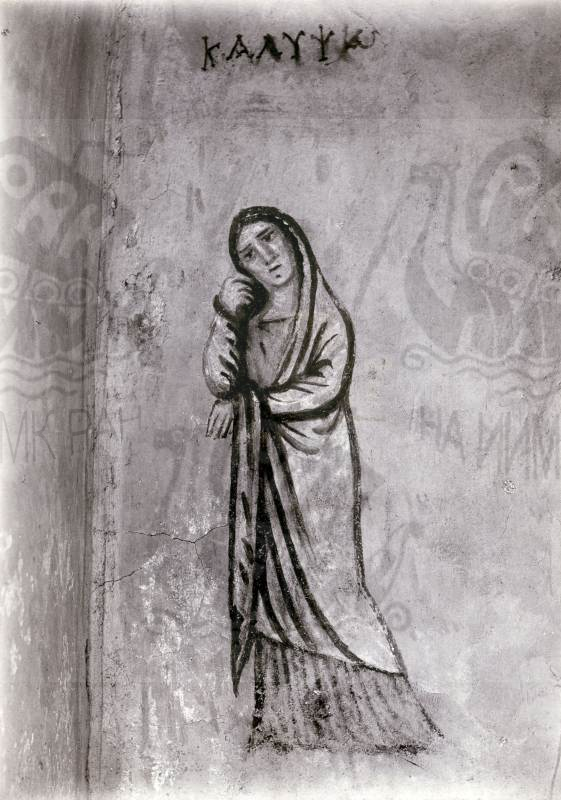
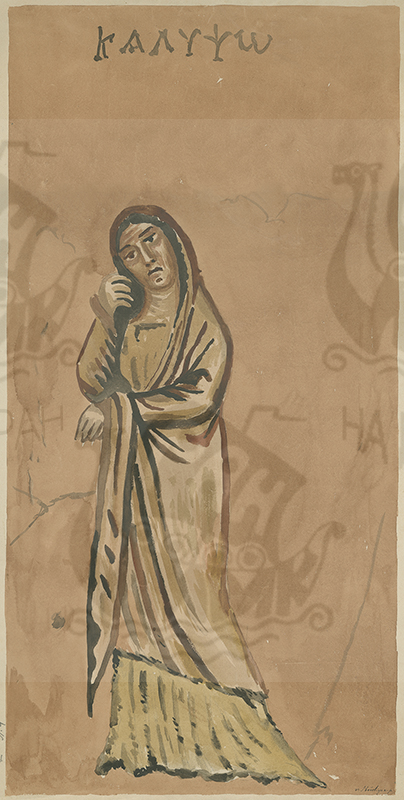
Sección titulada «Calypso: The Desire of One Who Will Not Let Go»Calypso offers Odysseus everything that seems beyond the reach of a mortal: the companionship of a goddess, an island seemingly sheltered from the troubles of human life, and even the possibility of never growing old or dying. But Odysseus wants to return to Ithaca. The promise of immortality cannot make up for the life he longs to recover with Penelope (5.201–227).
The island’s isolation seems to reflect Calypso’s own. Homer describes a place of extraordinary beauty, with woods, springs, and flowering meadows, which even Hermes pauses to admire. Yet it lies far from the inhabited world. The messenger of the gods must cross a vast expanse of sea to reach it, and Calypso reminds him how rarely he visits (5.55–102).
The poem does not tell us whether the goddess was unhappy before she met Odysseus, but it leaves us room to imagine her loneliness. She possesses beauty, power, and immortality, yet lives in a paradise she cannot truly share with the man she desires. What good is such a paradise? Calypso can offer Odysseus eternal life, but she cannot make him want to stay. And in trying to keep him, she turns her own unhappiness into his captivity. For her, Odysseus may represent a chance to escape her loneliness; for him, that beautiful island has become a prison.
The poem does not tell us how their relationship began, and it would be rash to assume that their feelings remained unchanged throughout their years together. What Homer does show clearly is their situation when we first encounter Odysseus. By day, he sits beside the sea, weeping and longing for his homeland. At night, he still shares Calypso’s bed, but Homer sets their desires in stark opposition: “he unwilling, she willing” (Odyssey, 5.151–158). The Greek also uses the word ἀνάγκῃ, “under compulsion” or “of necessity”. This is not simply a case of Calypso desiring him more than he desires her. By this point, Odysseus no longer wishes to share her bed, nor is he free to leave the island.
Zeus, following Athena’s intervention, orders Odysseus to be released, and Hermes delivers the command. Calypso protests, accusing the male gods of condemning goddesses who take mortal men as lovers while allowing themselves similar relationships (5.118–144). Within the world of the poem, her complaint about this double standard is not without foundation.
Yet both things can be true at once: Calypso may have good reason to reproach the other gods while also holding captive a man who wishes to leave. Here, unequal desire becomes something more serious, because one person’s will is imposed upon the other’s.
Circe: From Threat to the Bed
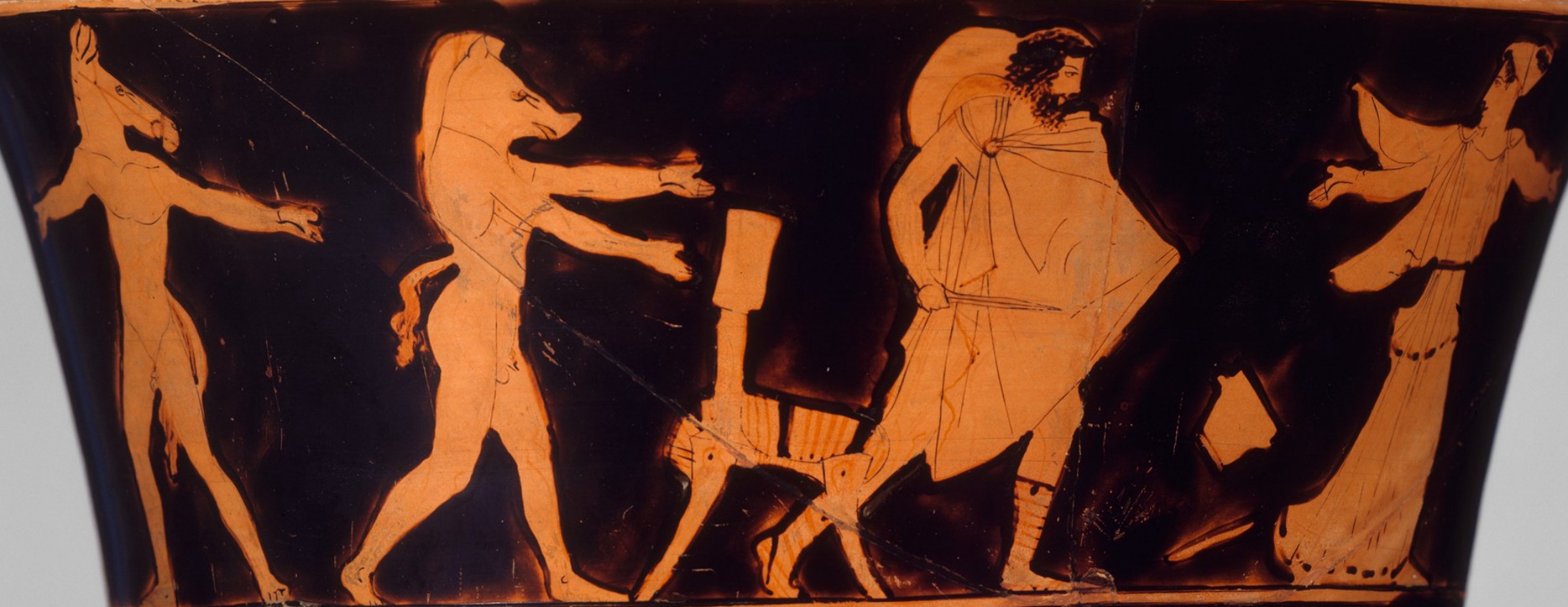
Sección titulada «Circe: From Threat to the Bed»With Circe, almost the opposite happens. Odysseus is not held in a prolonged captivity but faces an immediate threat. The enchantress has turned his companions into pigs. Hermes gives Odysseus a protective herb and tells him how to proceed. When her magic fails, Odysseus draws his sword. Circe falls to her knees and, recognising him as the man whose arrival Hermes had foretold, invites him to share her bed (10.310–335).
Circe’s invitation has an explicit purpose: by coming together in bed, they may learn to trust one another. Odysseus, however, does not simply agree. How can he trust someone who has just turned his companions into animals? Fearing another trap, he demands an oath: Circe must swear that she will do him no harm. Only after she has sworn does he sleep with her (10.333–347).
The scene is unsettling. Homer does not explain why Circe transforms the men into pigs. Her sudden change of attitude follows her recognition of Odysseus, but the invitation to share her bed remains unexpected. The bed is not presented as the natural outcome of trust already established, but as the means she proposes for creating it. Odysseus, for his part, agrees only after securing a promise of safety. Their encounter begins with a confrontation, not with a seduction free of conflict.
Circe restores his companions to human form, welcomes them into her home, and they remain there for a year. When the time comes to resume the voyage, it is she who explains how Odysseus must consult the dead and face the dangers ahead. The goddess who once threatened him has become his host, lover, and guide.
Has she fallen in love with Odysseus? Homer does not say. Nor do we know how she feels when they part. During that year, they share a home and a bed, but it is his companions who remind him that he must think of returning home (10.466–474). Odysseus then asks Circe to help him continue his journey, and she does. Unlike Calypso, she makes no attempt to keep him there. Both relationships involve sex and divine hospitality, but they unfold under very different conditions.
Nausicaa: The Life That Might Have Been
Sección titulada «Nausicaa: The Life That Might Have Been»Odysseus reaches the land of the Phaeacians naked, exhausted, and in need of help. Nausicaa welcomes him, provides him with clothes and food, and tells him how to approach her parents. Athena then enhances the shipwrecked stranger’s appearance. Seeing him transformed, the young woman tells her attendants that she wishes she could have a husband like him (6.232–245).
Alcinous himself, Nausicaa’s father, says he would gladly have Odysseus as his son-in-law if he chose to stay among the Phaeacians (7.311–316). But Odysseus does not choose that future. A new home, a new wife, and a new life are not what he seeks. He wants to return to Ithaca and to Penelope, and in doing so recover the life that makes him who he is.
There is no sexual relationship between Nausicaa and Odysseus, nor does the poem turn their encounter into a love story. Nausicaa confides her wish to her attendants, not to Odysseus; he accepts her help without making any promises. There is hospitality, admiration, and the possibility of marriage, but no commitment. Nausicaa glimpses a future in which he might stay; Odysseus sees his future elsewhere.
Not every form of desire ends in bed.
Athena and Odysseus: Intimacy Without Desire
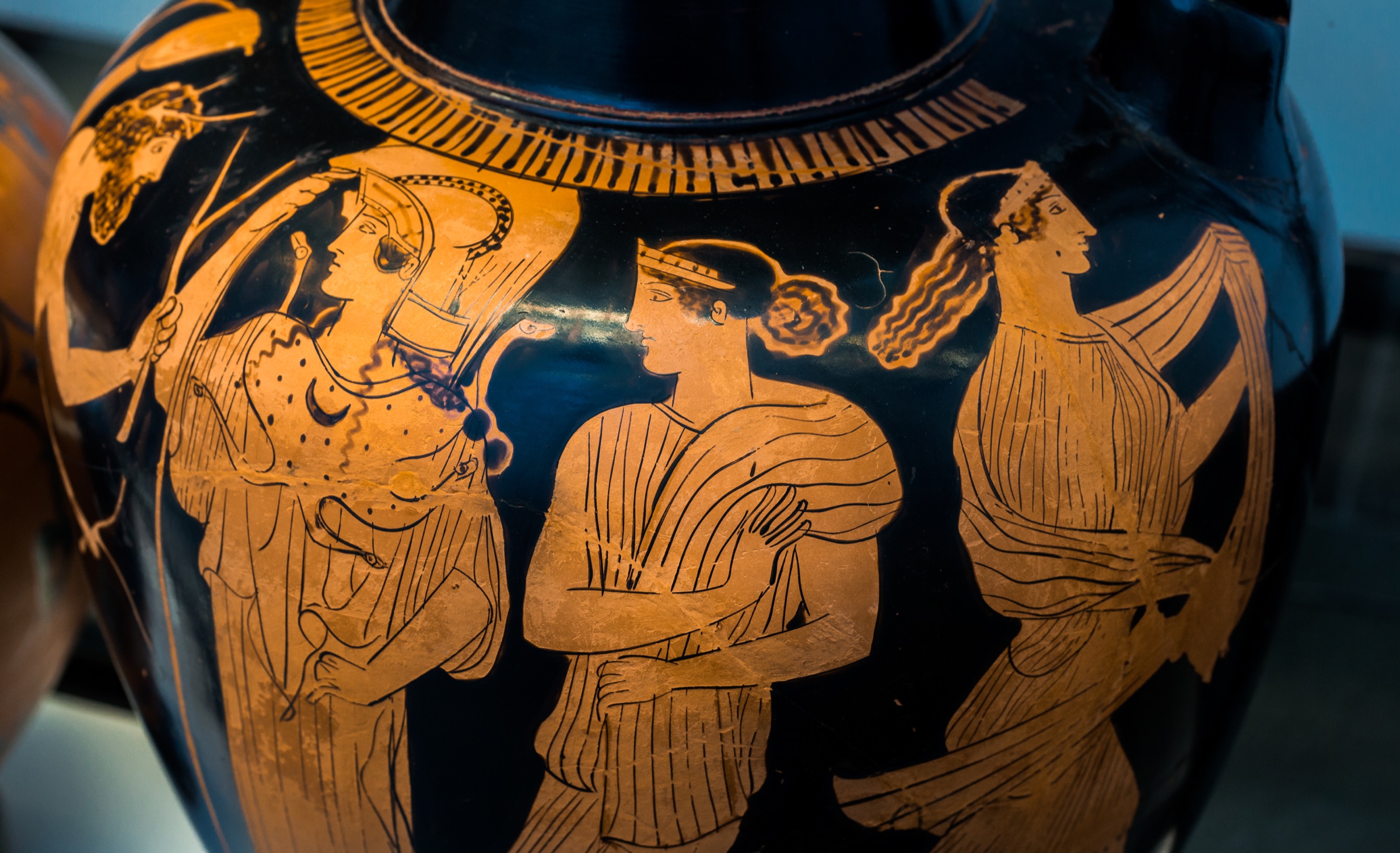
Sección titulada «Athena and Odysseus: Intimacy Without Desire»Of all the gods, Athena has the closest and most enduring bond with Odysseus, yet the poem never portrays it as erotic. She protects him, changes his appearance when necessary, advises him, and helps him reclaim his home. It is his intelligence, more than his looks or his strength, that seems to draw her to him.
When Odysseus returns to Ithaca, Athena appears to him in disguise, and he responds with an invented story. She sees through it immediately, but rather than taking offence, she smiles and praises their shared skill in cunning: his among mortals, hers among the gods (13.287–299). Few scenes reveal their mutual understanding so clearly.
In Greek tradition, Athena is a virgin goddess, and Homer gives no indication of sexual desire between them. Yet her support is far from impersonal. There is trust, playful irony, and a willingness to work together. They are not equals: she can transform his appearance and decide when to intervene, while he depends on help he cannot command. Yet despite that imbalance, they share a rapport unlike anything in his relationships with Calypso or Circe.
The Odyssey thus portrays a profound closeness between a mortal man and a goddess that has no erotic dimension. Here, intimacy grows above all from a shared way of looking at the world.
The Gods Desire—and Deceive—Too
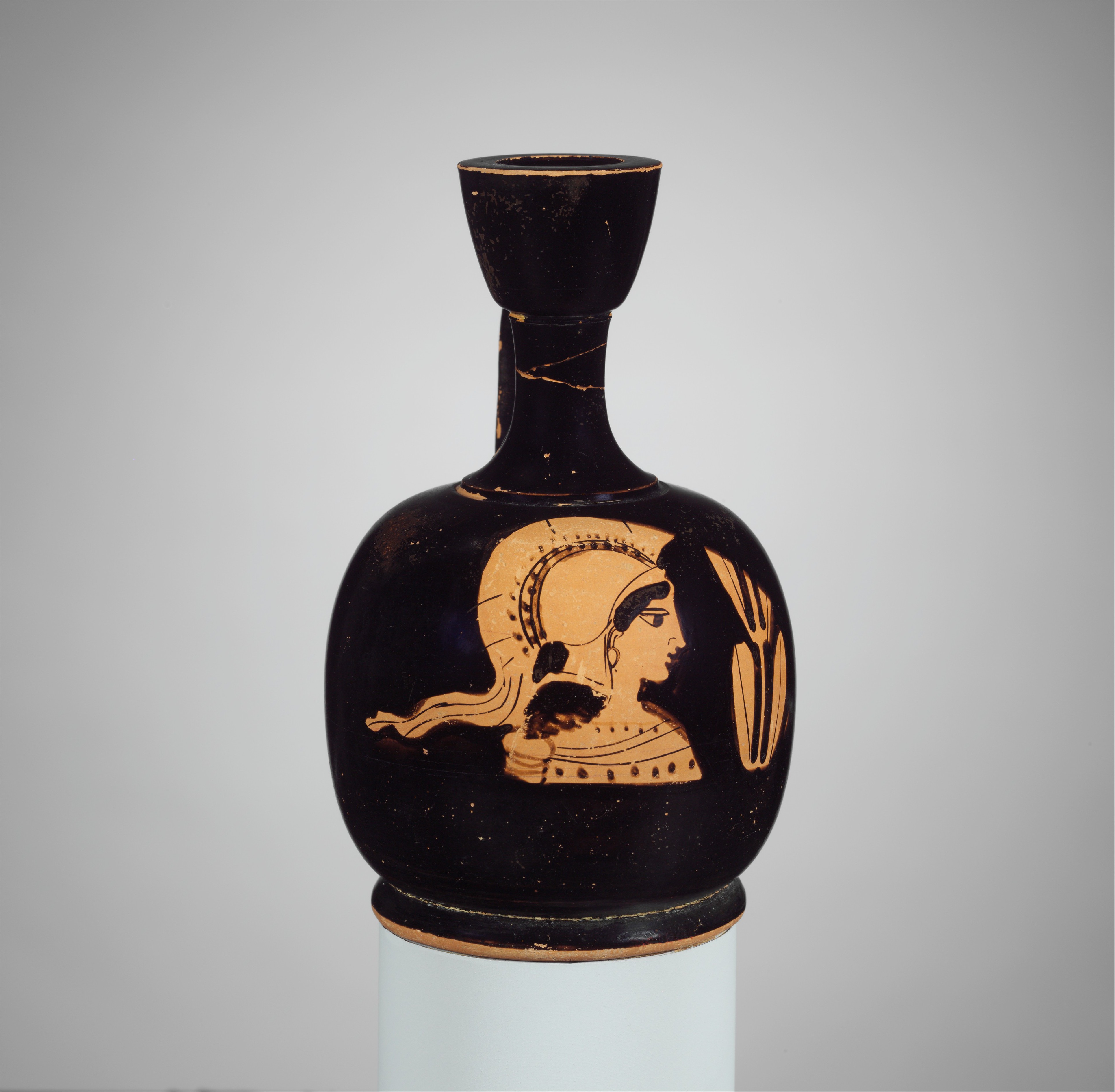
Sección titulada «The Gods Desire—and Deceive—Too»Calypso’s complaint about the double standards of the gods is not without foundation. She recalls the loves of Demeter and Iasion, and of Eos and Orion: two goddesses who loved mortal men, only for their lovers to be killed by other gods. Artemis killed Orion, and Zeus struck Iasion down with a thunderbolt (5.118–128). The poem also tells of a far more troubling encounter. Poseidon assumes the appearance of Enipeus, the river god with whom Tyro has fallen in love, and sleeps with her. From that union come Pelias and Neleus (11.235–259). Here, divine desire relies directly on deception.
The gods possess powers that mortals do not. They can change their appearance, disappear, or impose their will by force. Not all divine encounters are alike, but when one of those involved is a god, the balance of power can change the nature of the encounter. Neither a god’s beauty nor the honour of bearing heroic children removes that imbalance.
And yet Homer also knows how to laugh at the immortals. In the song Demodocus performs for the Phaeacians, Ares and Aphrodite meet secretly in Hephaestus’ bed. The betrayed husband fashions an invisible net that traps them as they lie together, then summons the other gods to witness their humiliation. The gods arrive and burst into laughter, while the goddesses stay away out of modesty. Apollo then asks Hermes whether he would be willing to endure such an embarrassment for the pleasure of sleeping with Aphrodite. Hermes replies that he would, even if he were bound by three times as many chains and all the gods and goddesses were watching. Finally, Poseidon intervenes to secure Ares’ release (8.266–366).
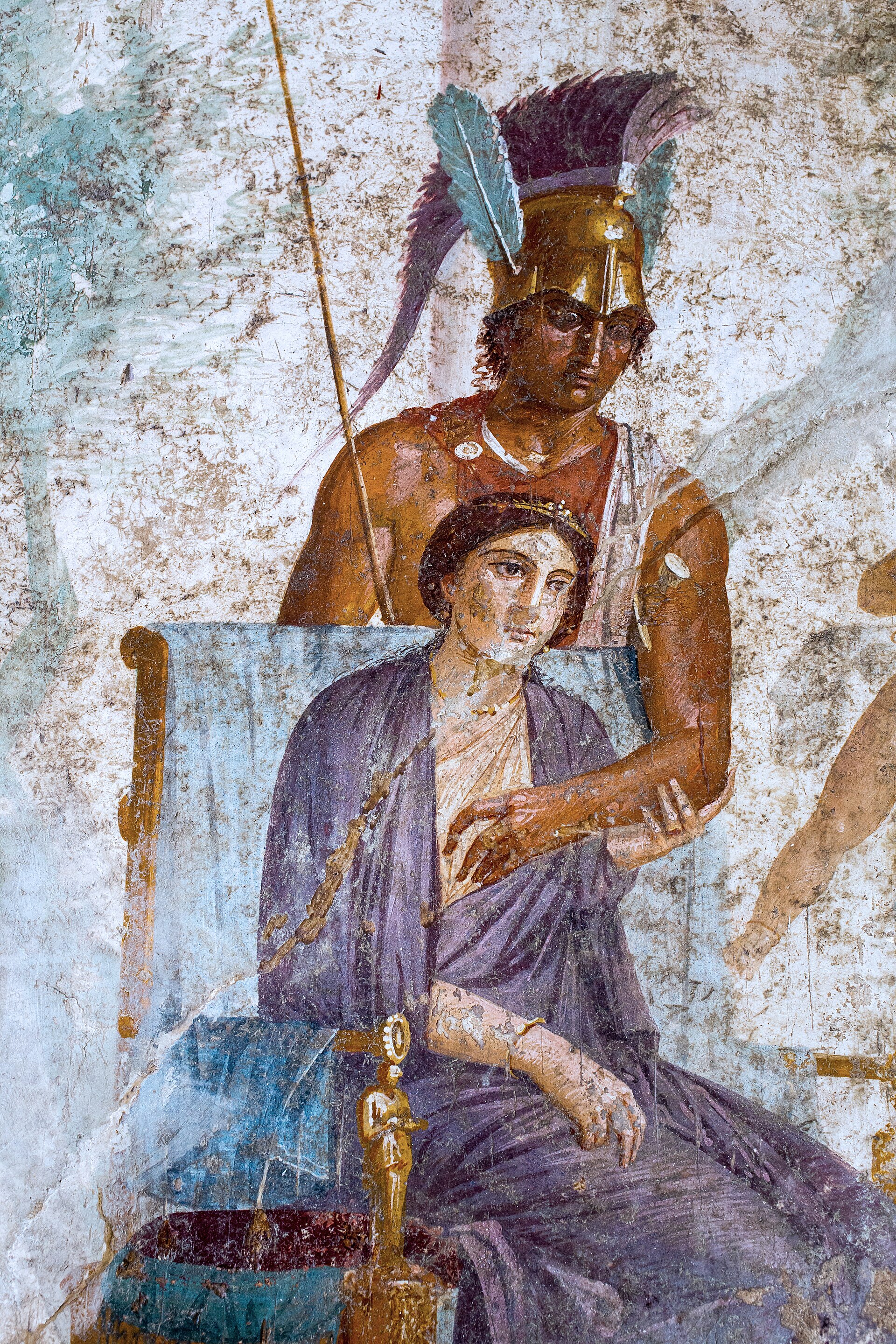
Divine adultery thus becomes a comedy of deception, jealousy, and public humiliation, in which even the lovers’ predicament becomes a source of laughter. Among mortals, by contrast, infidelity can have far darker consequences. This contrast between the worlds of gods and mortals is another expression of Homer’s irony.
Fidelity and Freedom: Unequal Expectations
Sección titulada «Fidelity and Freedom: Unequal Expectations»Penelope waits in Ithaca, resists the pressure of the suitors, and struggles to preserve her household and her place within it. Odysseus, meanwhile, shares a bed with Circe and Calypso. Yet these experiences are not equivalent: he agrees to sleep with Circe only after securing an oath, while with Calypso, when we first encounter him, he remains against his will. Nevertheless, the poem does not regard either relationship as preventing his return to Penelope as her husband. Husband and wife are not held to the same expectations of sexual fidelity.
Clytemnestra provides a revealing contrast. Her relationship with Aegisthus and the murder of Agamemnon recur throughout the poem as a dark image of what can happen when a husband returns home. Her story stands in contrast to Penelope’s long wait, although Homer’s account should not be confused with the tragedies written centuries later.
But speaking of fidelity, adultery, or choice presupposes a certain freedom to decide. Differences in desire do not necessarily involve coercion: two people may want different things without either imposing their will on the other. Yet the Odyssey also portrays relationships in which the freedom to refuse—or to leave—is far less certain.
The Servant Women: The Darker Side of the Household
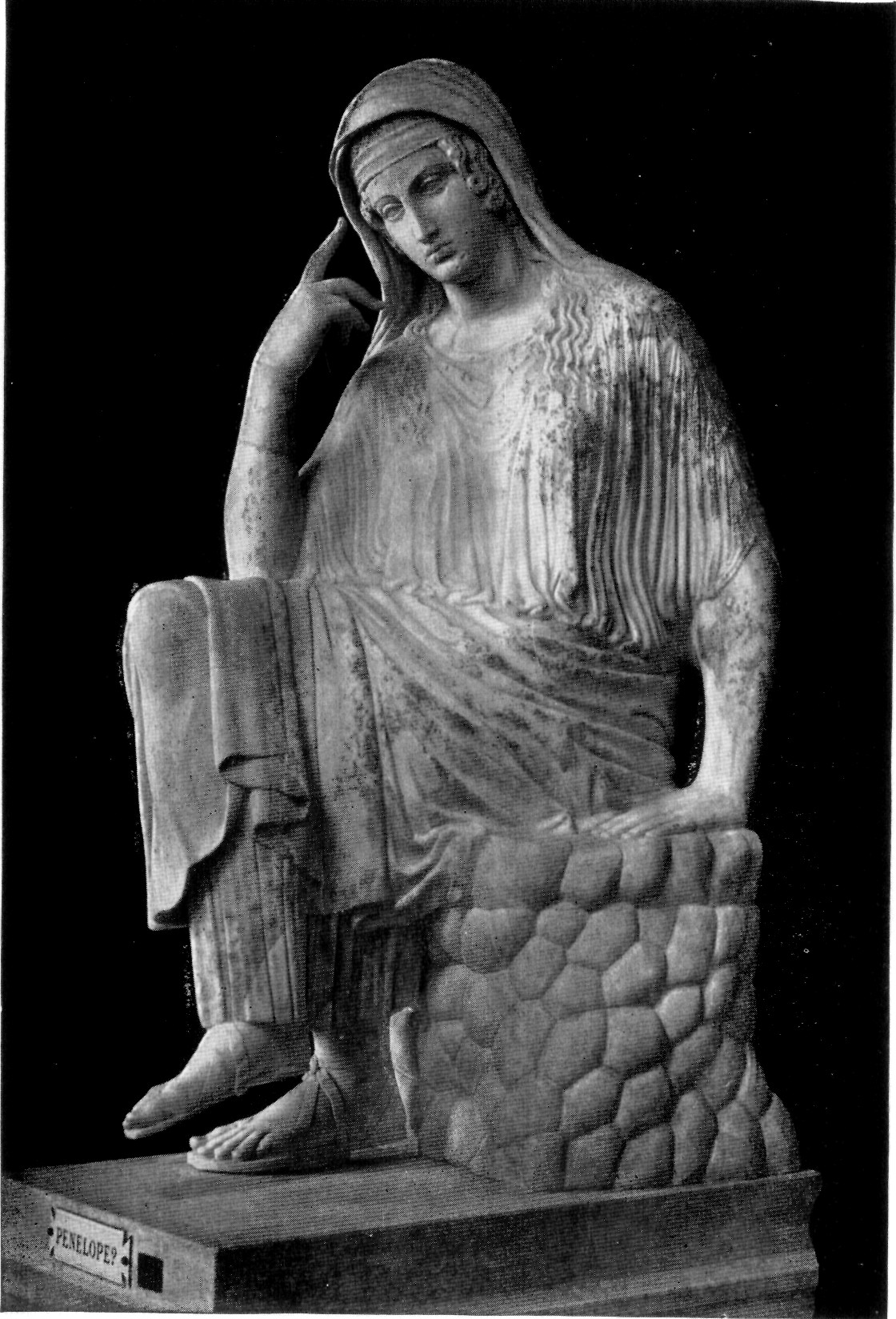
Sección titulada «The Servant Women: The Darker Side of the Household»Among the women of Odysseus’ household are enslaved women who have relations with the suitors. Melantho is the most prominent: Penelope had raised and loved her as a daughter, but she was in love with Eurymachus and slept with him. She also mocks the beggar without realising that he is her master (18.321–339; 19.65–95).
After the slaughter of the suitors, Odysseus asks Eurycleia which of the household’s fifty enslaved women have been disloyal to him. She names twelve. They are made to carry away the bodies and clean the hall. Odysseus then orders them to be killed with swords, but Telemachus decides to hang them instead, because he believes they do not deserve a clean death (22.417–473). It is a brutal scene that should not be reduced to a footnote on punishments for adultery.
Eurycleia, Odysseus, and Telemachus regard these women as guilty of dishonouring the household. But they were enslaved. We do not know how much freedom each had in her relations with the suitors, or what pressures she may have faced. Homer tells us that Melantho loved Eurymachus, but offers no comparable explanation for the other women. Nor can we assume that all were free to refuse. Their condemnation and our uncertainty about their circumstances must be read together.
Here, sexuality is no romantic adventure. It is entangled with slavery, dependence, and the violence through which Odysseus and Telemachus reassert their authority over the household.
See also: When Nobody Signed Anything — Ten Provisions from the Great Inscription, with Commentary.
What the Poem Leaves Largely Unexplained
Sección titulada «What the Poem Leaves Largely Unexplained»Not all forms of kinship and desire receive the same attention. On Aeolus’ island, Homer mentions without comment that the lord of the winds has given his six daughters in marriage to his six sons (10.5–11). In the underworld, Odysseus encounters Epicaste, who unknowingly married her own son, Oedipus, and took her own life when the truth came to light. Oedipus, however, continued to rule in Thebes (11.271–280). Both stories involve unions between close relatives, but they are very different in nature. The second should not automatically be reconstructed from the later tragedies, in which Oedipus’ mother is usually called Jocasta.
The Odyssey, moreover, contains no unambiguous account of a sexual or erotic relationship between people of the same sex. This is a limitation of what the poem tells us, not a conclusion about the full range of practices or experiences in the ancient Greek world. Nor would it be appropriate to import the debate about Achilles and Patroclus directly into the Odyssey: that debate concerns the Iliad and a different tradition of interpretation.
The Bed That Remains
Sección titulada «The Bed That Remains»After Circe and Calypso, after gods who assume different forms, marriages that might have been, and unequal expectations of fidelity, the Odyssey returns to a bed. It is richly adorned, yet what makes it remarkable is neither its beauty nor the pleasures it offers. It is the bed Odysseus built around the trunk of an olive tree rooted in the earth.
Penelope, still cautious, instructs Eurycleia to move the marriage bed outside their chamber and prepare it there. Odysseus reacts with indignation. He knows that moving it would be impossible without destroying it: he himself fashioned one of its posts from the trunk of a living olive tree and built the room around it. This shared secret finally convinces Penelope that the man before her is truly her husband (23.174–230).
No declaration of love settles the question of his identity. What convinces Penelope is something Odysseus made many years before, a secret from their life together. The bed speaks of intimacy, but also of memory, of a home, and of everything they have both struggled to preserve. Its strength lies in the fact that it cannot be separated from the ground in which the olive tree took root.
At that moment, Homer compares Penelope’s joy to that of shipwrecked sailors who, having lost their ship, finally reach the shore and escape danger (23.233–240). The image is surprising, because the traveller and castaway in this story is Odysseus. Yet it is his wife who now reaches solid ground. She too has endured a long ordeal, without ever leaving Ithaca. Athena even prolongs the night, delaying the coming of Dawn so that husband and wife may enjoy their reunion.
One final gesture remains. Once they have recognised each other, husband and wife return to their chamber. Homer tells us that they take pleasure in love and then in recounting all that has happened to them during their separation (23.296–343). Their reunion does not end with the test of the olive tree. There is also a physical union, but the poet accompanies it with conversation: through words, too, they need to recover the years they could not share.
We began with Odysseus gazing at the sea that separates him from Ithaca, held captive by a goddess. We end with Penelope and Odysseus together in a bed rooted in the earth. Between those two images lies much of what the poem has to say about sex and love: desire, companionship, trust, and freedom do not always coincide. In the end, however, the intimacy they recover allows them to share both their bodies and their words.